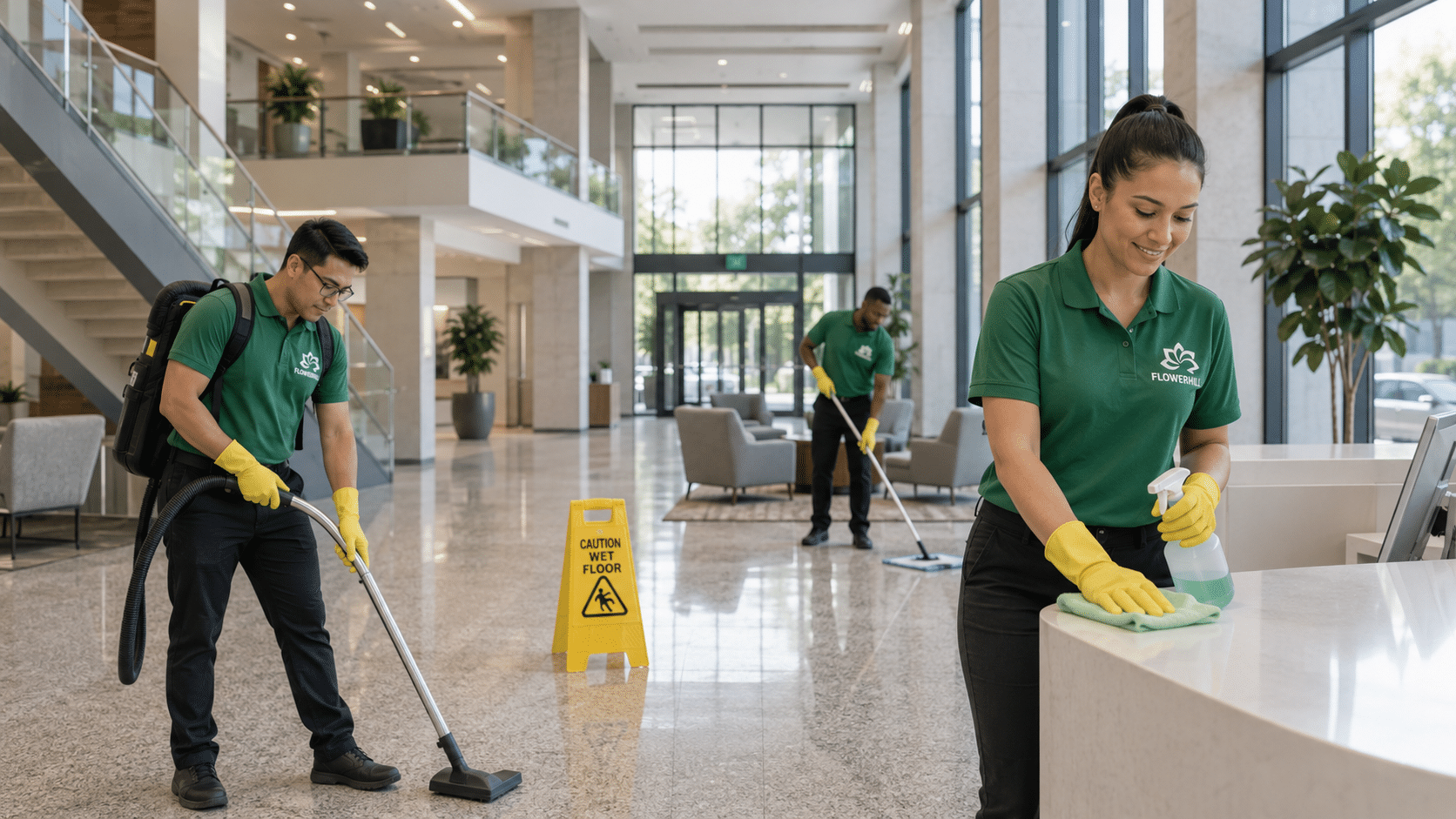
DALLAS - FORT WORTH'S PREFERRED COMMERCIAL CLEANING COMPANY

School and University Cleaning Services in Dallas-Fort Worth

Customized cleaning & facility-support for All DFW Schools & Univesities

FlowerHill Facility Services provides customized cleaning and facility-support programs for public schools, private schools, charter schools, colleges, universities, trade schools, administrative campuses, and other educational facilities throughout Dallas-Fort Worth.

Educational buildings experience concentrated traffic, shared surfaces, food service, athletic activity, events, and changing schedules throughout the academic year. Classrooms, restrooms, cafeterias, libraries, laboratories, gymnasiums, offices, residence halls, and common areas each require a cleaning plan suited to how the space is used.

FlowerHill develops each program around the institution’s calendar, building layout, student population, operating hours, floor surfaces, security procedures, extracurricular activities, and campus standards.

Whether your facility needs daily janitorial service, daytime porter support, targeted disinfection, floor care, summer deep cleaning, event support, or approved facility maintenance, our team creates a clearly documented plan designed to keep educational environments clean, orderly, and ready for learning.

What Are School and University Cleaning Services?

School and university cleaning services provide recurring and project-based care for instructional, administrative, athletic, residential, food-service, and shared spaces located across an educational campus.

A customized program may include classroom cleaning, restroom sanitation, waste removal, cafeteria care, floor maintenance, interior glass cleaning, supply restocking, high-touch surface care, residence-hall common-area cleaning, event support, and daytime porter service.

Unlike a traditional office, an educational facility may experience rapid room turnover, hundreds or thousands of daily occupants, evening programs, athletic events, food service, student activities, and seasonal schedule changes. The cleaning program must be structured around those operating conditions.

Why Educational Facilities Need Specialized Cleaning Programs

Schools and universities contain many different environments operating under one organization.

A comprehensive educational cleaning program may need to account for:

  • Large student and staff populations
  • Multiple buildings and floors
  • Class changes and concentrated hallway traffic
  • Shared desks, tables, doors, and equipment
  • High-use restrooms
  • Cafeterias and food-service areas
  • Libraries and technology spaces
  • Gymnasiums, locker rooms, and athletic facilities
  • Laboratories and specialized classrooms
  • Residence halls and student common areas
  • After-school programs and evening classes
  • Performances, graduations, and sporting events
  • Summer projects and academic breaks
  • Security and student-safety procedures

FlowerHill organizes these needs into a practical scope that defines the areas being serviced, the tasks being performed, the cleaning frequency, and the approved service schedule.

Educational Areas We Clean

Classrooms and Instructional Spaces

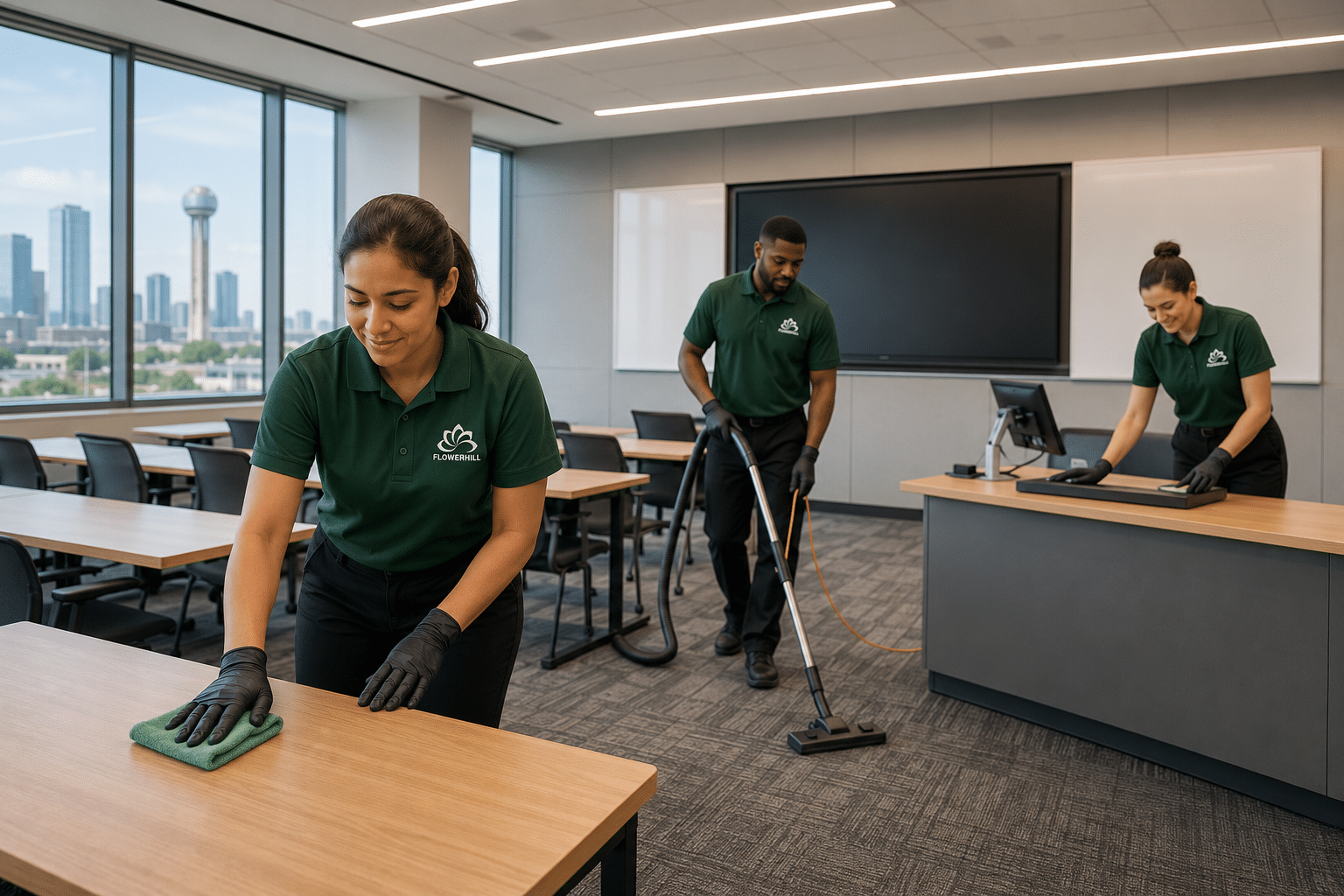
Classrooms experience repeated daily use by students, instructors, staff, and visitors. A consistent cleaning program helps keep these spaces orderly and prepared for the next class period.

Approved classroom cleaning may include:

  • Cleaning accessible desks and tables
  • Cleaning approved chair surfaces
  • Vacuuming carpeted floors
  • Sweeping and mopping hard floors
  • Removing trash and recycling
  • Cleaning door handles and approved touchpoints
  • Cleaning sinks and counters where present
  • Dusting accessible ledges and approved surfaces
  • Cleaning interior door glass
  • Removing visible cobwebs
  • Straightening furniture according to instructions
  • Reporting damaged furniture or fixtures

Books, student work, instructional materials, electronics, teacher belongings, and classroom projects should only be moved or cleaned according to established school procedures.

Lecture Halls and Auditoriums

Lecture halls and auditoriums may host academic instruction, assemblies, guest speakers, performances, orientation programs, and community events.

Cleaning may include:

  • Vacuuming carpeted aisles and seating areas
  • Sweeping and mopping hard floors
  • Cleaning approved seating surfaces
  • Removing trash and abandoned materials
  • Cleaning doors, handrails, and approved touchpoints
  • Maintaining entrance and lobby areas
  • Cleaning interior glass
  • Preparing the room for scheduled events
  • Post-event cleanup
  • Reporting damaged seating or facility concerns

Audiovisual systems, control booths, microphones, instruments, and technical equipment should only be handled under specific facility instructions.

School and Campus Restrooms

Educational restrooms can experience concentrated use during arrival periods, class changes, meal periods, athletic events, and campus programs.

Restroom cleaning may include:

  • Cleaning toilets and urinals
  • Cleaning sinks, counters, and fixtures
  • Cleaning mirrors and partitions
  • Sweeping and mopping floors
  • Cleaning baseboards and accessible edges
  • Removing waste and sanitary products
  • Cleaning approved high-touch surfaces
  • Monitoring odor and overall presentation
  • Restocking toilet tissue and paper towels
  • Replenishing soap and approved consumables
  • Reporting clogs, leaks, vandalism, or damaged fixtures

Inspection frequency can be adjusted according to enrollment, building traffic, event schedules, operating hours, and the number of available restrooms.

Cafeterias and Student Dining Areas

Cafeterias and dining halls require coordinated attention around meal schedules, student traffic, food residue, spills, waste, and seating turnover.

Approved dining-area cleaning may include:

  • Cleaning tables and approved seating surfaces
  • Removing food residue and visible debris
  • Emptying trash and recycling containers
  • Maintaining waste and tray-return areas
  • Sweeping and mopping floors
  • Responding to routine non-hazardous spills
  • Cleaning approved beverage and condiment stations
  • Cleaning entrance doors and interior glass
  • Maintaining adjacent restrooms
  • Resetting tables and chairs

Food preparation, dishwashing, cooking equipment, commercial hood cleaning, grease systems, and regulated food-contact sanitation should be defined separately according to the institution’s food-service requirements.

Libraries and Media Centers

Libraries and media centers combine quiet study areas, shared tables, shelving, computers, reading rooms, service desks, and collaborative spaces.

Cleaning may include:

  • Vacuuming carpeted areas
  • Sweeping and mopping hard floors
  • Cleaning approved tables and seating
  • Removing trash and recycling
  • Cleaning service counters
  • Cleaning doors and interior glass
  • Dusting accessible ledges and approved surfaces
  • Maintaining study rooms
  • Cleaning approved high-touch surfaces
  • Reporting damaged furniture or facility concerns

Books, archival materials, displays, electronics, student belongings, and specialty collections should only be handled according to library procedures.

Computer Labs and Technology Classrooms

Computer labs and technology classrooms contain electronics, cables, screens, controls, and shared workstations that require clearly established cleaning boundaries.

Approved services may include:

  • Vacuuming and floor cleaning
  • Removing trash and recycling
  • Cleaning approved desk surfaces
  • Cleaning doors and interior glass
  • Dusting accessible nontechnical surfaces
  • Cleaning approved shared touchpoints
  • Maintaining clear walkways
  • Reporting loose cables or visible facility concerns

Computers, keyboards, monitors, laboratory devices, network equipment, charging systems, and other electronics should only be cleaned using institution-approved procedures.

Science Laboratories

Science laboratories may contain chemicals, specimens, glassware, equipment, gas connections, sinks, and other specialized materials.

FlowerHill may clean approved nontechnical areas such as:

  • General floors and walkways
  • Approved empty work surfaces
  • Doors and interior glass
  • General waste containers
  • Adjacent classrooms
  • Restrooms and common spaces
  • Approved sinks and fixtures

Chemicals, biological materials, laboratory glassware, experiments, regulated waste, sharps, fume hoods, technical equipment, and contaminated surfaces require institution-specific procedures and appropriately qualified personnel.

Vocational and Trade-School Classrooms

Career and technical education spaces may include automotive bays, construction labs, welding areas, kitchens, healthcare classrooms, manufacturing equipment, or other specialized training environments.

Cleaning responsibilities must be developed around the specific program and may include:

  • Approved floors and pedestrian pathways
  • Classroom and administrative areas
  • Restrooms and locker areas
  • General waste removal
  • Approved tables and work surfaces
  • Entrance and interior glass cleaning
  • Visible loose-debris removal
  • Reporting leaks, damage, or unusual residue

Tools, machinery, vehicles, chemicals, fuels, welding residue, clinical materials, and powered equipment require separately defined procedures and qualified personnel.

Administrative Offices

Educational campuses include offices used by administrators, teachers, faculty, counselors, registrars, admissions teams, finance departments, and support staff.

Office cleaning may include:

  • Accessible surface dusting
  • Trash and recycling removal
  • Carpet vacuuming
  • Hard-floor cleaning
  • Conference-room resets
  • Reception-area cleaning
  • Interior glass care
  • Breakroom and restroom service
  • Cleaning approved high-touch surfaces

Confidential student records, personal information, locked offices, counseling files, computers, and employee belongings should only be handled according to campus procedures.

Nurse Offices and Student Health Areas

School nurse offices and student health areas require a clearly defined scope that separates routine environmental cleaning from clinical or biohazard responsibilities.

Approved routine services may include:

  • General floor cleaning
  • Trash removal
  • Cleaning approved waiting-area furniture
  • Cleaning doors and approved touchpoints
  • Restroom cleaning
  • Cleaning approved counters and sinks
  • Restocking approved paper products

Medical waste, sharps, medications, bodily-fluid contamination, examination equipment, treatment surfaces, and clinical materials require procedures established by the school’s health and safety team.

Gymnasiums and Athletic Facilities

Gymnasiums may host physical education, practices, games, assemblies, graduations, and community events.

Approved cleaning may include:

  • Dust mopping approved gym floors
  • Damp cleaning appropriate floor surfaces
  • Cleaning bleachers and seating areas
  • Removing trash and debris
  • Cleaning doors and approved touchpoints
  • Maintaining entrances and lobbies
  • Cleaning adjacent restrooms
  • Preparing the facility for scheduled events
  • Post-event cleanup

Gym floors require methods and products appropriate for their finish. Equipment, scoreboards, athletic devices, and specialty flooring should be handled according to institution-approved procedures.

Locker Rooms and Shower Areas

Locker rooms and shower areas experience moisture, soil, personal-item storage, odors, and heavy traffic.

Cleaning may include:

  • Cleaning shower floors and approved walls
  • Cleaning toilets, sinks, and fixtures
  • Cleaning mirrors and partitions
  • Cleaning benches and approved locker exteriors
  • Sweeping and mopping floors
  • Removing waste
  • Restocking approved consumables
  • Cleaning approved high-touch surfaces
  • Monitoring odor and overall presentation
  • Reporting visible leaks or damaged fixtures

Locker interiors, personal belongings, laundry, towels, athletic equipment, and specialized drainage concerns should be addressed separately.

Performing Arts and Music Facilities

Educational campuses may include theaters, band rooms, choir rooms, rehearsal spaces, dance studios, costume areas, and performance halls.

Approved cleaning may include:

  • Vacuuming and floor care
  • Cleaning approved seating and furniture
  • Removing trash
  • Cleaning doors and interior glass
  • Maintaining lobbies and restrooms
  • Cleaning backstage common areas
  • Preparing spaces for performances
  • Post-event cleaning

Instruments, sound equipment, lighting controls, costumes, props, stages, dance floors, and technical systems should only be handled according to campus instructions.

Hallways, Stairwells, and Common Areas

Hallways and stairwells experience some of the highest traffic levels on an educational campus.

Service may include:

  • Vacuuming carpeted corridors
  • Sweeping and mopping hard floors
  • Cleaning stair treads and landings
  • Cleaning approved handrails
  • Removing trash and visible debris
  • Cleaning interior glass
  • Cleaning approved drinking-fountain exteriors
  • Addressing approved wall marks
  • Reporting flooring, lighting, or hardware concerns

Residence-Hall Common Areas

Colleges and universities may require cleaning for residence-hall lobbies, corridors, lounges, study rooms, laundry rooms, shared kitchens, and common restrooms.

Approved services may include:

  • Lobby and corridor cleaning
  • Vacuuming and hard-floor care
  • Cleaning shared lounges and study rooms
  • Trash and recycling removal
  • Cleaning common restrooms
  • Cleaning shared kitchens
  • Cleaning laundry-room floors and approved surfaces
  • Cleaning interior glass
  • Cleaning approved touchpoints
  • Reporting damage or maintenance concerns

Student rooms, personal belongings, occupied suites, bed linens, abandoned property, and turnover responsibilities should be clearly defined in the service agreement.

Student Unions and Campus Centers

Student unions and campus centers may combine dining, retail, meeting, lounge, recreation, and event spaces under one roof.

Cleaning may include:

  • Lobby and entrance care
  • Restroom monitoring
  • Waste and recycling removal
  • Floor cleaning
  • Interior glass care
  • Cleaning approved seating and tables
  • Meeting-room resets
  • Routine non-hazardous spill response
  • Event support
  • Day porter coverage

Campus Childcare and Early Learning Areas

Some schools and universities include preschool, childcare, or early learning programs that require specialized procedures for young children.

Approved services may include:

  • Cleaning floors and washable rugs
  • Cleaning approved tables and chairs
  • Cleaning changing-station surfaces
  • Emptying diaper and waste containers
  • Cleaning sinks, counters, and fixtures
  • Cleaning approved touchpoints
  • Restocking approved hygiene supplies
  • Cleaning approved washable play surfaces
  • Reporting damaged furniture or equipment

Toys, bedding, feeding items, medications, personal belongings, and childcare equipment should be handled according to the program’s written procedures.

Routine Cleaning and Targeted Disinfection

Routine cleaning is the foundation of maintaining an educational facility. It removes dirt, residue, spills, and many germs from surfaces.

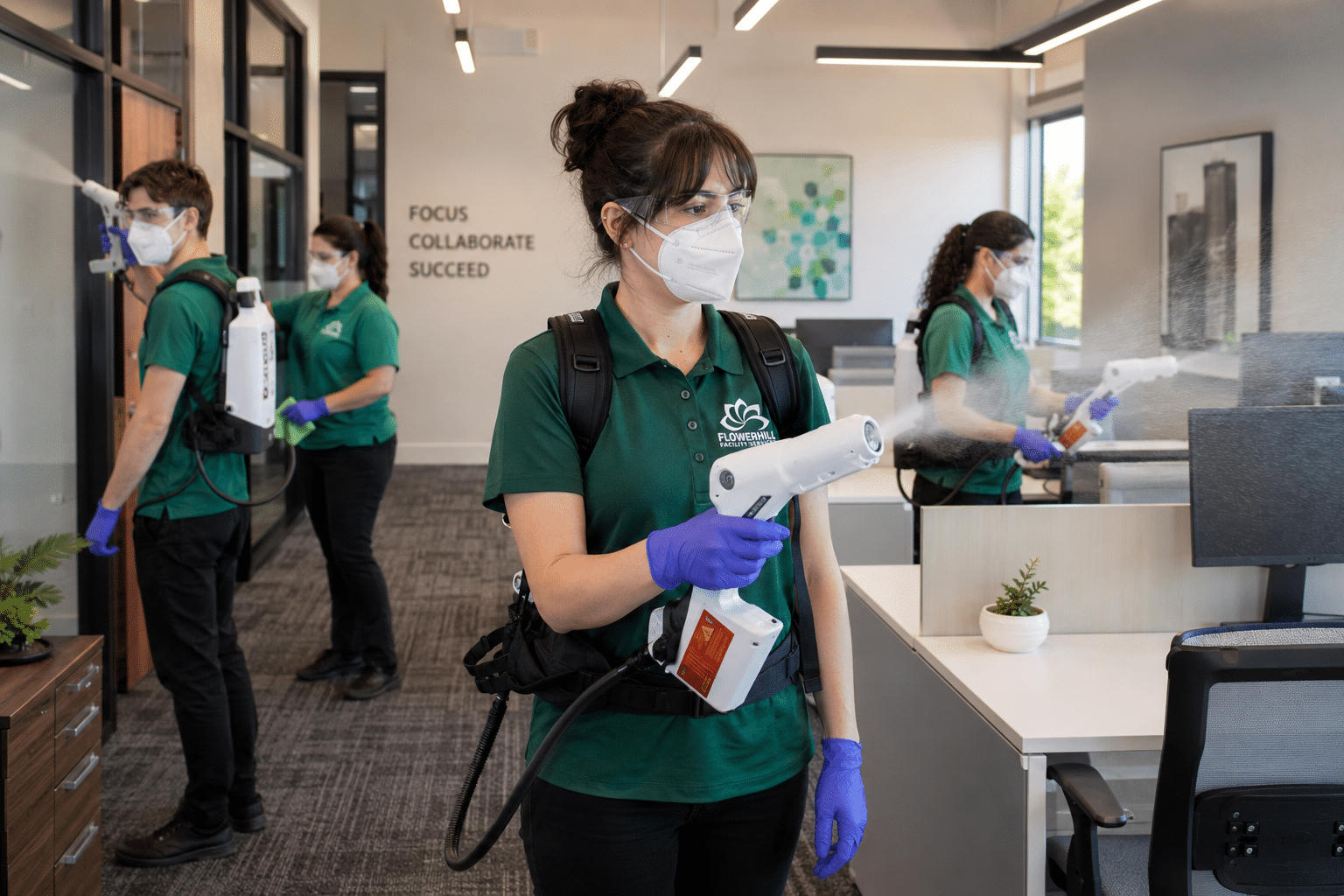
Targeted disinfection may be added for approved surfaces when someone has been ill, when a contamination event has occurred, or when the institution’s health procedures require additional treatment.

Approved high-touch areas may include:

  • Door handles and push plates
  • Light switches
  • Handrails
  • Restroom fixtures
  • Classroom tables and approved desks
  • Shared counters
  • Elevator buttons
  • Library and service counters
  • Cafeteria touchpoints
  • Approved athletic-facility surfaces

Products must be selected and used according to their labels, approved surfaces, required contact time, ventilation needs, and campus procedures. Cleaning products should not be sprayed directly onto electronics, books, student materials, sensitive finishes, or technical equipment.

Day Porter Services for Schools and Universities

Educational facilities frequently need cleaning attention while students, faculty, staff, and visitors are present.

A FlowerHill day porter may assist with:

  • Restroom checks and supply restocking
  • Entrance and lobby presentation
  • Routine non-hazardous spill response
  • Trash and recycling removal
  • Cafeteria and dining-area upkeep
  • Hallway and common-area monitoring
  • Interior glass cleaning
  • Meeting-room and event-space resets
  • Cleaning approved high-touch surfaces
  • Reporting emerging maintenance concerns

Porter schedules can be coordinated around arrival, class changes, meal periods, dismissal, evening programs, athletic events, and campus activities.

Cleaning Support for Athletic and Campus Events

Schools and universities host events that can substantially increase traffic and cleaning needs.

Event support may be available for:

  • Graduations and commencements
  • Athletic games and tournaments
  • Concerts and performances
  • Open houses
  • Admissions events
  • Parent meetings
  • Conferences and lectures
  • Student orientations
  • Fundraisers
  • Community programs
  • Testing periods
  • Summer camps

Services may include pre-event preparation, restroom monitoring, waste removal, spill response, lobby and corridor care, room resets, and post-event cleaning.

Summer and Academic-Break Deep Cleaning

Summer, winter break, and other low-occupancy periods provide opportunities to complete projects that may be difficult during normal academic operations.

Break-period cleaning may include:

  • Classroom detail cleaning
  • Furniture and room resets
  • Carpet extraction
  • Hard-floor stripping and refinishing
  • Machine floor scrubbing
  • Detailed restroom cleaning
  • High and low dusting
  • Interior glass cleaning
  • Locker-room deep cleaning
  • Residence-hall common-area turnover cleaning
  • Post-construction cleaning
  • Preparation for the upcoming term

Project schedules should be coordinated around maintenance work, construction, furniture movement, technology installation, summer programs, and reopening dates.

School and Campus Floor Care

Educational facilities may contain carpet, resilient tile, terrazzo, polished concrete, ceramic tile, rubber flooring, wood gym floors, and other specialty surfaces.

A floor-care program may include:

  • Routine carpet vacuuming
  • Edge and corner vacuuming
  • Carpet spot treatment
  • Periodic carpet extraction
  • Hard-floor sweeping and mopping
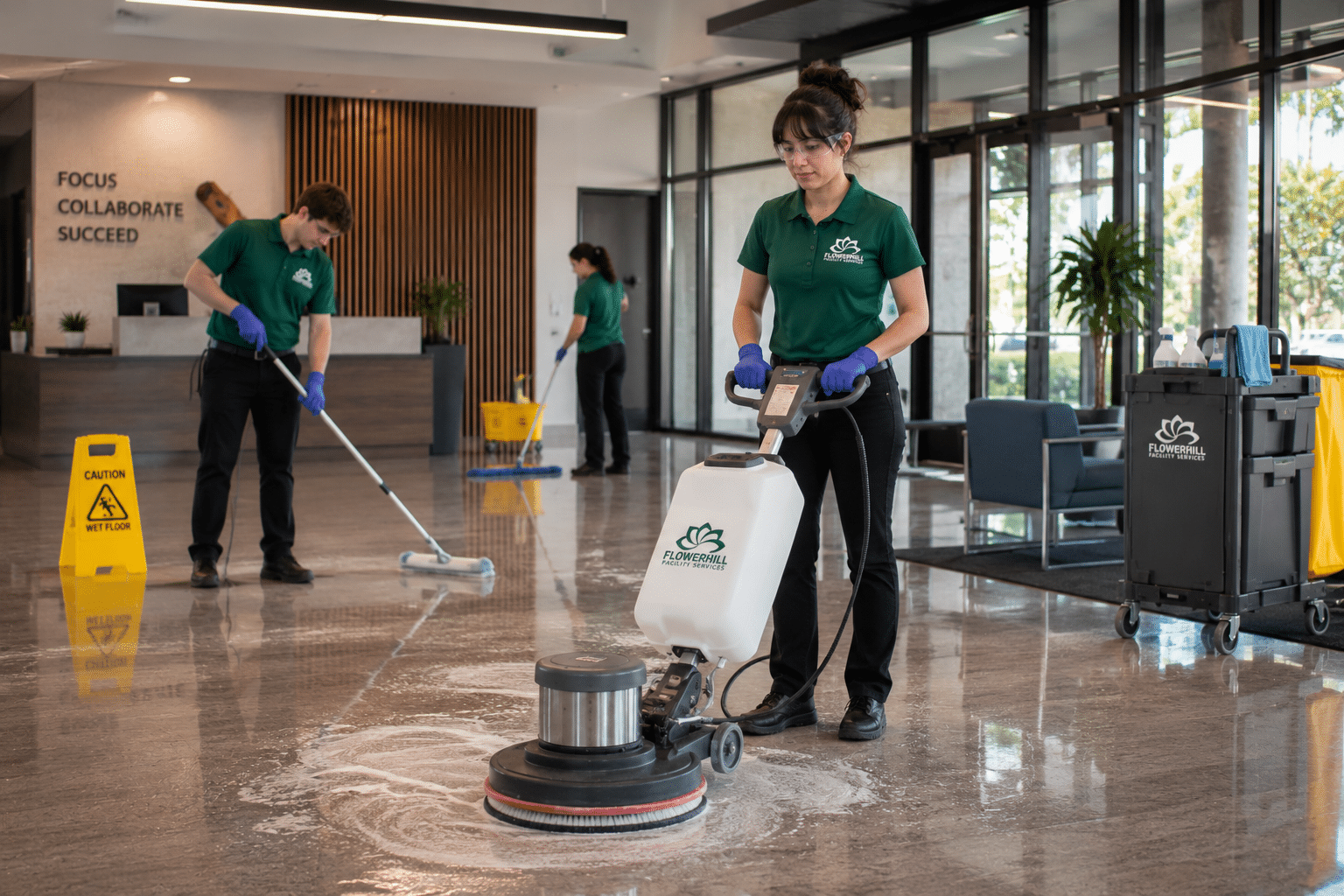
  • Machine scrubbing
  • Burnishing approved floors
  • Stripping and refinishing applicable surfaces
  • Entry-mat maintenance
  • Approved gym-floor care
  • Care for residence-hall and classroom flooring

FlowerHill evaluates the flooring material, age, finish, manufacturer guidance, traffic, and academic schedule before recommending a maintenance method.

Waste and Recycling Support

Schools and universities may generate large volumes of classroom waste, food waste, packaging, paper, and recyclable materials.

Approved waste services may include:

  • Classroom waste collection
  • Office and administrative waste removal
  • Cafeteria waste support
  • Restroom waste removal
  • Residence-hall common-area collection
  • Event waste support
  • Recycling collection
  • Liner replacement
  • Cleaning residue around containers
  • Maintaining approved collection areas

The institution and FlowerHill should define waste-separation procedures, collection locations, food-waste responsibilities, hazardous-material exclusions, and final-disposal responsibilities.

Security and Student-Safety Procedures

Educational cleaning requires careful coordination because personnel may work around students, minors, faculty, residential areas, confidential records, and secured facilities.

Before service begins, FlowerHill works with designated campus contacts to define:

  • Approved personnel and screening requirements
  • Keys, badges, and credential procedures
  • Visitor and contractor check-in
  • Authorized service times
  • Restricted classrooms and offices
  • Student-occupied areas
  • Residence-hall access
  • Escort requirements
  • Photography and mobile-device policies
  • Emergency and lockdown procedures
  • Incident-reporting expectations
  • Confidentiality requirements

The approved scope should clearly identify which spaces can be serviced independently, which require supervision, and which are excluded.

Facility Maintenance Support

FlowerHill may combine recurring cleaning with approved facility-support services for educational properties.

Depending on the agreement, support may include:

  • Routine visual facility inspections
  • Accessible light replacement
  • Approved ceiling-tile replacement
  • Minor wall and paint touch-ups
  • Door and hardware observations
  • Furniture adjustments and room setups
  • Restroom and breakroom fixture reporting
  • Exterior entrance and litter upkeep
  • Work-order documentation
  • Coordination with qualified specialty contractors

Electrical, plumbing, HVAC, fire-safety, elevator, security, laboratory, structural, playground, hazardous-material, and licensed trade work requires appropriately qualified personnel.

Educational Cleaning Programs Built Around Your Campus

No two schools or universities operate the same way.

A small private school may need daily classroom and restroom service. A large university may require coordinated cleaning across academic buildings, residence halls, athletic facilities, libraries, dining areas, student centers, and administrative offices.

Before proposing a cleaning program, FlowerHill evaluates:

  • Total cleanable square footage
  • Number of buildings and floors
  • Student, faculty, and staff population
  • Academic and operating schedules
  • Classroom and laboratory usage
  • Number of restrooms
  • Cafeteria and food-service activity
  • Athletic and event schedules
  • Residence-hall responsibilities
  • Flooring materials
  • Security and access requirements
  • Day porter needs
  • Summer and break-period projects
  • Waste and recycling procedures
  • Existing custodial personnel
  • Current facility condition

The result is a clearly defined program aligned with the institution’s calendar, facility standards, operating priorities, and budget.

Educational Facilities We Serve

Public and Independent Schools

Customized cleaning for classrooms, offices, restrooms, cafeterias, libraries, athletic spaces, and common areas.

Private and Parochial Schools

Recurring cleaning programs coordinated around academic schedules, religious activities, events, childcare programs, and campus operations.

Charter Schools

Flexible cleaning support for individual campuses, expanding programs, shared facilities, and specialized instructional environments.

Colleges and Universities

Scalable programs for academic buildings, student centers, administrative offices, libraries, dining areas, residence-hall common spaces, and athletic facilities.

Community Colleges

Cleaning coordinated around daytime, evening, technical, continuing-education, and workforce-development programs.

Trade and Technical Schools

Customized cleaning for classrooms, offices, restrooms, student areas, and approved vocational training environments.

Early Learning and Childcare Campuses

Carefully defined cleaning programs for classrooms, play areas, restrooms, administrative spaces, and approved childcare surfaces.

Specialty and Performing-Arts Schools

Cleaning support for classrooms, studios, theaters, rehearsal areas, galleries, offices, restrooms, and event spaces.

Educational Administration Buildings

Professional office cleaning for district offices, admissions centers, support-service buildings, training facilities, and administrative campuses.

Why DFW Educational Facilities Trust FlowerHill

Customized Campus Cleaning Plans

Each program is built around the institution’s buildings, schedule, population, operating needs, and cleaning priorities.

Flexible Academic Scheduling

Service can be coordinated during the day, after classes, overnight, on weekends, during breaks, or around approved events.

Clearly Defined Responsibilities

The approved scope identifies which areas are included, what tasks are performed, and how frequently service occurs.

Responsive Communication

Campus contacts have an established process for reporting concerns, coordinating schedule changes, requesting projects, and reviewing service performance.

Scalable Service

Programs can support individual schools, multi-building campuses, universities, administrative properties, and expanding educational organizations.

Coordinated Janitorial and Porter Support

FlowerHill can combine after-hours cleaning with daytime restroom checks, cafeteria upkeep, event coverage, and common-area support.

Local, Woman-Owned Leadership

As a woman-owned North Texas company, FlowerHill combines local accountability with the service structure needed to support active educational facilities throughout Dallas-Fort Worth.

Our School and University Cleaning Process

1. Campus Walkthrough

We tour approved buildings, review how each area is used, discuss current concerns, and identify cleaning priorities.

2. Operational Assessment

FlowerHill evaluates enrollment, staffing, academic schedules, restrooms, cafeterias, floors, events, athletics, security procedures, and existing custodial resources.

3. Customized Scope of Work

We develop a proposed plan organized by building, floor, room type, task, frequency, schedule, staffing, exclusions, and pricing.

4. Access and Safety Coordination

Our team reviews badges, keys, alarms, student-occupied areas, restricted rooms, chemical requirements, emergency procedures, and communication expectations.

5. Staffing and Service Preparation

Personnel, supplies, equipment, cleaning routes, storage areas, inspection procedures, and facility-specific instructions are coordinated before service begins.

6. Scheduled Cleaning and Porter Service

FlowerHill personnel complete authorized tasks according to the documented scope and agreed academic schedule.

7. Quality Review and Reporting

Completed work, recurring concerns, facility observations, special requests, and recommended adjustments can be reviewed with designated campus contacts.

8. Program Adjustments

The plan can be refined as enrollment changes, rooms are reassigned, new programs begin, events increase, or academic schedules evolve.

How Often Should a School or University Be Cleaned?

The appropriate frequency depends on enrollment, building size, daily traffic, operating hours, restroom usage, dining activity, athletic schedules, and facility expectations.

Most active schools require daily attention to classrooms, restrooms, entrances, cafeterias, and common areas. High-use restrooms, dining spaces, and student centers may require inspections or service several times during the day.

Lower-use offices, storage rooms, or selected instructional spaces may follow a less frequent schedule. Floor refinishing, carpet extraction, high dusting, and deep cleaning may be completed periodically or during academic breaks.

An on-site walkthrough allows FlowerHill to recommend frequencies based on actual campus usage.

What Determines School and University Cleaning Pricing?

Educational cleaning pricing is based on the labor, supervision, equipment, supplies, access requirements, and frequency needed to complete the approved scope.

Pricing factors may include:

  • Total cleanable square footage
  • Number of buildings and floors
  • Student and staff population
  • Cleaning frequency
  • Day porter hours
  • Number of classrooms and restrooms
  • Cafeteria and dining responsibilities
  • Athletic and locker-room areas
  • Residence-hall common spaces
  • Flooring materials and condition
  • Evening and weekend schedules
  • Security screening and onboarding
  • Consumable-restocking responsibilities
  • Event-support requirements
  • Summer and break-period projects
  • Existing custodial resources
  • Current facility condition

A comprehensive walkthrough is the most reliable way to establish staffing, responsibilities, and an accurate service proposal.

School and University Cleaning Service Areas

FlowerHill Facility Services supports educational facilities throughout Fort Worth, Dallas, North Richland Hills, Bedford, Hurst, Colleyville, Grapevine, Southlake, Keller, Roanoke, Alliance, Arlington, Irving, Coppell, Carrollton, Flower Mound, Frisco, Plano, Denton, Grand Prairie, The Colony, Westlake, McKinney, Richardson, Addison, and surrounding North Texas communities.

Frequently Asked Questions

What does professional school cleaning include?

School cleaning may include classrooms, offices, restrooms, cafeterias, libraries, gymnasiums, locker rooms, hallways, common areas, floors, interior glass, waste removal, and other approved spaces identified in the scope of work.

Can FlowerHill clean after classes or overnight?

Yes. Cleaning can be coordinated during the day, after dismissal, in the evening, overnight, on weekends, during breaks, or around another approved service window.

Do you provide daytime school porter services?

Yes. A day porter can monitor restrooms, maintain cafeterias and common areas, remove waste, respond to routine non-hazardous spills, and support approved daytime needs.

Do you disinfect classrooms every day?

Routine cleaning and disinfection are different processes. Regular cleaning forms the foundation of the program. Targeted disinfection may be added for approved surfaces when illness or another campus-specific situation warrants it.

Can you clean school cafeterias?

General dining-area cleaning may be included. Food preparation, dishwashing, cooking equipment, commercial hoods, grease systems, and regulated food-contact sanitation should be evaluated separately.

Can FlowerHill clean science laboratories?

Approved general floors and nontechnical surfaces may be included. Chemicals, experiments, biological materials, sharps, technical equipment, and regulated waste require institution-specific procedures and qualified personnel.

Do you clean gyms and locker rooms?

Yes. Approved gym floors, bleachers, entrances, locker-room floors, showers, restrooms, benches, and common areas may be included using procedures appropriate for the surfaces.

Can you provide summer deep cleaning?

Yes. Summer and break-period projects may include classroom detail cleaning, carpet extraction, floor refinishing, restroom deep cleaning, high dusting, interior glass, and preparation for the next term.

Can you clean university residence halls?

Residence-hall common areas such as lobbies, corridors, lounges, study rooms, shared kitchens, laundry rooms, and common restrooms may be included. Student-room and turnover responsibilities must be separately defined.

How do you handle security around students?

Access, personnel screening, badges, restricted areas, service hours, escort requirements, emergency procedures, and student-occupied spaces are reviewed with designated campus contacts before service begins.

Do you handle bodily fluids or medical waste?

Routine cleaning does not automatically include biohazard response, bodily-fluid cleanup, sharps, medical waste, or contaminated materials. Those conditions require separately defined procedures and appropriately trained personnel.

Can FlowerHill work alongside an existing custodial department?

Yes. FlowerHill can supplement internal teams with evening cleaning, daytime porter coverage, floor projects, event support, summer cleaning, or service for selected buildings.

How do we receive an educational facility cleaning proposal?

Begin by requesting an on-site campus walkthrough. FlowerHill will review the buildings, academic schedule, student population, service areas, access requirements, cleaning priorities, and existing custodial resources before preparing a customized proposal.

Create a Cleaner Environment for Learning and Campus Life

Your educational facility should support learning, teaching, collaboration, athletics, and student life without inconsistent cleaning becoming another operational distraction.

FlowerHill Facility Services develops customized janitorial, day porter, floor-care, summer-cleaning, event-support, and facility-maintenance programs for schools and universities throughout Dallas-Fort Worth.

Request a campus walkthrough to discuss your buildings, academic calendar, student population, cleaning priorities, security procedures, and ongoing facility needs.