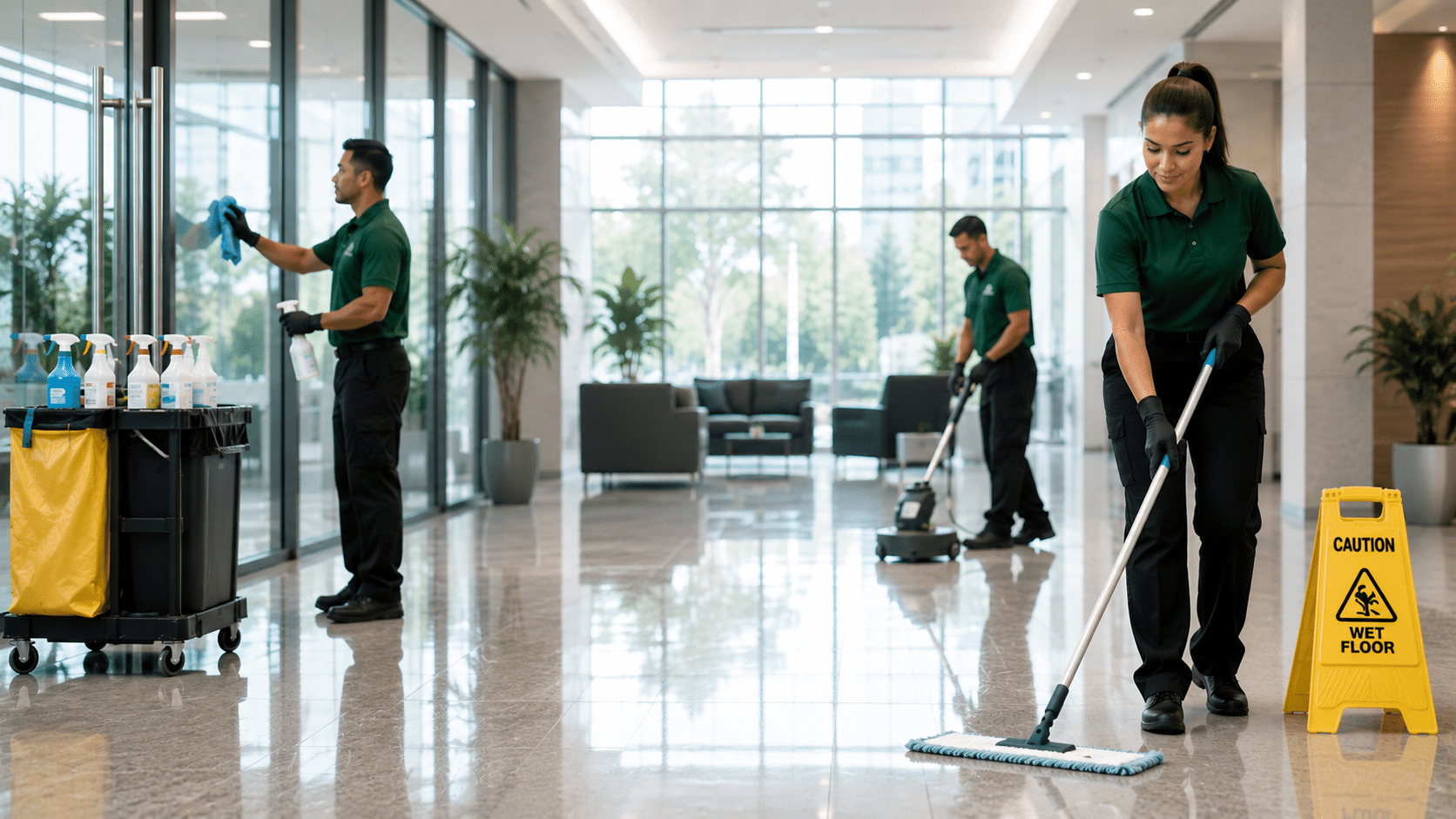
Data Center Cleaning Services in Dallas-Fort Worth
FlowerHill Offers Total Data Center Commercial Cleaning Support
We provide customized cleaning and facility-support programs for data centers, colocation facilities, server rooms, network operations centers, telecommunications spaces, disaster-recovery sites, edge-computing facilities, and other mission-critical technology environments throughout Dallas-Fort Worth.
Data centers require a more controlled approach than traditional commercial buildings. Dust, debris, inappropriate products, unsecured access, uncontrolled moisture, and poorly planned cleaning activity can create unnecessary risk around sensitive infrastructure and continuous operations.
FlowerHill develops each data center cleaning plan around the facility’s approved access procedures, security requirements, equipment layout, contamination-control standards, operating schedule, flooring systems, service-level expectations, and site-specific safety protocols.
Whether your facility needs recurring environmental cleaning, raised-floor surface care, support-space janitorial service, daytime porter coverage, post-construction detail cleaning, or scheduled deep cleaning, our team works within a clearly documented scope designed to protect uptime and minimize disruption.
What Is Data Center Cleaning?
Data center cleaning is the controlled removal of dust, debris, residue, and other contaminants from approved areas inside and around a mission-critical technology facility.
The service may cover data halls, raised-access floors, server-room aisles, network operations centers, staging rooms, offices, restrooms, corridors, loading areas, mechanical-support spaces, and other locations identified during the facility walkthrough.
Data center cleaning is not the same as routine office janitorial service. Personnel must follow stricter rules involving access, approved products, equipment placement, moisture control, static-sensitive environments, restricted surfaces, photography, tools, and interaction with live infrastructure.
Why Specialized Data Center Cleaning Matters
Technology facilities continuously move large volumes of air through cooling systems, equipment cabinets, floor openings, and ventilation pathways. Dust and loose debris that collect on floors, ledges, cable pathways, equipment exteriors, and surrounding spaces may be redistributed through this airflow.
A structured cleaning program helps facilities:
- Control visible dust and loose particulate buildup
- Maintain cleaner equipment-support environments
- Reduce contamination introduced through traffic and deliveries
- Support airflow pathways and raised-floor cleanliness
- Improve the presentation of customer and audit areas
- Prepare spaces for inspections and operational reviews
- Maintain offices, restrooms, breakrooms, and support areas
- Identify visible facility concerns for escalation
- Coordinate cleaning around critical operations
- Establish clear accountability and documentation
Cleaning does not replace equipment maintenance, environmental monitoring, cooling-system maintenance, filtration, corrosion assessment, or technical infrastructure management. It supports those programs by maintaining approved facility surfaces and surrounding spaces.
Data Center Areas We Clean
Data Halls and White-Space Environments
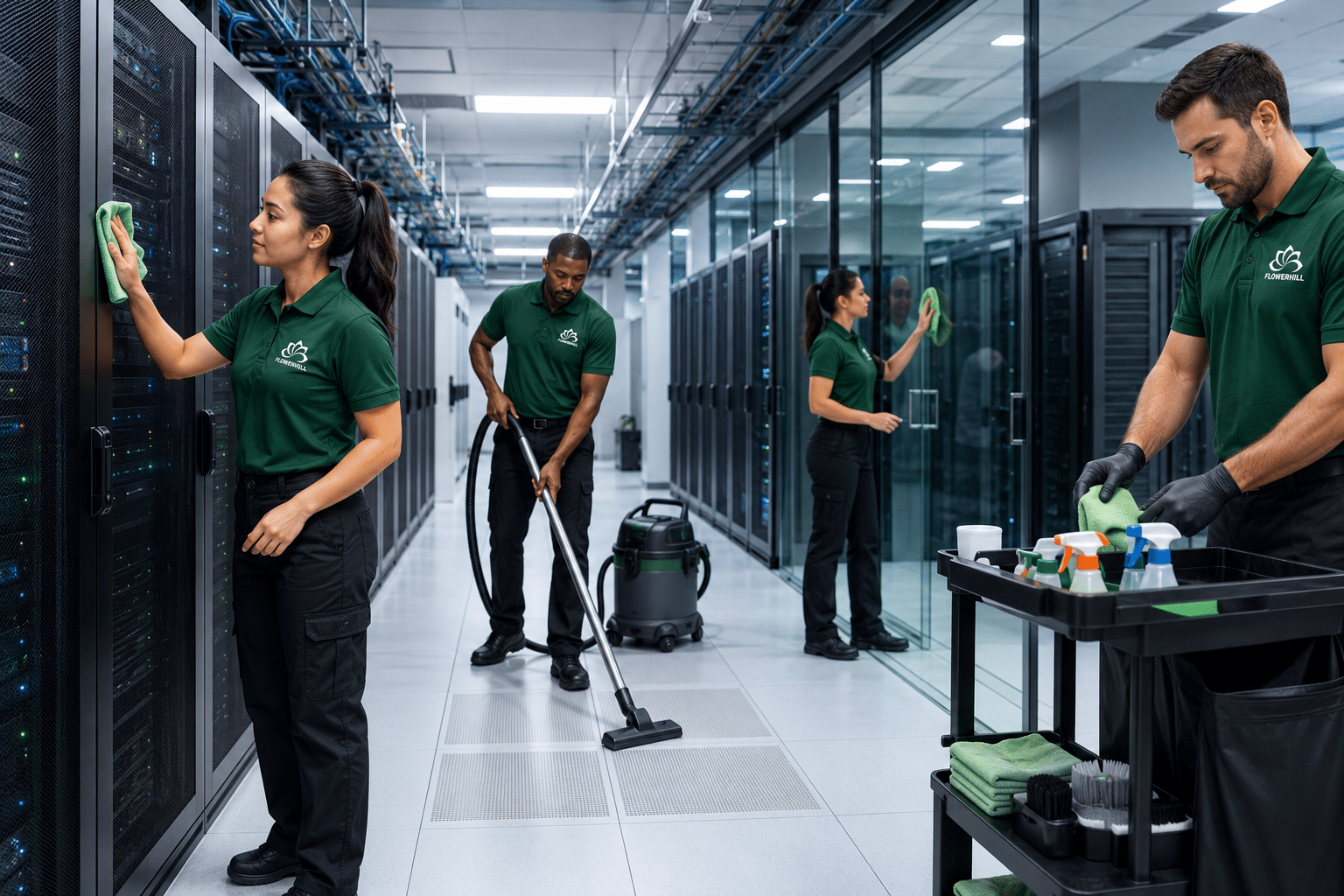
The data hall, sometimes called white space, contains active server cabinets, network equipment, storage systems, cabling, power-distribution components, cooling infrastructure, and other sensitive assets.
Approved white-space cleaning may include:
- Vacuuming or cleaning approved floor surfaces
- Removing visible loose debris
- Cleaning aisle pathways
- Cleaning approved exterior cabinet surfaces
- Cleaning accessible floor edges and perimeter areas
- Dusting approved non-equipment surfaces
- Cleaning doors, windows, and approved partitions
- Removing fingerprints from authorized surfaces
- Cleaning approved carts, benches, and work surfaces
- Reporting visible leaks, floor damage, or unusual debris
FlowerHill personnel should not open cabinets, disconnect cables, move equipment, operate controls, clean internal electronic components, or touch live infrastructure unless the work has been separately authorized and assigned to appropriately qualified personnel.
Raised-Access Floor Cleaning
Raised-access floors may support airflow, cabling, power distribution, and other infrastructure beneath the data hall. Their cleaning requires careful coordination with the facility team.
Approved raised-floor surface care may include:
- Vacuuming approved floor tiles
- Removing loose particulate and visible debris
- Cleaning accessible aisle edges
- Spot cleaning approved surfaces
- Cleaning around designated floor openings
- Reporting damaged, loose, or uneven tiles
- Documenting visible contamination concerns
- Coordinating work around equipment movement
Floor tiles should not be lifted, repositioned, or removed unless the procedure is specifically authorized, the personnel are properly trained, and the facility has approved the work plan.
Subfloor Cleaning
Dust and debris can accumulate below raised-access floors, particularly after construction, equipment installation, cabling projects, or facility modifications.
When separately approved, a subfloor cleaning project may involve:
- Controlled access to designated floor sections
- Removal of loose dust and debris
- Cleaning accessible structural surfaces
- Cleaning approved cable-support areas
- Removal of abandoned nontechnical debris when authorized
- Documentation of visible conditions
- Reporting damaged seals or floor components
- Coordination with facility, safety, and technology personnel
Subfloor work requires a detailed method of procedure because opening floor sections can affect airflow, access, cable pathways, floor stability, and nearby operations. It should not be treated as routine janitorial cleaning.
Server and Equipment Cabinet Exteriors
Exterior cabinet surfaces may collect dust, fingerprints, and debris over time. Cleaning methods must be approved before work occurs near active equipment.
Authorized exterior care may include:
- Cleaning approved cabinet doors and frames
- Removing fingerprints from exterior surfaces
- Cleaning approved handles
- Cleaning surrounding floor areas
- Cleaning approved blanking panels or external surfaces
- Removing visible debris near cabinet bases
- Reporting unusual residue or visible equipment concerns
Liquids should never be sprayed directly onto cabinets, vents, controls, displays, cable connections, or electronic equipment. Cleaning products should be applied and used only according to the facility’s approved procedure.
Hot Aisles and Cold Aisles
Hot-aisle and cold-aisle configurations support controlled airflow through mission-critical equipment. Cleaning personnel must understand where they can work, where tools may be placed, and how to avoid obstructing airflow or access.
Approved aisle cleaning may include:
- Vacuuming or cleaning designated floor surfaces
- Removing loose debris
- Cleaning approved containment doors
- Cleaning accessible exterior surfaces
- Maintaining clear walking paths
- Reporting loose floor components or obstructions
- Reporting visible residue or contamination
Cleaning equipment, carts, cords, containers, and tools should never block cooling pathways, emergency access, cabinet doors, or designated egress routes.
Network Operations Centers
Network operations centers and monitoring rooms combine technology infrastructure with occupied office environments that may operate continuously.
NOC cleaning may include:
- Vacuuming and approved floor cleaning
- Trash and recycling removal
- Cleaning approved desks and work surfaces
- Cleaning doors and interior glass
- Cleaning break areas and shared surfaces
- Maintaining operator seating areas
- Cleaning approved high-touch surfaces
- Reporting visible facility concerns
Monitors, control panels, keyboards, communications equipment, documents, and personal workstations should only be handled according to site-specific instructions.
Meet-Me Rooms and Telecommunications Spaces
Meet-me rooms, carrier rooms, network rooms, and telecommunications closets contain high concentrations of cabling and equipment connections.
Approved cleaning may include:
- Cleaning designated floor areas
- Removing visible loose debris
- Cleaning approved doors and partitions
- Dusting approved nontechnical surfaces
- Maintaining clear access paths
- Reporting visible water, damage, or contamination concerns
Cables, patch panels, ports, racks, controls, and provider-owned equipment should not be moved, disconnected, reorganized, or cleaned without explicit authorization.
Equipment Staging and Build Rooms
Staging areas may receive new servers, racks, parts, tools, packaging, and installation teams. These activities can introduce cardboard fibers, dust, foam, plastic, and shipping debris.
Staging-area cleaning may include:
- Removing approved packaging waste
- Vacuuming or cleaning floors
- Cleaning workbenches and approved surfaces
- Maintaining clear pathways
- Removing loose debris after installations
- Cleaning designated storage areas
- Reporting improperly stored materials
- Preparing the space for upcoming deployment work
Whenever possible, equipment should be unpacked in an approved staging area rather than directly inside critical data halls.
Battery, UPS, and Power-Support Areas
UPS rooms, battery rooms, switchgear areas, generator-support spaces, and electrical rooms require strict access and safety controls.
FlowerHill may clean approved surrounding surfaces only when the work has been specifically reviewed and authorized.
Possible tasks may include:
- Cleaning designated floors and access paths
- Removing approved loose debris
- Cleaning doors and approved nontechnical surfaces
- Maintaining clear walkways
- Reporting visible leaks, corrosion, damage, or residue
Personnel should not perform electrical maintenance, battery handling, spill remediation, energized-system cleaning, equipment servicing, or technical work unless separately qualified and authorized.
Mechanical and Cooling-Support Spaces
Data centers rely on cooling and mechanical infrastructure that may be located in dedicated support rooms, corridors, equipment yards, or rooftop environments.
Approved surrounding-area cleaning may include:
- Floor and walkway cleaning
- Loose debris removal
- Exterior housekeeping around approved equipment
- Cleaning access doors and approved surfaces
- Reporting visible moisture or damage
- Maintaining designated access paths
FlowerHill’s cleaning personnel should not service cooling units, replace technical filters, open equipment, adjust controls, or perform mechanical maintenance unless that work is separately authorized and assigned to qualified personnel.
Loading Docks and Receiving Areas
Deliveries, equipment movement, pallets, packaging, carts, and outdoor traffic can introduce significant debris into a data center property.
Loading and receiving support may include:
- Sweeping designated dock areas
- Removing loose debris
- Collecting approved packaging waste
- Cleaning pedestrian pathways
- Maintaining interior entry zones
- Cleaning approved waste stations
- Reporting damaged doors or flooring
- Supporting post-delivery cleanup
Security Lobbies and Visitor Areas
Data center entrances must reflect the professionalism and control expected inside the facility.
Cleaning may include:
- Cleaning entrance glass and doors
- Vacuuming carpet and mats
- Sweeping and mopping hard floors
- Cleaning approved reception surfaces
- Maintaining visitor seating
- Removing waste and recycling
- Cleaning approved high-touch surfaces
- Maintaining screening and waiting areas
Administrative Offices and Conference Rooms
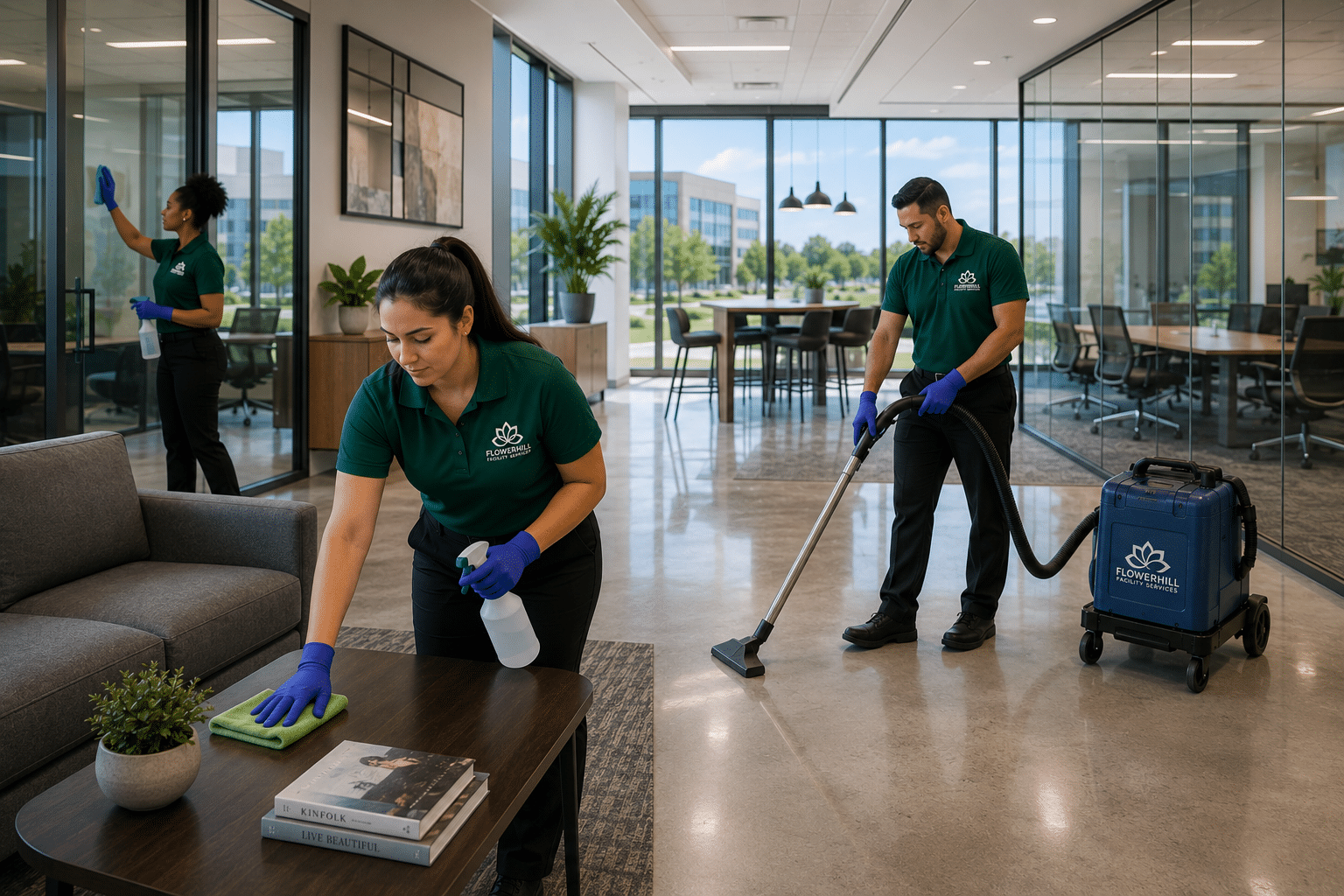
Most data centers also include offices, meeting rooms, command spaces, training rooms, and employee work areas requiring professional commercial cleaning.
Service may include:
- Accessible surface dusting
- Trash and recycling removal
- Carpet vacuuming
- Hard-floor cleaning
- Conference-room resets
- Interior glass cleaning
- Breakroom and restroom care
- Cleaning approved high-touch surfaces
Employee Breakrooms and Restrooms
Employee support areas can usually follow a commercial janitorial program separate from the more controlled procedures used inside critical technology spaces.
Services may include:
- Cleaning restrooms and fixtures
- Restocking approved consumables
- Cleaning breakroom counters and tables
- Cleaning sinks and exterior appliance surfaces
- Removing trash and recycling
- Sweeping and mopping floors
- Cleaning approved shared touchpoints
- Monitoring odor and presentation
Contamination-Control Cleaning
Contamination-control cleaning focuses on reducing dust, fibers, residue, and loose debris within approved data center environments.
A customized program may incorporate:
- Facility-approved vacuum equipment
- Approved low-lint or microfiber materials
- Controlled product application
- Minimal-moisture cleaning methods
- Dedicated tools for critical spaces
- Color-coded cloths and equipment
- Controlled cart placement
- Documented cleaning routes
- Tool and supply accountability
- Post-service area inspections
FlowerHill should only advertise HEPA-filtered, ESD-safe, antistatic, cleanroom-rated, or data-center-certified equipment and procedures when the company can verify the exact specifications, training, and documentation supporting those claims.
Data Center Cleaning After Construction or Renovation
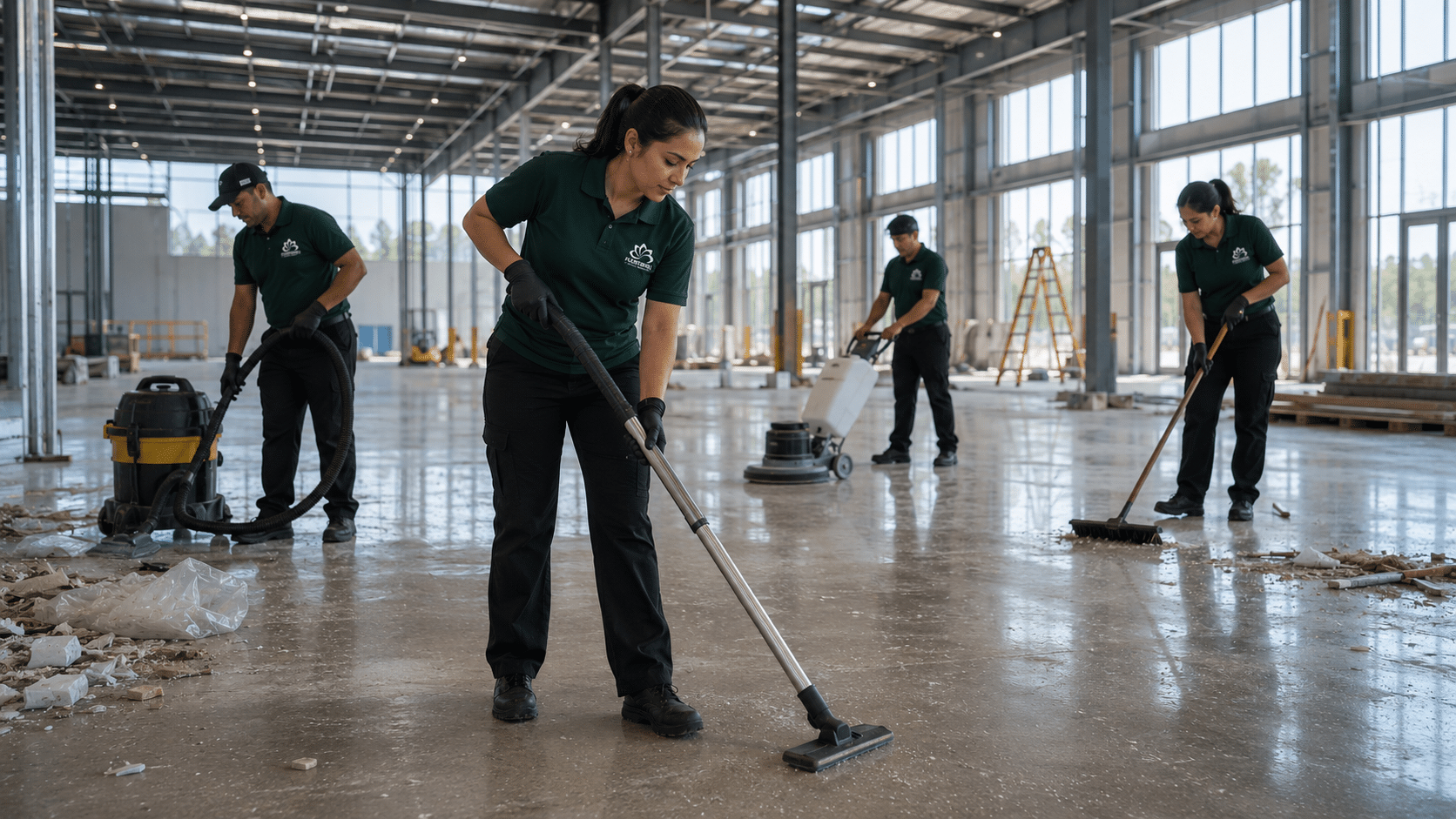
Construction, drilling, cable installation, equipment deployment, drywall work, flooring modifications, and infrastructure upgrades can introduce large amounts of dust and debris.
Post-construction data center cleaning may include:
- Removal of approved construction debris
- Detailed floor cleaning
- Cleaning ledges and approved horizontal surfaces
- Cleaning doors, frames, and partitions
- Cleaning approved cabinet exteriors
- Cleaning staging and access routes
- Cleaning raised-floor surfaces
- Controlled subfloor cleaning when authorized
- Removal of packaging residue
- Final inspection support
Post-construction cleaning should be planned before equipment is commissioned whenever possible. Work performed around active infrastructure requires additional controls, approvals, and coordination.
Cleaning During Equipment Installation and Decommissioning
Rack installation, equipment replacement, cabling changes, hardware refreshes, and decommissioning projects may disturb settled dust and generate packaging debris.
FlowerHill can provide approved support such as:
- Cleaning staging areas before deployment
- Removing approved packaging waste
- Cleaning access routes
- Maintaining floors around installation teams
- Cleaning approved areas after equipment movement
- Removing loose debris following cabling work
- Supporting final project-area cleanup
- Documenting visible conditions
FlowerHill cleaning personnel should not install, disconnect, relocate, sanitize, erase, dispose of, or decommission data-bearing equipment unless those activities are separately contracted and assigned to qualified technology or asset-disposition professionals.
Security and Controlled Access
Data centers often maintain strict physical-security procedures because of the critical systems, customer information, equipment, and operational risks present inside the facility.
Before cleaning begins, FlowerHill works with the designated facility contact to define:
- Approved personnel and access lists
- Background-screening requirements
- Badge, key, and credential procedures
- Visitor and contractor check-in
- Escort requirements
- Restricted rooms and cages
- Photography and mobile-device policies
- Tool and supply accountability
- Entry and exit procedures
- Delivery and loading-dock access
- Emergency communication procedures
- Incident-reporting expectations
The scope should identify which spaces can be accessed independently, which require an escort, which require advance authorization, and which are excluded entirely.
Cleaning Around Continuous Operations
Many data centers operate continuously and cannot pause normal operations for routine cleaning.
FlowerHill can develop service schedules around:
- Approved maintenance windows
- Low-traffic operating periods
- Daytime or overnight shifts
- Customer-access schedules
- Equipment deployment projects
- Construction activity
- Audit and inspection dates
- Facility change-control procedures
- Restricted cleaning zones
- Phased work areas
Services can be divided by room, aisle, cage, building, floor, or operational zone to limit disruption and maintain clear accountability.
Method of Procedure and Change-Control Support
Some data centers require a written method of procedure before work is performed inside controlled or mission-critical spaces.
A cleaning method of procedure may document:
- Authorized work areas
- Cleaning sequence
- Approved personnel
- Scheduled start and completion times
- Required supervision
- Approved tools and products
- Personal protective equipment
- Equipment and cart placement
- Access restrictions
- Stop-work conditions
- Escalation procedures
- Incident-response contacts
- Final inspection requirements
FlowerHill can align its service documentation with the client’s existing work-order, change-management, security, or facility-management process.
Day Porter Services for Data Centers
Large data center campuses may benefit from dedicated daytime personnel who maintain support spaces and respond to approved facility needs while the site remains active.
A data center day porter may assist with:
- Security-lobby presentation
- Restroom monitoring and restocking
- Breakroom and employee-area upkeep
- Waste and recycling removal
- Loading and receiving-area support
- Routine non-hazardous spill response
- Conference-room resets
- Interior glass care
- Maintaining approved corridors and common areas
- Reporting visible facility concerns
Porter duties inside critical technology areas should be separately defined and governed by the facility’s access and operating procedures.
Data Center Facility Maintenance Support
FlowerHill may combine environmental cleaning with approved facility-support services outside technical infrastructure.
Depending on the agreement, support may include:
- Routine visual facility inspections
- Accessible lighting observations
- Approved ceiling-tile replacement in noncritical spaces
- Minor wall and paint touch-ups
- Door and hardware observations
- Furniture and meeting-room support
- Exterior entrance and litter upkeep
- Work-order documentation
- Reporting visible leaks or damage
- Coordinating qualified specialty contractors
Electrical systems, cooling infrastructure, batteries, generators, UPS equipment, fire-suppression systems, security systems, network equipment, cabling, servers, storage systems, and other technical assets require qualified specialists.
Data Center Cleaning Programs Built Around Your Facility
No two data centers share the same physical design, customer requirements, access structure, operating model, or risk profile.
Before proposing a service plan, FlowerHill evaluates factors such as:
- Total cleanable square footage
- Number of data halls and support rooms
- Raised-floor configuration
- Equipment density
- Flooring materials
- Operating and maintenance windows
- Security and escort requirements
- Customer cages and restricted areas
- Required cleaning frequency
- Construction and deployment activity
- Staging and receiving operations
- Approved products and equipment
- Documentation and reporting requirements
- Day porter needs
- Office and employee-support areas
- Current contamination and facility conditions
The result is a clearly documented plan aligned with the facility’s standards, schedule, security program, operational priorities, and service expectations.
Technology Facilities We Serve
Enterprise Data Centers
Customized environmental cleaning for company-owned data centers supporting internal technology, applications, storage, networks, and critical business operations.
Colocation Data Centers
Coordinated service for shared facilities containing multiple customer cages, secure suites, meet-me rooms, support spaces, and public-facing environments.
Hyperscale and Large Data Center Campuses
Scalable programs for multiple data halls, buildings, support spaces, loading operations, administrative offices, and large technical campuses.
Edge Data Centers
Cleaning support for smaller distributed technology facilities serving localized computing, network, storage, and telecommunications requirements.
Telecommunications Facilities
Approved cleaning for network rooms, switching facilities, communications spaces, support areas, offices, and other controlled environments.
Disaster-Recovery and Business-Continuity Sites
Cleaning programs for backup operations centers, alternate work locations, recovery infrastructure, server rooms, and supporting office spaces.
Server Rooms and Network Closets
Customized cleaning for smaller technology environments located within corporate offices, medical buildings, schools, industrial properties, and other commercial facilities.
AI and High-Density Computing Facilities
Controlled cleaning support for facilities containing high-density racks, advanced cooling infrastructure, specialized compute systems, and restricted technical environments.
What Data Center Cleaning Does Not Include
Environmental cleaning should not be confused with technical infrastructure maintenance.
Unless separately authorized and performed by qualified personnel, FlowerHill cleaning services do not include:
- Opening or internally cleaning servers
- Disconnecting or reconnecting cables
- Moving live racks or equipment
- Operating server or network controls
- Electrical maintenance
- Battery handling or battery-spill remediation
- UPS or generator service
- Cooling-equipment maintenance
- Fire-suppression system service
- Network installation or cable management
- Data-bearing device sanitization
- Electronic asset disposition
- Hazardous-material remediation
- Technical equipment repair
Clear service boundaries protect the facility, the equipment, the cleaning personnel, and the client’s operational responsibilities.
Why DFW Data Centers Trust FlowerHill Facility Services
Customized Site Procedures
Every cleaning program is built around the facility’s approved access rules, equipment layout, security requirements, contamination-control expectations, and operating schedule.
Controlled Cleaning Methods
Products, tools, work routes, equipment placement, and cleaning methods are identified before service begins inside critical spaces.
Respect for Mission-Critical Operations
Cleaning is coordinated around active equipment, restricted environments, approved work windows, and operational priorities.
Clearly Defined Service Boundaries
The scope identifies which surfaces can be cleaned, which areas require supervision, and which technical tasks remain the responsibility of qualified specialists.
Documented Communication
Facility contacts have an established process for approving work, reporting concerns, coordinating access, reviewing completed tasks, and adjusting service requirements.
Scalable Facility Support
FlowerHill can support individual server rooms, colocation facilities, enterprise data centers, large campuses, employee spaces, offices, and support buildings.
Local, Woman-Owned Leadership
As a woman-owned North Texas company, FlowerHill combines local accountability with the service structure needed to support controlled commercial environments throughout Dallas-Fort Worth.
Our Data Center Cleaning Process
1. Controlled Facility Walkthrough
We tour approved portions of the facility with the designated client representative, review the site layout, and identify service priorities, restricted areas, and operational concerns.
2. Risk and Access Assessment
FlowerHill reviews security requirements, escorts, work windows, equipment proximity, raised floors, approved products, safety procedures, and documentation requirements.
3. Customized Scope of Work
We develop a proposed plan defining the rooms, surfaces, tasks, frequency, staffing, equipment, exclusions, reporting process, and pricing.
4. Method and Procedure Approval
When required, the cleaning method, tools, route, schedule, stop-work conditions, and escalation procedures are documented for client approval.
5. Personnel Orientation
Assigned personnel are oriented to access rules, security procedures, restricted equipment, approved products, emergency contacts, and site-specific expectations.
6. Scheduled Cleaning Service
FlowerHill completes authorized tasks within the agreed work areas and service window.
7. Inspection and Documentation
Completed work, visible concerns, exceptions, and recommended follow-up items may be documented and communicated to the designated facility contact.
8. Program Review
The cleaning plan can be adjusted as equipment density, floor layouts, construction activity, access procedures, occupancy, or operational priorities change.
How Often Should a Data Center Be Cleaned?
Cleaning frequency depends on the facility’s design, traffic, equipment activity, construction history, flooring, filtration, outdoor environment, shipping volume, security rules, and contamination-control requirements.
Administrative offices, restrooms, breakrooms, and security lobbies may require daily or several-times-per-week service. Data halls may follow a different weekly, monthly, quarterly, semiannual, or project-based schedule established by the facility team.
Raised-floor and subfloor cleaning may be performed periodically, after construction, after major equipment changes, or when inspection results indicate a need.
A controlled walkthrough allows FlowerHill to recommend a practical schedule without applying the same frequency to every room.
What Determines Data Center Cleaning Pricing?
Data center cleaning pricing is based on the labor, supervision, equipment, supplies, access controls, documentation, and service frequency required to complete the approved scope safely and correctly.
Pricing factors may include:
- Total cleanable square footage
- Number of data halls and support rooms
- Raised-floor and subfloor requirements
- Cleaning frequency
- Required equipment and materials
- Security screening and onboarding
- Escort requirements
- Daytime versus overnight service
- Maintenance-window limitations
- Equipment density and aisle configuration
- Customer cages and controlled areas
- Post-construction cleaning needs
- Documentation and reporting requirements
- Office, restroom, and breakroom coverage
- Day porter staffing
- Current facility condition
An on-site assessment is the most reliable way to define the scope and prepare an accurate data center cleaning proposal.
Data Center Cleaning Service Areas Across Dallas-Fort Worth
FlowerHill Facility Services supports data centers and technology facilities throughout Fort Worth, Dallas, North Richland Hills, Bedford, Hurst, Colleyville, Grapevine, Southlake, Keller, Roanoke, Alliance, Arlington, Irving, Coppell, Carrollton, Flower Mound, Frisco, Plano, Denton, Grand Prairie, The Colony, Westlake, McKinney, Richardson, Addison, and surrounding North Texas communities.
Frequently Asked Questions
What does professional data center cleaning include?
Data center cleaning may include approved data-hall floors, raised-floor surfaces, cabinet exteriors, aisles, staging rooms, network operations centers, offices, security lobbies, restrooms, breakrooms, loading areas, and other authorized spaces. The exact responsibilities are documented in the scope of work.
Can FlowerHill clean around live servers?
Cleaning may be performed in active data halls when the work has been specifically approved and appropriate access, product, equipment, supervision, and safety procedures are in place. Cleaning personnel should not open, disconnect, move, or service live equipment.
Do you clean server cabinets?
Approved exterior cabinet surfaces may be cleaned according to the facility’s documented procedure. Internal equipment cleaning, cable handling, component cleaning, and technical maintenance are not routine janitorial services.
Can you clean raised-access floors?
Yes. Approved raised-floor surface cleaning may be included. Tile lifting and subfloor access require separate authorization, training, planning, and coordination.
Do you provide subfloor cleaning?
Controlled subfloor cleaning may be available as a separately planned project. The work requires a defined method, approved floor-access procedures, airflow consideration, supervision, and careful coordination around cabling and infrastructure.
What cleaning products are used inside data centers?
Products and tools should be selected according to the facility’s approved procedure, equipment environment, surfaces, safety requirements, and contamination-control standards. No product should be sprayed directly onto electronic equipment.
Do you use HEPA-filtered or ESD-safe equipment?
Equipment specifications should be established during the walkthrough. FlowerHill should confirm the exact filtration, electrical, static-control, and manufacturer specifications of any equipment before representing it as HEPA-filtered, ESD-safe, antistatic, or cleanroom-rated.
Can cleaning be performed during a maintenance window?
Yes. Service can be coordinated around approved maintenance windows, overnight periods, phased work zones, construction schedules, or another authorized service period.
Can cleaning personnel work inside secure customer cages?
Customer cages and restricted suites may be included only when appropriate access, authorization, escort, documentation, and scope requirements have been established.
Can FlowerHill clean our offices and employee areas too?
Yes. One coordinated plan can cover controlled technical areas along with offices, conference rooms, security lobbies, restrooms, breakrooms, corridors, loading areas, and other approved support spaces.
Do you provide post-construction data center cleaning?
Post-construction cleaning may include floors, staging areas, access routes, approved surfaces, raised-floor areas, packaging debris, and controlled detail cleaning. The scope depends on whether equipment is already installed or operational.
Does FlowerHill provide technical server maintenance?
No. Environmental cleaning does not include server repair, internal equipment cleaning, network maintenance, electrical work, cooling-system maintenance, cable management, or data-device sanitization unless separately performed by appropriately qualified specialists.
How do we receive a data center cleaning proposal?
Begin by requesting a controlled facility walkthrough. FlowerHill will review the approved service areas, access procedures, operational schedule, cleaning requirements, risks, exclusions, and documentation expectations before preparing a customized proposal.
Protect the Environment Supporting Your Critical Infrastructure
Your data center needs a cleaning program built around controlled access, documented procedures, contamination awareness, and continuous operations.
FlowerHill Facility Services develops customized environmental-cleaning, janitorial, day porter, post-construction, and facility-support programs for data centers and technology facilities throughout Dallas-Fort Worth.
Request a controlled facility walkthrough to discuss your data halls, raised floors, support spaces, access requirements, operating schedule, and cleaning priorities.