DALLAS - FORT WORTH'S PREFERRED COMMERCIAL CLEANING COMPANY

porter Services

Day Porter Services in Dallas-Fort Worth

FlowerHill Facility Services provides professional day porter services for office buildings, corporate campuses, medical offices, warehouses, industrial facilities, retail centers, schools, churches, mixed-use developments, and other commercial properties throughout Dallas-Fort Worth.

Even a thoroughly cleaned building can develop new cleaning and presentation needs shortly after the workday begins. Restrooms run low on supplies, entrances collect tracked-in soil, breakrooms become untidy, waste containers fill, spills occur, and high-traffic common areas require additional attention.

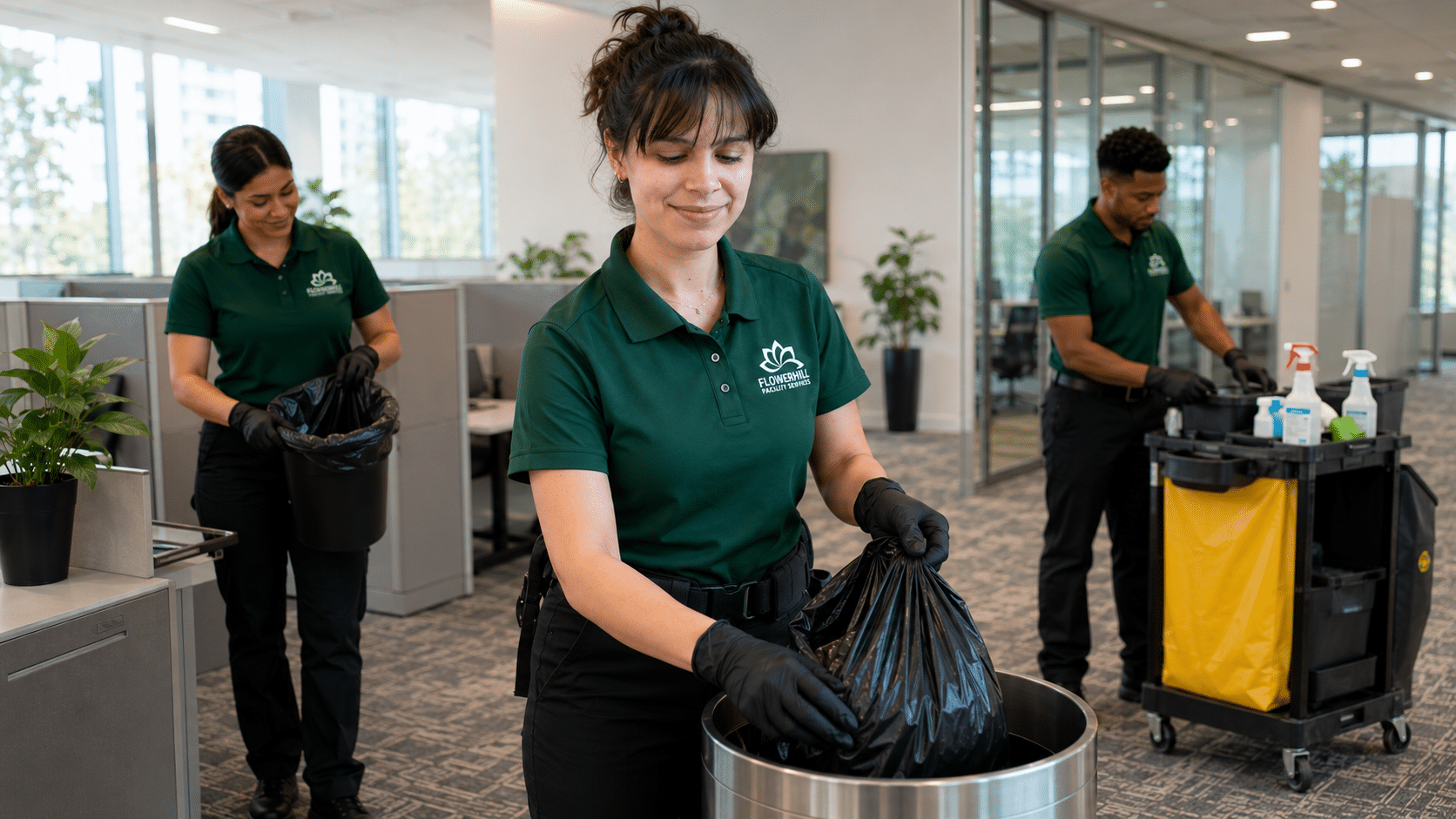
A FlowerHill day porter works within your facility during operating hours to address these needs as they arise. We build each porter program around the property’s traffic, schedule, layout, tenant expectations, service priorities, and existing janitorial plan.

Whether your building needs a dedicated full-day porter, scheduled daytime coverage, supplemental support during peak hours, or assistance with special events, FlowerHill provides dependable personnel focused on keeping your property clean, orderly, stocked, and professionally presented throughout the day.

What Are Day Porter Services?

Day porter services provide ongoing cleaning, appearance care, restocking, and basic facility support while a commercial building is occupied and operational.

Unlike an evening janitorial team that completes a scheduled cleaning checklist after employees or visitors leave, a day porter responds to conditions developing in real time. The porter monitors high-use areas, handles approved routine cleaning needs, communicates emerging facility concerns, and helps maintain a consistent standard between comprehensive cleaning visits.

Day porter duties are customized for each facility. The porter may focus heavily on public presentation in a corporate office, restroom monitoring in a busy retail property, employee areas in an industrial facility, or continuous common-area care within a multi-tenant building.

What Does a Commercial Day Porter Do?

A commercial day porter serves as a visible, responsive extension of the facility or property-management team.

Depending on the approved scope of work, day porter responsibilities may include:

  • Monitoring lobbies and public common areas
  • Checking and servicing restrooms
  • Restocking paper products, soap, and approved supplies
  • Responding to routine non-hazardous spills
  • Removing trash and recycling
  • Maintaining entrances and interior glass
  • Cleaning breakrooms and shared spaces
  • Addressing visible debris and tracked-in soil
  • Maintaining elevators, stairwells, and corridors
  • Resetting conference rooms and meeting spaces
  • Supporting event preparation and cleanup
  • Monitoring exterior entrances and sidewalks
  • Cleaning approved high-touch surfaces
  • Reporting damaged fixtures or emerging maintenance needs
  • Communicating service concerns to designated facility contacts

The exact responsibilities, schedule, priorities, exclusions, and reporting process are documented in the facility’s customized porter-service plan.

Our Day Porter Services

Lobby and Reception Area Maintenance

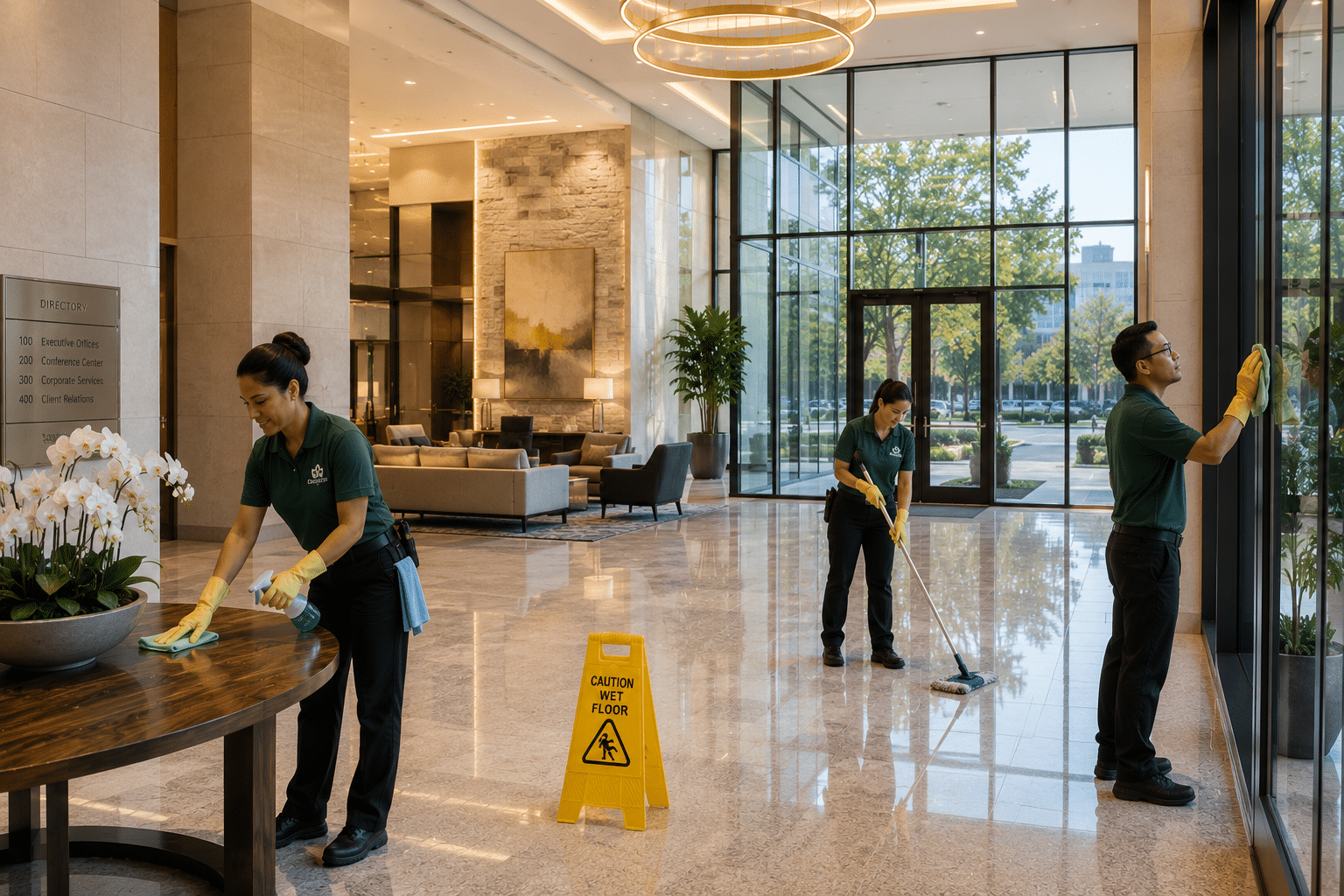
Your lobby creates an immediate impression of your organization and property-management standards. A day porter helps maintain that presentation after morning traffic, deliveries, meetings, and visitor activity begin.

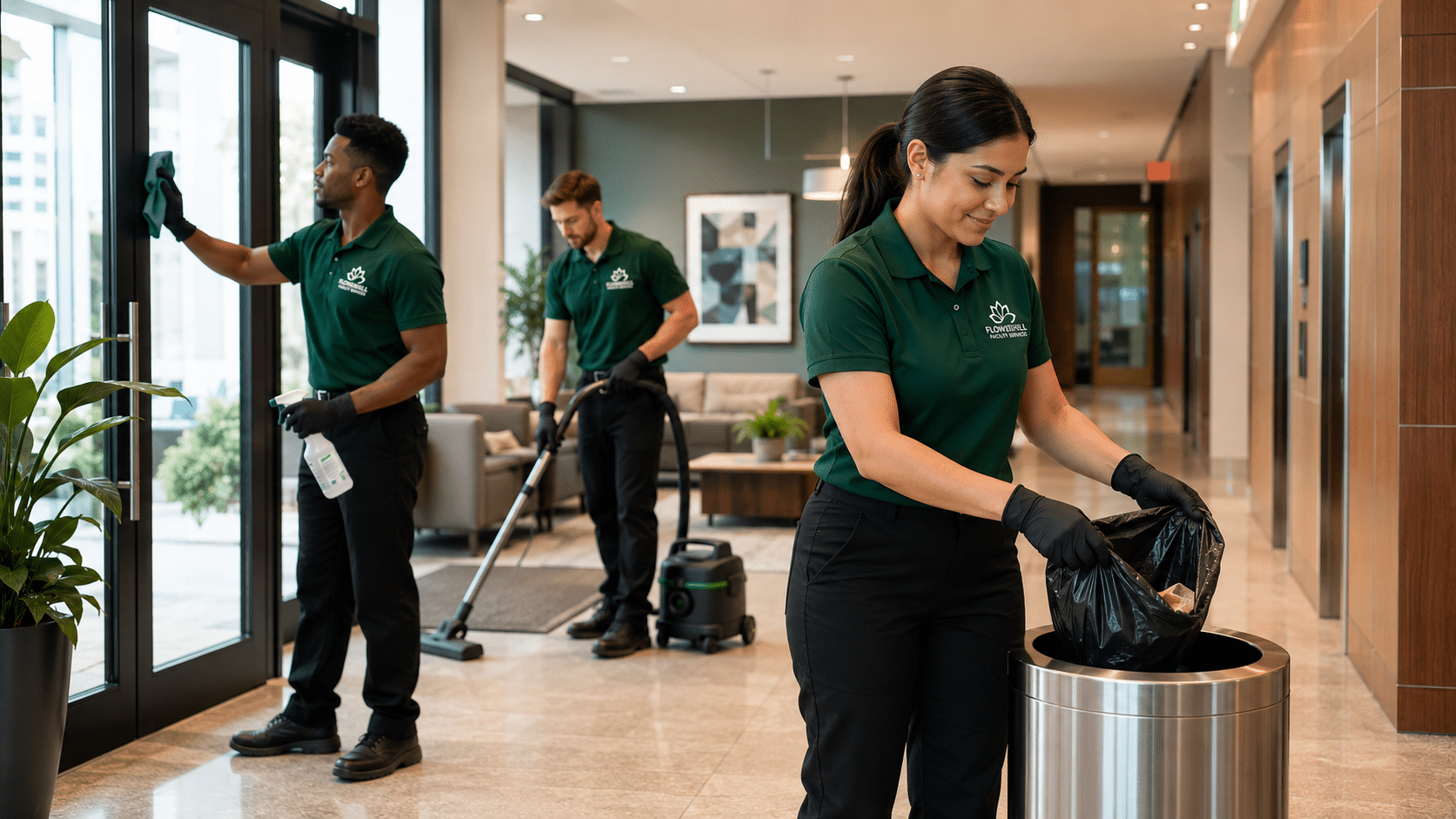
Lobby and reception support may include:

  • Removing visible debris
  • Spot cleaning floors
  • Vacuuming high-traffic areas when appropriate
  • Cleaning entrance glass and door surfaces
  • Wiping approved reception surfaces
  • Straightening furniture and shared materials
  • Emptying waste containers
  • Monitoring mats and entryways
  • Addressing fingerprints and visible smudges
  • Reporting appearance or maintenance concerns

Restroom Monitoring and Restocking

Restrooms can require attention several times during a business day, especially in high-occupancy buildings, retail centers, medical offices, schools, industrial facilities, and public-facing properties.

A day porter can perform scheduled restroom checks that may include:

  • Checking toilets, urinals, sinks, and counters
  • Spot cleaning fixtures and partitions
  • Removing waste
  • Addressing visible floor concerns
  • Checking mirrors
  • Restocking toilet tissue and paper towels
  • Replenishing soap and approved consumables
  • Monitoring odor and overall presentation
  • Reporting leaks, clogs, or damaged fixtures
  • Documenting completed restroom rounds when required

The inspection frequency can be adjusted around building occupancy, break periods, visitor patterns, shift changes, and peak operating hours.

Routine Spill and Spot Cleaning Response

Spills, tracked-in moisture, dropped food, and other unexpected conditions can create both appearance concerns and potential slip hazards.

Day porters can respond to routine, non-hazardous situations by:

  • Securing the immediate area with appropriate signage
  • Cleaning approved liquid spills
  • Removing dropped food and debris
  • Spot cleaning carpet or hard flooring
  • Drying affected surfaces
  • Reporting damage or recurring concerns
  • Escalating situations outside the approved scope

Chemical releases, biohazards, bodily fluids, regulated waste, major water intrusion, and other hazardous situations require separate procedures and appropriately qualified personnel.

Trash and Recycling Management

Waste can accumulate quickly inside active workplaces, food areas, meeting rooms, restrooms, and public spaces.

Daytime waste support may include:

  • Emptying high-use waste containers
  • Replacing liners
  • Collecting approved recycling
  • Monitoring breakroom and restroom waste
  • Maintaining centralized collection areas
  • Removing visible debris from common spaces
  • Cleaning residue around waste containers
  • Reporting overflow or disposal concerns

Breakroom and Shared Kitchen Upkeep

Employee breakrooms and shared kitchens can become untidy soon after the workday begins. A porter helps prevent food residue, spills, waste, and clutter from accumulating between scheduled janitorial visits.

Breakroom support may include:

  • Wiping approved tables and countertops
  • Cleaning sinks and fixtures
  • Spot cleaning exterior appliance surfaces
  • Maintaining coffee and beverage stations
  • Emptying trash and recycling
  • Sweeping or spot cleaning floors
  • Restocking approved supplies
  • Cleaning high-touch surfaces
  • Straightening seating and shared areas

Responsibilities involving employee dishes, refrigerators, food, personal belongings, and appliance interiors should be clearly defined in the approved scope.

Elevator, Stairwell, and Corridor Upkeep

Elevators, stairwells, and corridors connect the busiest parts of a commercial building and often require repeated attention throughout the day.

Service may include:

  • Removing visible debris
  • Spot cleaning elevator floors
  • Cleaning approved elevator surfaces
  • Wiping handrails
  • Addressing fingerprints on doors and panels
  • Maintaining stair landings
  • Removing waste from common areas
  • Reporting lighting, flooring, or hardware concerns

Entrance and Interior Glass Cleaning

Glass doors, partitions, mirrors, and other high-visibility surfaces can collect fingerprints and smudges throughout operating hours.

A porter can maintain:

  • Interior entrance glass
  • Glass doors and sidelights
  • Lobby glass
  • Conference-room partitions
  • Mirrors
  • Approved stainless-steel surfaces
  • Accessible interior windows

Meeting Room and Conference Space Resets

Conference rooms and shared meeting spaces may host several groups throughout the day. Porter support helps restore each room before the next scheduled use.

Room-reset duties may include:

  • Removing trash and abandoned materials
  • Wiping approved table surfaces
  • Repositioning chairs
  • Spot cleaning floors
  • Cleaning visible glass and touchpoints
  • Restocking approved meeting supplies
  • Reporting damaged furniture or equipment
  • Preparing the room according to an approved layout

Exterior Entrance and Sidewalk Care

The customer and employee experience begins before anyone enters the building.

Approved exterior porter duties may include:

  • Removing litter near entrances
  • Emptying exterior waste containers
  • Sweeping entry areas
  • Monitoring walkways for visible debris
  • Checking entrance mats
  • Cleaning approved exterior glass
  • Reporting pavement, lighting, or drainage concerns
  • Monitoring smoking areas when included

Supply Monitoring and Replenishment

A porter can help monitor approved facility consumables so shortages are identified before they affect employees or visitors.

Supply responsibilities may include:

  • Restroom paper products
  • Hand soap
  • Trash liners
  • Sanitary-disposal supplies
  • Approved breakroom consumables
  • Cleaning products used by the porter
  • Inventory reporting
  • Storage-area organization

The client and FlowerHill should establish who purchases, stores, monitors, and replenishes each category of supplies.

Special Event Support

Commercial properties may need additional porter coverage for meetings, conferences, tenant events, open houses, worship services, school programs, celebrations, or other high-traffic occasions.

Event support may include:

  • Pre-event room preparation
  • Restroom monitoring
  • Waste removal during the event
  • Spill and spot cleaning
  • Table and chair resets
  • Maintaining entrances and common areas
  • Post-event cleanup
  • Coordination with the facility contact

Day Porter Service Options

Dedicated Full-Day Porter

A dedicated porter remains on-site for an agreed shift and follows a customized schedule of routine rounds, service priorities, inspections, and responsive tasks.

This model may be appropriate for corporate campuses, multi-tenant properties, large offices, medical buildings, retail centers, schools, and other heavily occupied facilities.

Partial-Day Porter Coverage

Some buildings need support only during peak hours, lunch periods, shift changes, customer traffic, or another concentrated service window.

Partial-day coverage allows the porter schedule to align with the periods when the facility experiences its greatest cleaning and presentation demands.

Scheduled Porter Visits

A smaller commercial property may benefit from one or more planned daytime visits rather than continuous on-site coverage.

The porter can complete restroom checks, waste removal, breakroom care, entrance maintenance, and other approved tasks during each scheduled visit.

Supplemental Porter Support

Daytime porter service can supplement an existing evening janitorial program, internal maintenance team, property-management staff, or another approved facility-service arrangement.

Event and Temporary Porter Service

Temporary coverage may be available for special events, seasonal periods, tenant transitions, facility openings, high-traffic projects, or another short-term operational need.

Commercial Facilities That Benefit From Day Porter Services

Corporate Offices and Headquarters

Maintain polished lobbies, restrooms, conference rooms, employee areas, breakrooms, entrances, and shared spaces throughout an active workday.

Multi-Tenant Office Buildings

Provide ongoing support across shared restrooms, elevators, corridors, lobbies, common spaces, entrances, and property-management areas.

Corporate Campuses

Coordinate daytime coverage across multiple buildings, conference spaces, cafeterias, training areas, public spaces, and heavily used employee amenities.

Medical Office Buildings

Support waiting areas, non-clinical common spaces, public restrooms, administrative areas, entrances, corridors, and other frequently used locations.

Retail Centers and Shopping Properties

Maintain customer-facing entrances, sidewalks, restrooms, common areas, waste stations, food areas, corridors, and other high-traffic spaces.

Warehouses and Industrial Facilities

Address employee restrooms, breakrooms, entrances, administrative offices, shared walkways, waste, routine spills, and approved operational areas during active shifts.

Logistics and Airport-Support Facilities

Provide daytime attention to terminals, waiting areas, administrative spaces, employee facilities, entrances, restrooms, corridors, and high-traffic common areas.

Schools and Universities

Support restrooms, administrative spaces, cafeterias, corridors, common areas, event spaces, entrances, and routine cleaning needs throughout the academic day.

Churches and Places of Worship

Maintain entrances, restrooms, nurseries, fellowship areas, classrooms, worship spaces, and event areas during services and community programs.

Mixed-Use Developments

Coordinate daytime care across offices, residential common areas, retail spaces, public walkways, amenity areas, lobbies, and shared facilities.

Day Porter Services vs. Janitorial Cleaning

Day porter services provide responsive cleaning and appearance support while the facility is occupied and active.

Janitorial services generally follow a comprehensive recurring checklist completed daily, nightly, weekly, or several times per week. Janitorial work may include restroom cleaning, full-floor cleaning, trash removal, dusting, breakroom cleaning, and other scheduled tasks.

Facility maintenance focuses on the physical condition and functionality of the building, including inspections, lighting, hardware, minor repairs, fixtures, finishes, and approved building-upkeep responsibilities.

Commercial cleaning is the broader service category that can include janitorial work, porter services, floor care, deep cleaning, disinfection, pressure washing, and other scheduled projects.

Many commercial properties receive the strongest coverage from a blended program that combines daytime porter service with comprehensive evening or overnight janitorial cleaning.

How Many Hours of Day Porter Service Does a Facility Need?

The right amount of porter coverage depends on how the property is used.

A smaller office may need one or two scheduled daytime visits. A busy multi-tenant building may require a porter for several hours each day. A corporate campus, medical property, retail center, school, warehouse, or high-occupancy facility may need one or more dedicated porters across an entire operating shift.

FlowerHill considers factors such as:

  • Total square footage
  • Number of buildings or floors
  • Employee and visitor traffic
  • Operating hours
  • Peak traffic periods
  • Number of public restrooms
  • Breakroom and food-service usage
  • Common-area activity
  • Event schedules
  • Exterior responsibilities
  • Existing janitorial coverage
  • Required inspection and reporting frequency

An on-site walkthrough allows FlowerHill to recommend coverage based on the property’s real operating conditions rather than an arbitrary staffing package.

Why DFW Facilities Trust FlowerHill Day Porters

Customized Porter Responsibilities

Each porter program is developed around the building’s actual traffic, priorities, schedule, and service expectations.

Responsive Daytime Support

Porters can address approved cleaning and appearance needs while the facility remains active instead of allowing every issue to wait for the nighttime crew.

Professional Facility Presence

FlowerHill personnel work respectfully around employees, customers, tenants, visitors, vendors, and other building occupants.

Consistent Inspection Routines

Scheduled rounds help establish when restrooms, lobbies, breakrooms, entrances, waste stations, and common areas are reviewed.

Clear Communication

Facility contacts receive an established process for reporting concerns, requesting adjustments, communicating priorities, and addressing service issues.

Flexible Service Coverage

Porter schedules can be structured around full shifts, partial days, peak hours, special events, or recurring service windows.

Local, Woman-Owned Leadership

As a woman-owned North Texas company, FlowerHill combines local accountability with the operational resources needed to support active commercial properties throughout Dallas-Fort Worth.

Our Day Porter Service Process

1. Facility Walkthrough

We tour the property, observe traffic patterns, identify high-use areas, discuss current concerns, and learn how the building operates throughout the day.

2. Porter Needs Assessment

FlowerHill evaluates occupancy, service hours, restrooms, common areas, employee spaces, entrances, exterior needs, existing janitorial coverage, and peak activity periods.

3. Customized Scope and Schedule

We develop a proposed plan defining the porter’s responsibilities, schedule, inspection rounds, priorities, exclusions, reporting process, and pricing.

4. Facility Orientation

The assigned personnel are oriented to building access, restricted areas, supply locations, communication procedures, safety requirements, and client-specific expectations.

5. Scheduled Day Porter Service

The porter completes routine rounds, scheduled tasks, approved responsive work, and required documentation throughout the service period.

6. Quality Review and Adjustment

The porter program can be refined when occupancy changes, new tenants arrive, event schedules increase, operating hours shift, or facility priorities evolve.

What Determines Day Porter Service Pricing?

Day porter pricing is generally based on the number of service hours, staffing level, responsibilities, supervision, supplies, equipment, schedule, and building requirements included in the approved program.

Pricing factors may include:

  • Number of porter hours per day
  • Number of service days per week
  • Facility size and layout
  • Number of floors or buildings
  • Employee and visitor traffic
  • Number of restrooms and breakrooms
  • Exterior service requirements
  • Event-support responsibilities
  • Required supplies and equipment
  • Consumable-restocking responsibilities
  • Security and onboarding requirements
  • Inspection and reporting expectations
  • Special scheduling requirements
  • Current facility conditions

An on-site walkthrough is the most reliable way to establish the appropriate porter coverage and prepare an accurate service proposal.

Day Porter Service Areas Across Dallas-Fort Worth

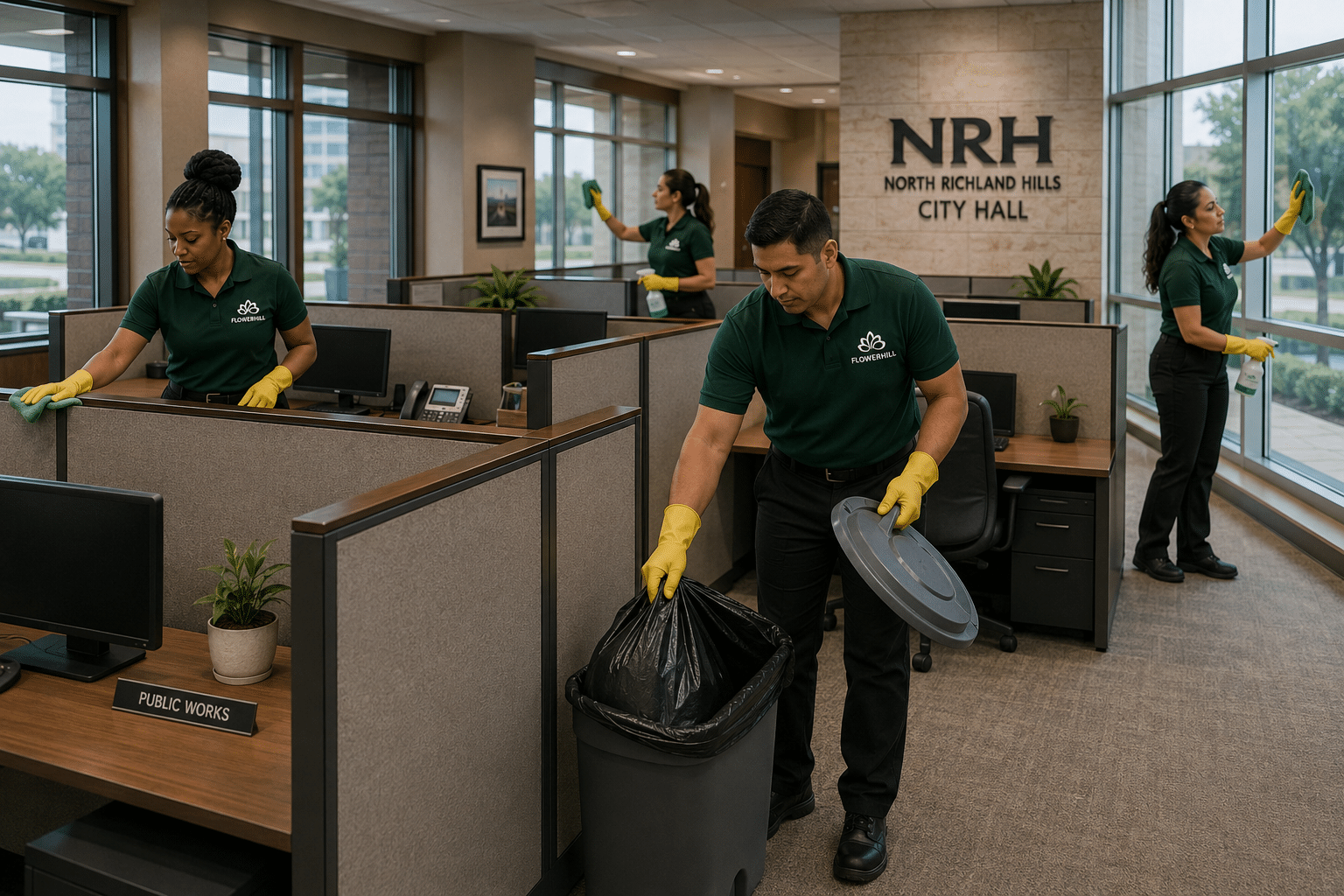
FlowerHill Facility Services supports commercial properties throughout Fort Worth, Dallas, North Richland Hills, Bedford, Hurst, Colleyville, Grapevine, Southlake, Keller, Roanoke, Alliance, Arlington, Irving, Coppell, Carrollton, Flower Mound, Frisco, Plano, Denton, Grand Prairie, The Colony, Westlake, McKinney, and surrounding North Texas communities.

Frequently Asked Questions

What is a day porter?

A day porter is an on-site commercial cleaning and facility-support professional who works during operating hours to maintain restrooms, entrances, common areas, breakrooms, waste stations, meeting spaces, and other approved parts of a property.

What is the difference between a porter and a janitor?

A porter generally provides ongoing daytime support while the property is occupied. A janitorial team generally performs a broader scheduled cleaning program during the evening, overnight, or another established service period.

Does a day porter clean restrooms?

Yes. Restroom monitoring, spot cleaning, waste removal, supply restocking, and presentation checks are common day porter responsibilities when included in the approved scope.

Can a day porter respond to spills?

A porter can respond to approved routine, non-hazardous spills using established procedures. Chemical spills, biohazards, regulated waste, bodily fluids, and other hazardous conditions may require separately trained and qualified personnel.

Can we have a porter for only part of the day?

Yes. Coverage can potentially be structured as a full shift, partial shift, scheduled visits, peak-hour support, or temporary event coverage, depending on the facility’s needs and location.

Can a porter work alongside our nighttime cleaning crew?

Yes. Many properties use a porter during operating hours and a janitorial team after hours. The responsibilities should be coordinated so coverage is clear and duplicated work is minimized.

Can a day porter perform minor maintenance?

Basic approved support tasks and reporting may be included, but technical electrical, plumbing, HVAC, security, structural, hazardous, or licensed trade work requires appropriately qualified personnel.

Do day porters restock restroom supplies?

Restocking may be included. The service agreement should clarify which consumables are supplied by FlowerHill, which are supplied by the client, and how inventory is monitored.

Can FlowerHill provide porter support for special events?

Event porter service may be available for meetings, conferences, worship services, school programs, tenant events, open houses, and other high-traffic occasions.

How do we receive a day porter proposal?

Begin by requesting an on-site facility walkthrough. FlowerHill will evaluate the property, identify daytime priorities, recommend an appropriate coverage schedule, and prepare a customized scope and proposal.

Keep Your Facility Professionally Maintained Throughout the Day

Your property should not have to wait until closing time for every cleaning or presentation concern to be addressed.

FlowerHill Facility Services develops customized day porter programs that help Dallas-Fort Worth facilities remain clean, stocked, responsive, and professionally presented throughout operating hours.

Request a facility walkthrough to discuss your building, daytime traffic, service priorities, porter schedule, and ongoing support needs.