Specialized Food Processing Cleaning Services in DFW
Specialized Food Processing Cleaning Services in Dallas-Fort Worth
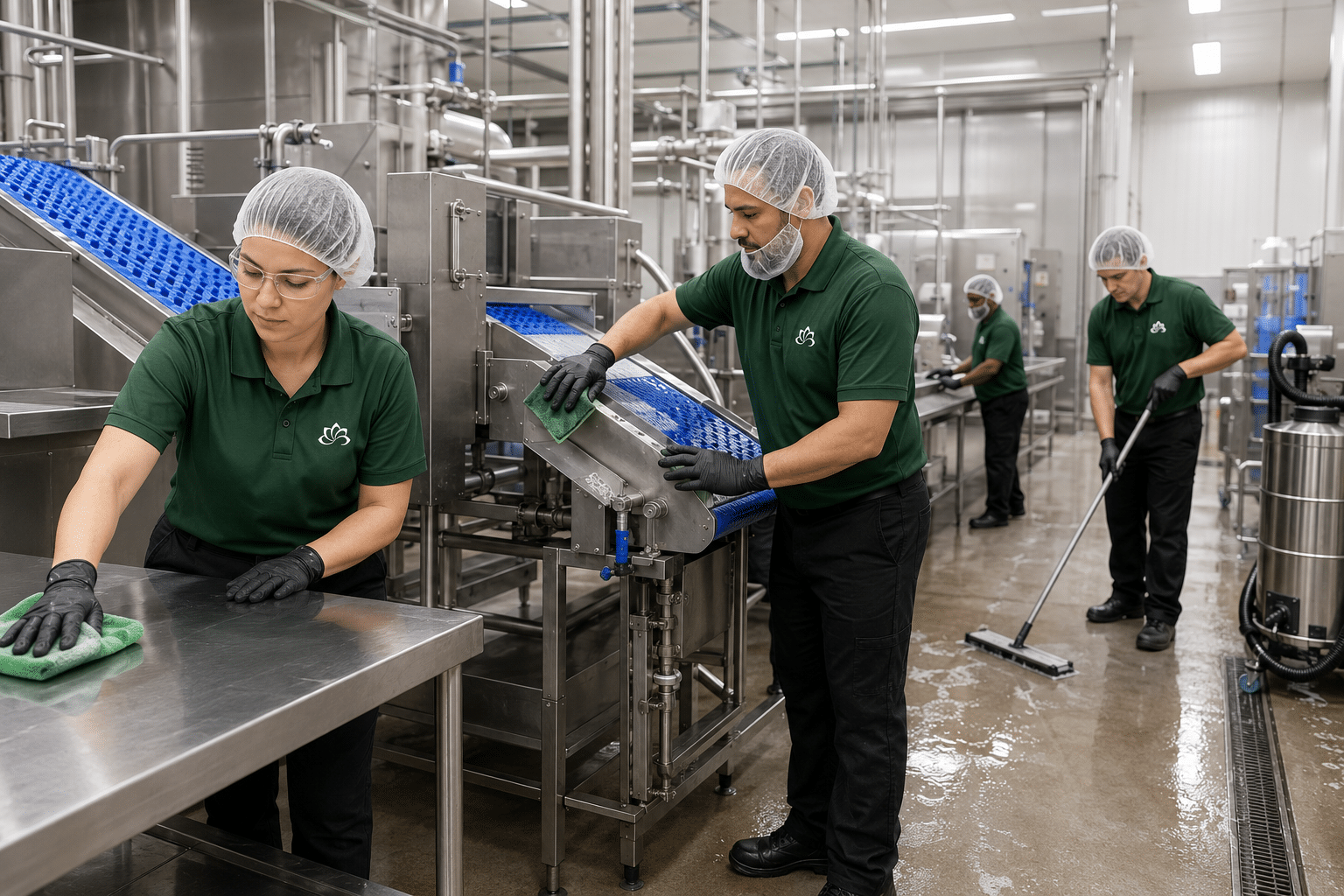
FlowerHill Facility Services provides customized environmental cleaning, janitorial, floor care, and facility-support programs for food-processing plants, beverage facilities, commercial bakeries, packaging operations, ingredient facilities, cold-storage properties, commissaries, and food-production support buildings throughout Dallas-Fort Worth. Food-processing environments demand more than conventional commercial cleaning. Production schedules, sanitation zones, food-contact surfaces, allergens, moisture control, machinery, drains, employee hygiene areas, chemical restrictions, and inspection requirements must all be considered before work begins. FlowerHill develops each program around the facility’s written sanitation procedures, approved service boundaries, operating schedule, food-safety plan, production zones, equipment layout, flooring, access controls, and safety requirements. Whether your plant needs recurring non-production-area janitorial service, production-floor support, post-shift environmental cleaning, warehouse cleaning, machine floor scrubbing, daytime porter coverage, or scheduled deep-cleaning projects, our team creates a clearly documented scope designed to support your existing sanitation and facility-management program.What Are Food Processing Facility Cleaning Services?
Food-processing facility cleaning is the controlled removal of food residue, dust, soil, grease, packaging debris, moisture, and other unwanted material from approved surfaces and areas within a food-production property. Depending on the plant and service agreement, the scope may include:- Production-room floors and non-food-contact surfaces
- Packaging and labeling rooms
- Warehouses and ingredient-storage areas
- Coolers and approved cold-storage spaces
- Loading docks and receiving areas
- Employee entrances and hygiene-transition areas
- Locker rooms and changing spaces
- Restrooms and breakrooms
- Administrative offices and conference rooms
- Interior glass and common areas
- Waste-transfer and recycling areas
- Approved equipment exteriors
- Scheduled floor, wall, overhead, or shutdown projects
Environmental Cleaning vs. Production Sanitation
Food-processing facilities often contain both general commercial spaces and tightly controlled production environments. Environmental cleaning may include floors, walls, offices, restrooms, breakrooms, corridors, warehouses, loading areas, equipment exteriors, and other approved non-food-contact surfaces. Production sanitation may involve direct food-contact surfaces, conveyors, utensils, tanks, fillers, slicers, processing equipment, production tools, and other surfaces that can directly affect the product. Production sanitation should only be performed when FlowerHill’s responsibilities, training, products, chemical concentrations, equipment shutdown procedures, verification methods, records, and supervisory requirements have been clearly established with the facility. FlowerHill does not replace the plant’s food-safety team, sanitation management, quality department, preventive-controls program, HACCP plan, or regulatory responsibilities.Food-Contact and Non-Food-Contact Surfaces
Understanding the difference between food-contact and non-food-contact surfaces is essential when developing a food-plant cleaning program.Food-Contact Surfaces
Food-contact surfaces are surfaces that directly contact exposed food or from which material may transfer to food during normal production. Examples may include:- Conveyor-belt product surfaces
- Preparation tables
- Mixers and processing vessels
- Filling and packaging components
- Utensils and production tools
- Cutting, slicing, and portioning surfaces
- Product chutes and hoppers
- Approved reusable containers
Non-Food-Contact Surfaces
Non-food-contact surfaces do not normally touch exposed food but can still affect the overall production environment. Examples may include:- Floors and floor edges
- Walls and partitions
- Drains and drain surroundings
- Equipment frames and legs
- Exterior machine guards
- Doors and handles
- Conveyor exteriors
- Ceilings, beams, and ledges
- Storage racks
- Carts and non-product work surfaces
Food Processing Areas We Clean
Production Floors and Processing Rooms
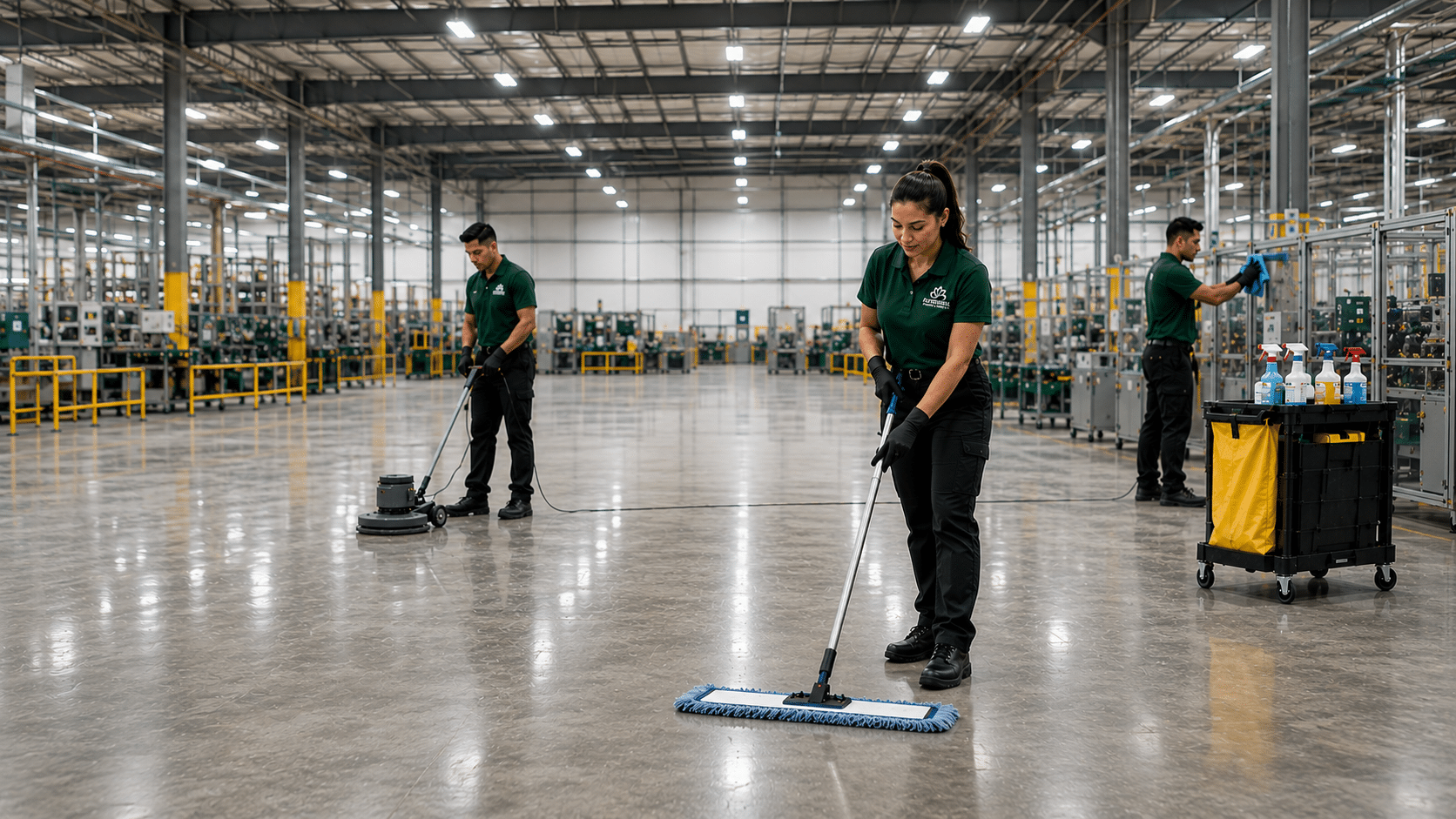
Food-production floors can accumulate product residue, water, oils, ingredients, packaging debris, and soil generated by equipment and employee traffic. Approved services may include:- Dry pickup of loose debris
- Sweeping or vacuuming approved areas
- Controlled wet-floor cleaning
- Foam or detergent application when authorized
- Manual or machine floor scrubbing
- Squeegee and water-removal procedures
- Cleaning floor edges and accessible corners
- Cleaning approved curbs and barriers
- Removing residue from designated walkways
- Cleaning around accessible equipment bases
- Reporting cracked flooring or standing water
Packaging and Labeling Areas
Packaging rooms can generate cardboard fibers, labels, plastic film, adhesive residue, paper, broken packaging, and other loose debris. Cleaning may include:- Removing approved packaging debris
- Vacuuming or cleaning floors
- Cleaning approved work surfaces
- Cleaning equipment exteriors
- Emptying waste and recycling containers
- Cleaning accessible conveyor exteriors
- Cleaning walls, doors, and partitions
- Cleaning approved storage racks
- Maintaining pedestrian pathways
- Reporting damaged surfaces or recurring debris
Ingredient Receiving and Raw-Material Areas
Receiving areas may introduce pallets, cardboard, dust, soil, damaged packaging, outdoor debris, and raw-material residue into the facility. Approved cleaning may include:- Sweeping receiving floors
- Removing loose debris
- Cleaning approved pedestrian paths
- Collecting approved packaging waste
- Cleaning dock entrances
- Cleaning designated staging zones
- Maintaining approved waste containers
- Cleaning accessible rack-base areas
- Reporting damaged bags, containers, or surfaces
- Supporting post-delivery cleanup
Finished-Goods Warehouses
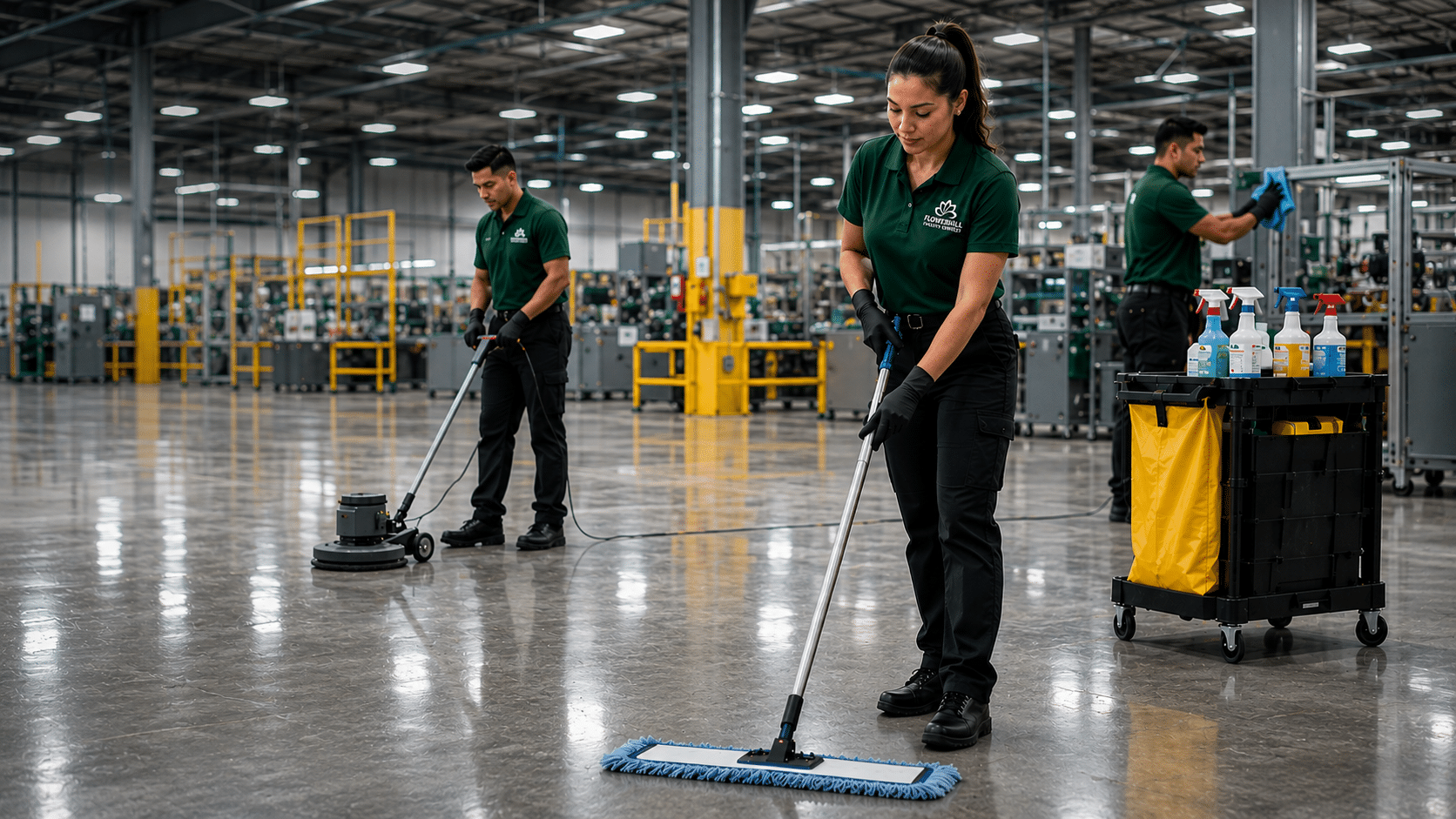
Finished-product warehouses require cleaning methods that protect packaged inventory while maintaining floors, aisles, racks, loading areas, and employee spaces. Services may include:- Sweeping accessible warehouse aisles
- Machine floor scrubbing
- Removing loose packaging debris
- Cleaning pedestrian pathways
- Cleaning accessible rack-base areas
- Maintaining dock approaches
- Collecting approved recycling
- Cleaning employee and dispatch areas
- Removing visible cobwebs
- Reporting damaged inventory or facility concerns
Coolers, Refrigerated Rooms, and Cold Storage
Temperature-controlled areas present additional concerns involving condensation, ice, moisture, drainage, protective equipment, floor conditions, and product exposure. Approved services may include:- Removing loose floor debris
- Cleaning approved walkways
- Cleaning doors, frames, and handles
- Cleaning approved wall and floor surfaces
- Cleaning accessible rack-base areas
- Removing approved packaging waste
- Cleaning employee transition areas
- Reporting condensation, ice, leaks, or damaged surfaces
Freezers
Freezer cleaning requires a facility-specific assessment because water and conventional wet-cleaning methods can create ice, slip, surface, and operational concerns. Possible services may include:- Dry debris collection
- Approved low-moisture cleaning
- Cleaning doors and handles
- Cleaning accessible pedestrian paths
- Removing approved packaging material
- Cleaning staging and transition areas
- Reporting ice buildup or damaged surfaces
Loading Docks and Shipping Areas
Loading docks connect controlled interior environments with outdoor traffic, trailers, pallets, drivers, equipment, and weather. Approved services may include:- Sweeping designated dock areas
- Removing loose debris
- Collecting approved packaging waste
- Cleaning pedestrian pathways
- Maintaining dock entrances
- Cleaning designated staging zones
- Cleaning approved waste stations
- Supporting post-shipment cleanup
- Reporting damaged flooring, doors, or seals
Employee Hygiene and Gowning Areas
Many food plants use controlled transition areas where employees change clothing, wash hands, apply protective equipment, or move between sanitation zones. Approved cleaning may include:- Cleaning floors and walkways
- Cleaning benches and approved locker exteriors
- Cleaning handwashing sinks and fixtures
- Cleaning doors and approved touchpoints
- Removing waste
- Restocking approved hygiene products
- Cleaning mirrors and partitions
- Maintaining shoe-change or garment areas
- Reporting damaged dispensers or fixtures
Employee Restrooms
Restrooms within food-processing facilities require dependable cleaning and supply management across production shifts. Restroom service may include:- Cleaning toilets and urinals
- Cleaning sinks, counters, and fixtures
- Cleaning mirrors and partitions
- Sweeping and mopping floors
- Removing waste and sanitary products
- Cleaning approved high-touch surfaces
- Monitoring odor and presentation
- Restocking toilet tissue and paper towels
- Replenishing soap and approved supplies
- Reporting clogs, leaks, or damage
Breakrooms and Employee Dining Areas
Employee dining spaces can accumulate food residue, waste, spills, personal items, and heavy traffic during scheduled breaks and shift changes. Cleaning may include:- Cleaning tables and seating surfaces
- Cleaning countertops and sinks
- Cleaning exterior appliance surfaces
- Maintaining coffee and beverage stations
- Removing trash and recycling
- Sweeping and mopping floors
- Cleaning approved touchpoints
- Restocking approved supplies
- Cleaning doors and interior glass
- Monitoring overall presentation
Quality Offices, Laboratories, and Sample Areas
Food plants may contain quality-control offices, sample rooms, test kitchens, laboratories, and technical spaces. FlowerHill may clean approved general areas such as:- Floors and walkways
- General waste containers
- Office surfaces
- Doors and interior glass
- Approved empty counters
- Adjacent restrooms
- Administrative work areas
Administrative Offices and Conference Rooms
One coordinated facility program can include the plant’s administrative, human-resources, training, conference, reception, and management spaces. Office cleaning may include:- Accessible surface dusting
- Trash and recycling removal
- Carpet vacuuming
- Hard-floor cleaning
- Conference-room resets
- Reception-area cleaning
- Interior glass care
- Breakroom and restroom service
- Cleaning approved high-touch surfaces
Waste, Recycling, and Byproduct Areas
Waste-transfer areas may contain food residue, damaged packaging, rejected materials, liquid leakage, cardboard, plastic, organic waste, or other byproducts. Approved support may include:- Removing loose litter and debris
- Cleaning accessible floors
- Cleaning residue around approved containers
- Maintaining pedestrian paths
- Cleaning approved waste enclosures
- Collecting approved cardboard and recycling
- Reporting leaks, overflow, odors, or pest evidence
- Coordinating approved pressure washing
Floor and Drain Cleaning
Floors and drains can require specialized procedures because they collect soil, water, ingredients, oils, and residue from surrounding operations. An approved program may include:- Dry debris removal before applying water
- Controlled detergent application
- Manual or machine scrubbing
- Cleaning floor-wall junctions
- Cleaning approved curbs and barriers
- Water and foam removal
- Cleaning designated drain surroundings
- Cleaning removable drain components when authorized
- Using dedicated drain tools
- Reporting damaged grout, cracks, or standing water
Dry and Low-Moisture Food Facilities
Facilities producing dry ingredients, cereals, spices, powders, snacks, baked products, nuts, or other low-moisture foods may restrict the introduction of water into production environments. Approved dry-cleaning methods may include:- Controlled scraping and dry pickup
- Facility-approved vacuuming
- Dry wiping
- Limited-moisture spot cleaning
- Cleaning approved equipment exteriors
- Removing dust from accessible ledges
- Cleaning packaging and storage areas
- Using dedicated tools by sanitation zone
Wet Processing Environments
Wet-processing plants may use water, foam, detergents, sanitizers, hoses, floor squeegees, and drainage systems as part of their sanitation program. A wet-cleaning scope may address:- Pre-cleaning and debris removal
- Controlled rinsing
- Detergent or foam application
- Manual scrubbing
- Controlled final rinsing
- Water and foam removal
- Drain-area cleaning
- Approved sanitizer application
- Drying or release procedures
- Post-cleaning inspection
Pre-Operational, Operational, and Post-Operational Cleaning
Pre-Operational Support
Pre-operational work occurs before production begins and may include visual checks, removal of overnight debris, cleaning corrections, room preparation, and support for the plant’s release process. FlowerHill personnel should not independently release production areas unless that authority and verification process have been formally assigned.Operational Cleaning Support
Operational cleaning occurs while the plant is active and may include approved waste removal, routine non-hazardous spill response, floor attention, employee-area service, and cleaning of designated support spaces. Cleaning around exposed product or running equipment requires additional controls and should only occur under the plant’s approved procedures.Post-Operational Cleaning
Post-operational work occurs after production and may include debris removal, floor and wall cleaning, approved equipment-exterior cleaning, drain-area service, room resets, and preparation for inspection. Production equipment must be shut down, isolated, disassembled, and made available by authorized personnel according to the plant’s energy-control and sanitation procedures.Allergen-Control and Changeover Support
Food facilities handling milk, eggs, fish, shellfish, tree nuts, peanuts, wheat, soy, sesame, or other allergenic ingredients may require defined cleaning procedures between products or production runs. Approved FlowerHill support may include:- Following the plant’s changeover cleaning instructions
- Using designated tools and supplies
- Cleaning approved floors and surrounding surfaces
- Removing visible ingredient residue
- Cleaning packaging and staging areas
- Preventing tool movement between designated zones
- Documenting assigned cleaning tasks
- Reporting unexpected residue or material
Cleaning Chemicals and Product Control
Cleaning and sanitizing products used inside a food plant should be selected and controlled according to the facility’s approved chemical program. The program may define:- Approved products for each area
- Food-contact or non-food-contact use
- Dilution and concentration requirements
- Application methods
- Required contact time
- Rinsing requirements
- Water temperature
- Storage and labeling
- Secondary-container procedures
- Safety data sheet access
- Personal protective equipment
- Product compatibility
Sanitation Zoning and Cross-Contamination Controls
Food plants may divide areas according to product exposure, sanitation risk, allergens, raw and ready-to-eat operations, wet and dry environments, or other facility-specific criteria. A cleaning program may incorporate:- Color-coded tools
- Dedicated carts and equipment
- Separate production and restroom tools
- Controlled tool-storage areas
- Restricted personnel movement
- Defined cleaning sequences
- Raw and ready-to-eat separation
- Allergen-specific equipment
- Dedicated drain tools
- Controlled waste routes
- Footwear or garment-change procedures
- Cleaning-tool inspection and sanitation
Cleaning Around Machinery and Processing Equipment
Food-processing machinery may contain blades, conveyors, augers, belts, chains, pinch points, stored energy, electrical systems, compressed air, steam, pressure, and other hazards. Before FlowerHill cleans in or around equipment, the facility should define:- Who shuts the equipment down
- Who applies lockout or tagout
- Who verifies energy isolation
- Who removes guards and components
- Which surfaces FlowerHill may clean
- Which tools and chemicals are authorized
- When the equipment can be reassembled
- Who inspects and releases the equipment
- How unexpected hazards are reported
Walls, Ceilings, Beams, and Overhead Cleaning
Dust, condensation, grease, cobwebs, and residue may accumulate on overhead surfaces and eventually affect lower areas. Approved overhead cleaning may include:- Accessible wall cleaning
- Cleaning approved ceiling panels
- Removing visible cobwebs
- Cleaning accessible beams and ledges
- Cleaning approved pipes and supports
- Cleaning vents and exterior housings
- Cleaning elevated nontechnical surfaces
- Reporting condensation, leaks, or damaged materials
Shutdown, Deep-Cleaning, and Post-Construction Projects
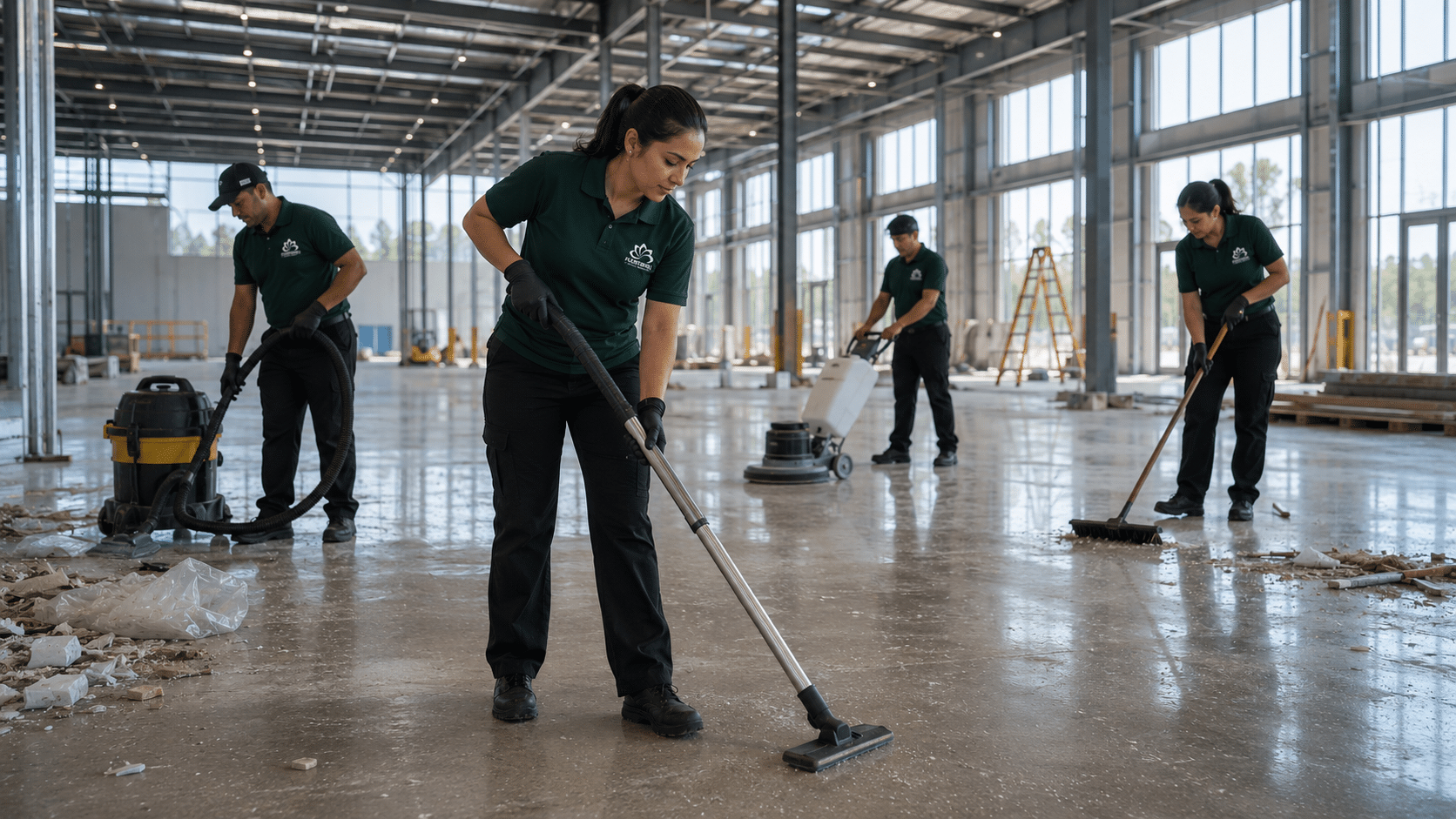
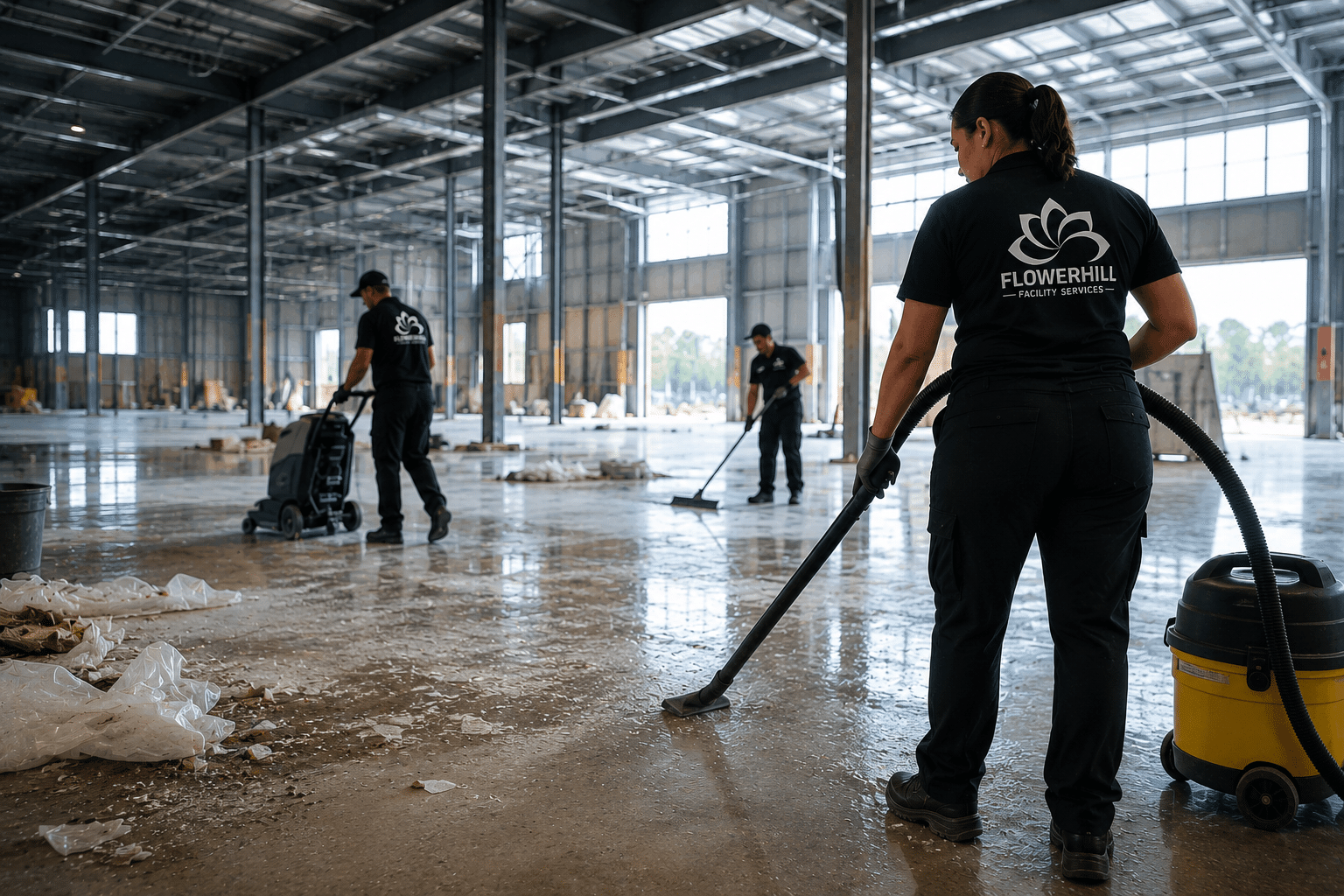
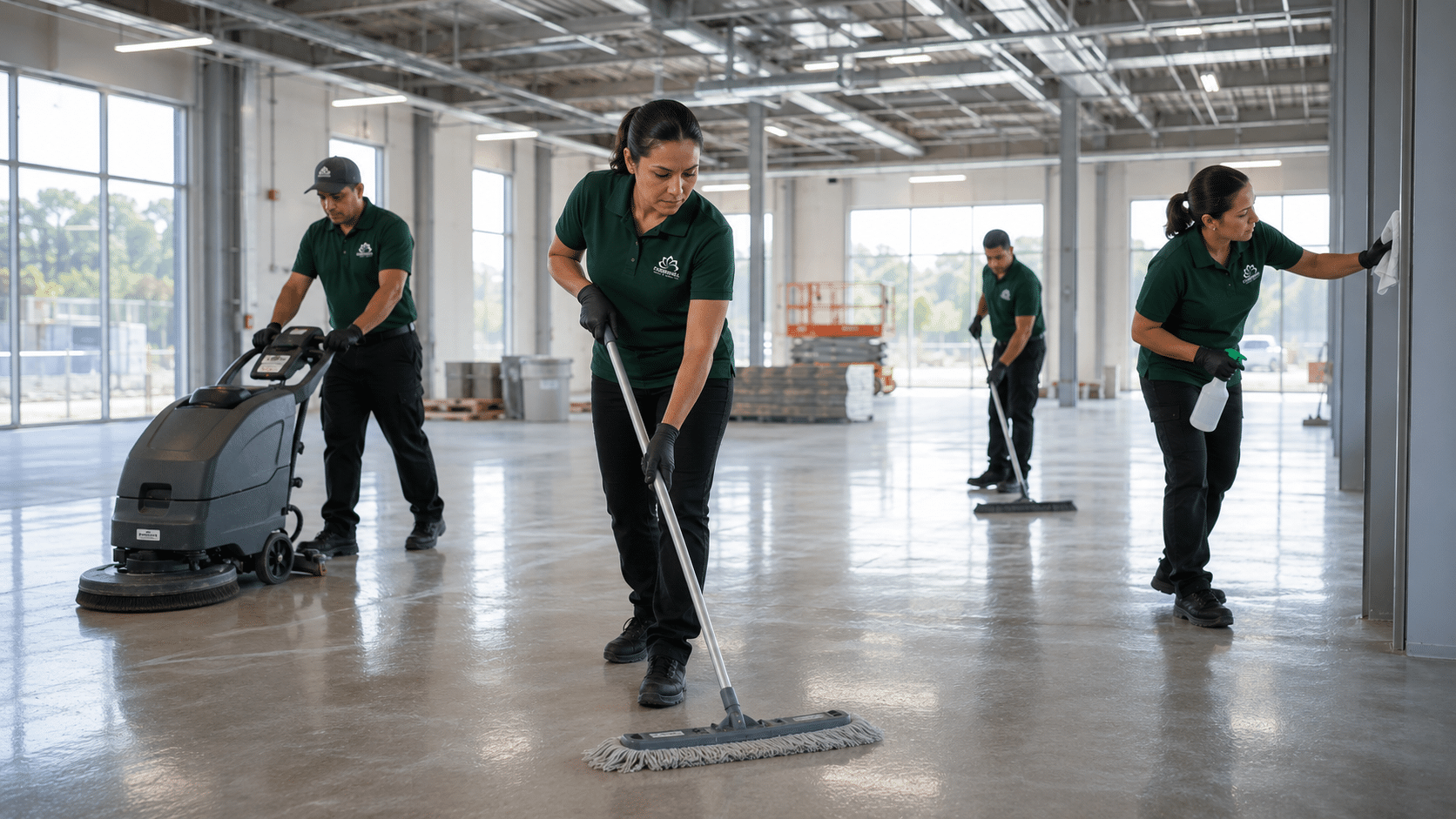
Scheduled shutdowns, equipment changes, construction, line installation, plant expansion, and maintenance periods create opportunities for detailed cleaning that may not be possible during production.
Project cleaning may include:
- Detailed floor and wall cleaning
- Cleaning approved equipment exteriors
- Overhead dust and debris removal
- Cleaning behind accessible equipment
- Cleaning storage and staging rooms
- Post-construction dust removal
- Cleaning newly installed production areas
- Cleaning doors, frames, and partitions
- Cleaning employee and administrative areas
- Final presentation cleaning
Work should be coordinated around contractors, equipment commissioning, utilities, chemical use, remaining construction activity, inspections, and the planned production restart.
Documentation and Sanitation Verification Support
Food-processing facilities may require documentation showing when assigned cleaning tasks were completed, who performed them, and whether exceptions were identified.
Depending on the approved scope, FlowerHill may support:
- Task-completion checklists
- Area and sanitation-zone records
- Shift and service logs
- Chemical-use documentation
- Concentration checks when trained and assigned
- Corrective-cleaning records
- Supervisor inspections
- Photographic documentation when permitted
- Work-order reporting
- Exception and damage reporting
- Client signoff procedures
Microbiological sampling, ATP testing, allergen testing, environmental monitoring, regulatory verification, and final sanitation release should only be offered when FlowerHill’s role, equipment, training, methods, and reporting responsibilities are formally established.
Day Porter and Operational Facility Support
Some food plants need continuous support in employee, warehouse, administrative, and approved non-production areas while production remains active.
A FlowerHill day porter may assist with:
- Restroom checks and supply restocking
- Breakroom upkeep
- Office and lobby presentation
- Waste and recycling removal
- Approved warehouse debris collection
- Routine non-hazardous spill response
- Loading and receiving-area support
- Interior glass cleaning
- Employee entrance care
- Reporting visible facility concerns
Porter duties inside production rooms should be separately defined and coordinated with the plant’s food-safety and operations teams.
Types of Food Processing Facilities We Support
Commercial Bakeries
Cleaning programs for ingredient rooms, production floors, packaging areas, warehouses, employee spaces, loading areas, and approved non-food-contact surfaces.
Dry Food and Snack Facilities
Controlled dry or low-moisture cleaning for facilities handling cereals, chips, nuts, powders, spices, grains, ingredients, and packaged snack products.
Beverage and Bottling Facilities
Approved environmental cleaning for production-support areas, bottling rooms, warehouses, floors, employee facilities, loading areas, and offices.
Produce Processing and Packing Facilities
Customized cleaning for receiving areas, wash and packaging support spaces, cold rooms, floors, employee areas, warehouses, and shipping zones.
Prepared-Food and Commissary Facilities
Cleaning support for centralized food-production properties, packaging rooms, ingredient storage, employee spaces, floors, and approved production-support areas.
Dairy and Refrigerated Food Facilities
Facility-specific cleaning developed around refrigeration, moisture, drainage, equipment, product exposure, flooring, and written sanitation requirements.
Meat, Poultry, Seafood, and Egg-Product Facilities
These environments require particularly detailed sanitation, machinery-safety, chemical, temperature, documentation, and regulatory procedures.
FlowerHill should only offer direct production sanitation within these facilities when the company has confirmed the necessary personnel, training, supervision, equipment, safety programs, and contractual responsibilities.
Food Ingredient and Spice Facilities
Controlled cleaning for dry ingredients, powders, storage, packaging, blending-support spaces, warehouses, and designated production environments.
Food Packaging Facilities
Cleaning for packaging rooms, material storage, finished-goods warehouses, equipment exteriors, offices, employee areas, and loading operations.
Cold-Storage and Food Distribution Facilities
Coordinated cleaning for refrigerated areas, freezers, docks, warehouses, employee facilities, offices, and approved product-support zones.
What Food Processing Cleaning Does Not Automatically Include
Food processing is a specialized and highly facility-dependent environment. The following services are not automatically included in a general commercial-cleaning agreement:
- Direct food-contact surface sanitation
- Production-line disassembly or reassembly
- Cleaning inside energized machinery
- Operating processing equipment
- Clean-in-place or clean-out-of-place system operation
- HACCP or preventive-controls management
- Regulatory compliance certification
- Environmental or microbiological sampling
- ATP or allergen testing
- Sanitation-process validation
- Product release decisions
- Hazardous-material response
- Ammonia or refrigeration-system work
- Pest-control treatment
- Wastewater-system operation
- Confined-space entry
- Industrial equipment repair
- Product destruction or recall handling
These responsibilities require separate evaluation, written procedures, appropriate training, qualified personnel, and clear contractual assignment.
Food Processing Cleaning Programs Built Around Your Plant
No two food plants operate under the same products, processes, schedules, equipment, allergens, moisture conditions, or food-safety requirements.
Before proposing a cleaning program, FlowerHill evaluates:
- Products manufactured or packaged
- FDA, USDA, state, customer, or other oversight
- Raw and ready-to-eat areas
- Food-contact and non-food-contact surfaces
- Sanitation and allergen zones
- Wet, dry, refrigerated, and frozen environments
- Production shifts and sanitation windows
- Equipment and machinery hazards
- Flooring and drainage
- Approved chemicals and tools
- Personal protective equipment
- Personnel-screening and access requirements
- Documentation and verification requirements
- Employee and administrative spaces
- Warehouse and loading activity
- Existing sanitation personnel
- Current facility condition
The result is a clearly defined scope aligned with the plant’s operations, sanitation program, safety procedures, quality requirements, and production schedule.
Why DFW Food Processing Facilities Choose FlowerHill
Customized Facility-Specific Scopes
Each program is developed around the plant’s products, production areas, sanitation zones, schedule, flooring, equipment, and approved responsibilities.
Clear Food-Safety Boundaries
The scope distinguishes general janitorial cleaning, environmental cleaning, non-food-contact work, and any separately authorized production-sanitation duties.
Flexible Production Scheduling
Service may be coordinated during sanitation shifts, post-production windows, overnight periods, planned shutdowns, weekends, or approved operational hours.
Coordinated Plant-Wide Support
FlowerHill can combine approved production-area support with warehouse, dock, restroom, breakroom, office, floor, and exterior cleaning.
Documented Communication
Facility contacts have an established process for approving work, reporting concerns, reviewing records, requesting corrections, and adjusting the service plan.
Scalable Staffing
Programs can support smaller food-production facilities, large plants, multiple shifts, seasonal demand, shutdown projects, and multi-building properties.
Local, Woman-Owned Leadership
As a woman-owned North Texas company, FlowerHill combines local accountability with the service structure needed to support demanding commercial facilities throughout Dallas-Fort Worth.
Our Food Processing Facility Cleaning Process
1. Controlled Facility Walkthrough
We tour approved areas with the plant’s designated representative and identify production zones, support spaces, sanitation needs, access limitations, and service priorities.
2. Food-Safety and Safety Assessment
FlowerHill reviews food-contact boundaries, sanitation zones, allergens, chemicals, equipment hazards, drainage, production schedules, personal protective equipment, and existing procedures.
3. Customized Scope of Work
We develop a proposed plan defining the approved areas, surfaces, tasks, frequencies, service windows, personnel, products, equipment, records, exclusions, and pricing.
4. Procedure and Responsibility Review
The plant and FlowerHill confirm shutdown responsibilities, access rules, chemical requirements, tool separation, sanitation sequencing, documentation, supervision, and stop-work conditions.
5. Personnel Orientation and Training
Assigned personnel are oriented to facility access, hygiene requirements, sanitation zones, allergen controls, personal protective equipment, emergency procedures, and service boundaries.
6. Scheduled Cleaning Service
FlowerHill completes approved cleaning tasks according to the documented scope and service schedule.
7. Inspection and Documentation
Completed work, exceptions, visible concerns, corrective tasks, and follow-up needs may be documented and communicated to the designated plant contact.
8. Program Review and Adjustment
The cleaning plan can be updated when products, equipment, allergens, schedules, construction, sanitation procedures, or facility conditions change.
How Often Should a Food Processing Facility Be Cleaned?
The appropriate frequency depends on the product, process, regulatory environment, sanitation plan, production schedule, soil load, allergen program, equipment, flooring, moisture conditions, and facility risk assessment.
Employee restrooms, breakrooms, hygiene areas, and offices may require daily or several-times-per-shift attention.
Production spaces may require cleaning after every production run, after each shift, during product changeovers, on a scheduled daily basis, or according to the plant’s written sanitation procedures.
Warehouse, overhead, deep-cleaning, cooler, shutdown, and post-construction projects may follow weekly, monthly, quarterly, seasonal, or project-specific schedules.
An on-site assessment is necessary before FlowerHill recommends frequency for any controlled production environment.
What Determines Food Processing Cleaning Pricing?
Pricing is based on the labor, supervision, training, equipment, products, documentation, access controls, and service frequency needed to complete the approved scope.
Pricing factors may include:
- Total cleanable square footage
- Product and processing type
- Food-contact versus non-food-contact responsibilities
- Wet or dry sanitation requirements
- Production and sanitation schedules
- Number of shifts
- Flooring and drain conditions
- Equipment density
- Required cleaning chemicals
- Personal protective equipment
- Tool and equipment segregation
- Allergen and sanitation zones
- Security and onboarding
- Documentation requirements
- Warehouse and dock coverage
- Restroom, breakroom, and office coverage
- Elevated or shutdown cleaning
- Current facility condition
A controlled facility walkthrough is the most reliable way to define responsibilities and prepare an accurate proposal.
Food Processing Facility Cleaning Service Areas
FlowerHill Facility Services supports food-processing and food-production properties throughout Fort Worth, Dallas, Arlington, Grand Prairie, Irving, Coppell, Carrollton, Alliance, Roanoke, Denton, Grapevine, Flower Mound, Bedford, Hurst, North Richland Hills, Colleyville, Southlake, Keller, Westlake, Frisco, Plano, McKinney, Richardson, Addison, The Colony, and surrounding North Texas communities.
Frequently Asked Questions
What does food processing facility cleaning include?
Services may include approved production floors, non-food-contact surfaces, packaging rooms, warehouses, coolers, loading areas, employee hygiene spaces, restrooms, breakrooms, offices, waste areas, and other areas identified in the scope of work.
Does FlowerHill sanitize direct food-contact surfaces?
Direct food-contact sanitation should only be included when the surfaces, procedures, products, concentrations, contact times, rinsing requirements, training, records, and verification responsibilities have been formally approved.
Can FlowerHill clean while food production is operating?
Approved operational cleaning may be performed when work zones, exposed-product protections, machinery boundaries, traffic controls, products, and procedures have been established by the facility.
Can cleaning be completed overnight or after production?
Yes. Service may be coordinated after production, during sanitation shifts, overnight, on weekends, during changeovers, or during planned shutdown windows.
Do you clean production equipment?
Approved equipment exteriors and specifically authorized surfaces may be included. Internal machinery, direct food-contact components, guards, conveyors, tanks, processing tools, and disassembled equipment require separately defined procedures.
Does FlowerHill handle lockout and tagout?
The facility and FlowerHill must establish who shuts down, isolates, verifies, and restores each machine. FlowerHill personnel should not clean within hazardous equipment zones until required energy-control procedures have been completed.
Do you clean drains?
Approved drain and drain-area cleaning may be included using dedicated tools, approved chemicals, proper sequencing, and procedures intended to prevent material from being transferred to cleaner zones.
Can you clean dry or low-moisture food plants?
Yes, subject to assessment. Dry facilities may require vacuuming, scraping, controlled dry pickup, dedicated tools, and minimal-moisture methods rather than conventional wet cleaning.
Do you provide allergen-changeover cleaning?
FlowerHill may support an approved changeover procedure, but allergen removal and validation remain subject to the plant’s written program, verification methods, and qualified food-safety personnel.
Do you conduct ATP, allergen, or microbiological testing?
Testing should only be offered when the equipment, methods, training, sampling locations, acceptance criteria, recordkeeping, and reporting responsibilities have been formally established.
Are FlowerHill’s products EPA approved?
The more accurate term is EPA-registered when discussing antimicrobial pesticide products. Any cleaner or sanitizer must be approved by the plant and used strictly according to its current label and intended surface application.
Can FlowerHill guarantee FDA or USDA compliance?
No outside cleaning contractor should guarantee a facility’s overall regulatory compliance. FlowerHill’s role is to perform its approved scope in support of the plant’s sanitation, food-safety, quality, and regulatory programs.
Can you clean meat or poultry processing plants?
Potentially, but direct production sanitation in USDA-regulated environments requires a detailed review of Sanitation SOP responsibilities, equipment hazards, chemicals, records, supervision, and employee qualifications.
Do you handle chemical or biohazard spills?
Routine commercial cleaning does not automatically include hazardous-material, chemical-release, sewage, blood, ammonia, or biohazard response. These conditions require separately trained and equipped personnel.
Can FlowerHill clean our offices, restrooms, and warehouse too?
Yes. A coordinated plan can cover approved production-support areas along with administrative offices, employee spaces, warehouses, loading areas, restrooms, breakrooms, and common areas.
Do you provide shutdown and post-construction cleaning?
Shutdown, expansion, equipment-installation, and post-construction cleaning may be available following a review of production status, contractor activity, equipment, access, safety, and restart deadlines.
How do we receive a food processing cleaning proposal?
Begin with a controlled facility walkthrough. FlowerHill will review the plant’s approved service areas, products, production schedule, sanitation zones, equipment, safety requirements, documentation, and existing sanitation resources before preparing a customized proposal.
Build a Cleaning Program Around Your Food Production Operation
Your facility needs a cleaning partner that respects food-safety boundaries, production schedules, sanitation zones, employee safety, and clearly documented responsibilities.
FlowerHill Facility Services develops customized environmental-cleaning, janitorial, warehouse, floor-care, day porter, shutdown, and facility-support programs for food-processing properties throughout Dallas-Fort Worth.
Request a controlled facility walkthrough to discuss your operation, production areas, cleaning priorities, schedule, sanitation requirements, and service boundaries.