DALLAS - FORT WORTH'S PREFERRED COMMERCIAL CLEANING COMPANY

Facility Maintenance

Facility Maintenance Services in Dallas-Fort Worth

FlowerHill Facility Services provides dependable facility maintenance and building-support services for offices, warehouses, industrial properties, medical office buildings, corporate campuses, retail centers, churches, schools, logistics facilities, and other commercial properties throughout Dallas-Fort Worth.

Maintaining a commercial building involves more than keeping it clean. Lighting, doors, walls, ceilings, fixtures, common areas, exterior spaces, and other physical assets require ongoing attention to remain safe, functional, presentable, and ready for daily operations.

FlowerHill develops customized facility maintenance programs around your building’s condition, operating schedule, occupancy, service priorities, and existing maintenance resources. Our team can provide recurring inspections, preventive upkeep, approved minor repairs, appearance maintenance, work-order support, and coordination with qualified specialty contractors when more technical work is required.

What Is Facility Maintenance?

Facility maintenance is the ongoing inspection, upkeep, repair, and care of a commercial building and its physical assets.

The purpose of facility maintenance is to help keep the property functional, safe, efficient, professionally presented, and prepared for the people who work in or visit the building. It may involve scheduled preventive tasks, minor corrective repairs, exterior upkeep, asset inspections, maintenance documentation, and prompt attention to emerging building concerns.

Unlike routine janitorial service, which primarily focuses on cleaning and sanitation, facility maintenance addresses the physical condition and operation of the property itself.

Facility Maintenance Services We Can Provide

The exact services included in your FlowerHill maintenance program will depend on your property, operating environment, service agreement, and the qualifications required for each task.

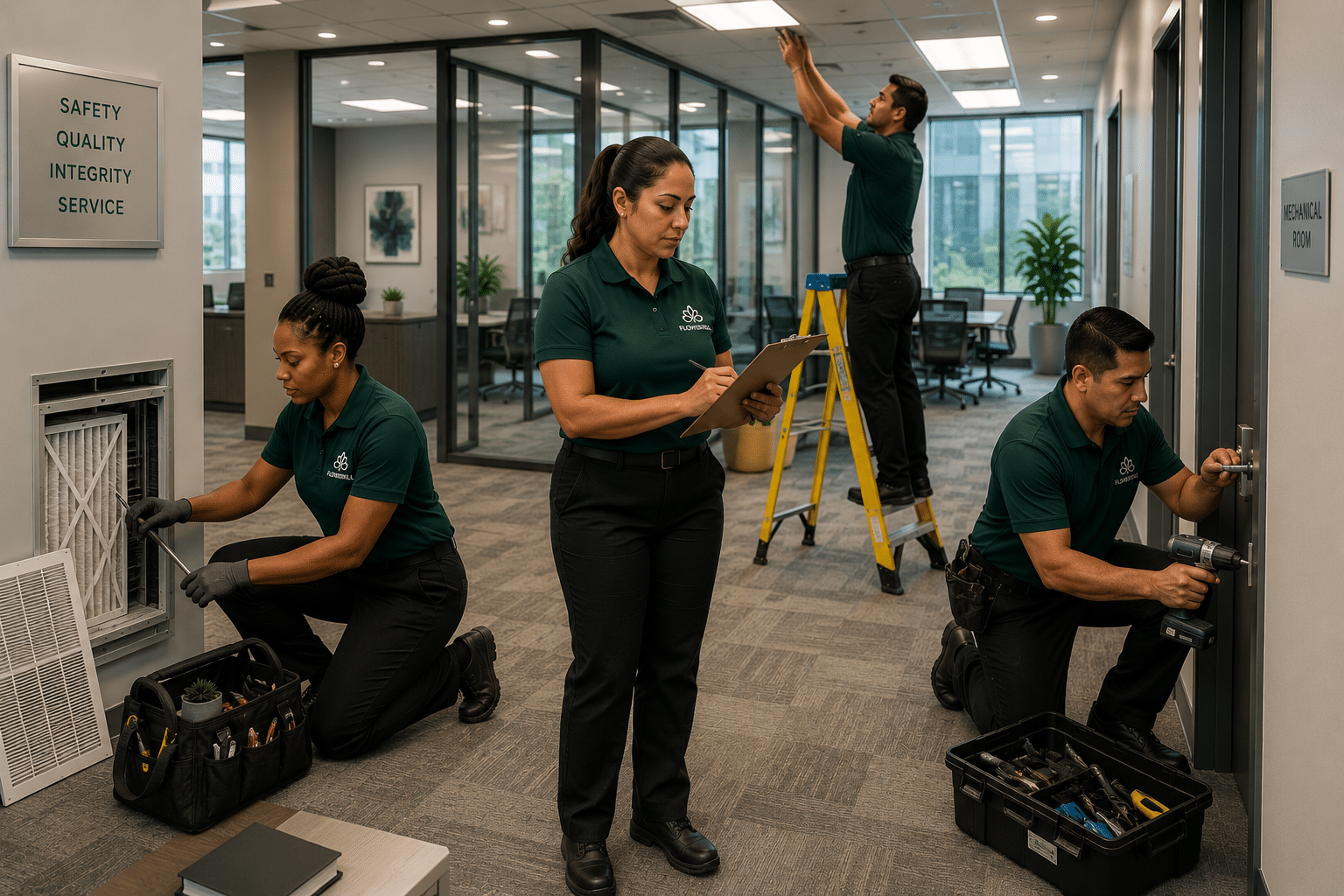
Routine Building Inspections

Regular visual inspections can help identify minor concerns before they become disruptive or expensive building problems.

Routine facility inspections may include checking:

  • Interior lighting conditions
  • Damaged or stained ceiling tiles
  • Doors, hinges, handles, and closers
  • Walls, corners, baseboards, and painted surfaces
  • Restroom fixtures and visible leaks
  • Common-area furniture and fixtures
  • Flooring transitions and visible trip concerns
  • Entryways and pedestrian paths
  • Exterior lighting conditions
  • Parking areas and surrounding property
  • Visible signs of wear or property damage
  • Areas requiring specialty-contractor attention

Observations can be documented and communicated to the designated facility contact for review and authorization.

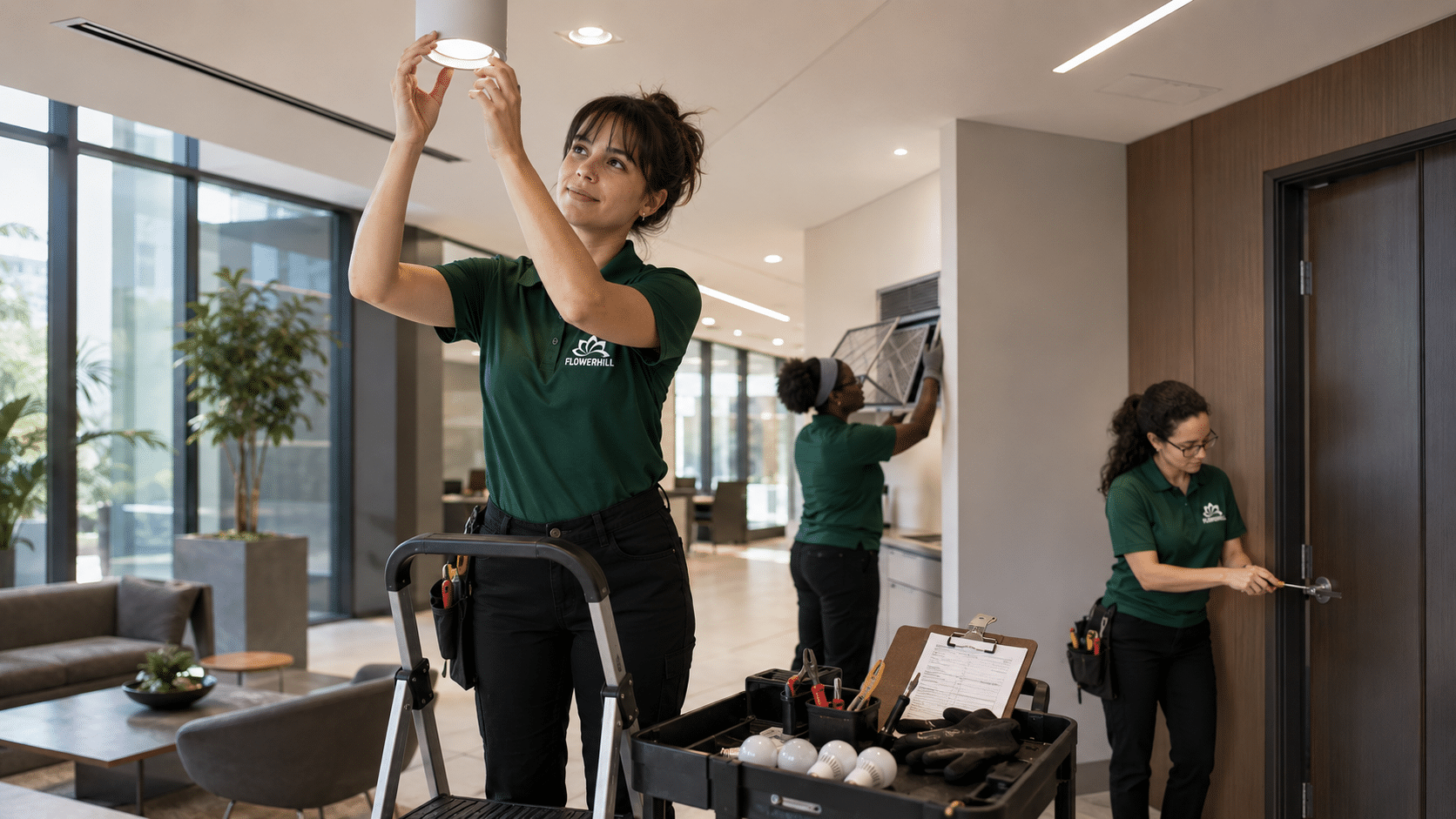
Lighting and Ceiling Upkeep

Lighting and ceiling conditions affect safety, appearance, visibility, and the overall impression of a commercial environment.

Approved routine services may include:

  • Replacing accessible lightbulbs or lamps
  • Replacing approved ceiling tiles
  • Reporting damaged or malfunctioning fixtures
  • Cleaning accessible light covers and diffusers
  • Checking common areas for burned-out lighting
  • Documenting recurring lighting concerns
  • Coordinating more complex repairs with a qualified electrician

Electrical repairs, hardwired fixture work, energized systems, elevated access, and other regulated tasks must be completed by properly qualified personnel.

Door, Hardware, and Fixture Maintenance

Doors and frequently used building hardware experience continual wear from employees, customers, deliveries, and everyday traffic.

Minor upkeep may include:

  • Tightening approved handles and hardware
  • Adjusting accessible hinges where appropriate
  • Inspecting door closers and latches
  • Replacing approved non-security hardware
  • Checking restroom partitions and accessories
  • Stabilizing loose furniture components
  • Reporting damaged locks or access-control equipment
  • Coordinating specialty repairs when required

Security systems, electronic access controls, fire-rated assemblies, automatic doors, and major hardware repairs may require specialized contractors.

Wall, Paint, and Surface Repairs

Scuffs, dents, holes, and damaged finishes can make an otherwise well-maintained facility appear neglected.

Approved appearance-maintenance services may include:

  • Minor drywall patching
  • Small paint touch-ups
  • Wall and corner-guard inspection
  • Baseboard and trim touch-ups
  • Removal of approved wall-mounted materials
  • Minor cosmetic surface repairs
  • Reporting moisture damage or recurring wall concerns
  • Coordinating larger restoration projects

Water intrusion, mold, structural damage, hazardous materials, and extensive repairs require separate professional evaluation.

Restroom and Breakroom Upkeep

Restrooms and employee break areas contain fixtures and accessories that may require attention beyond routine cleaning.

Facility-support tasks may include:

  • Checking dispensers and wall-mounted accessories
  • Tightening approved restroom fixtures
  • Replacing damaged dispensers when authorized
  • Reporting visible plumbing leaks
  • Checking cabinet and drawer hardware
  • Inspecting countertops and backsplashes
  • Minor furniture adjustments
  • Coordinating licensed plumbing or electrical repairs

FlowerHill can combine routine facility upkeep with restroom cleaning, consumable restocking, breakroom cleaning, and recurring janitorial service.

Office Furniture and Interior Asset Support

Commercial furniture and shared interior assets often require adjustments, repositioning, assembly, or minor upkeep as workplace needs change.

Approved services may include:

  • Minor furniture adjustments
  • Assembly of approved office furniture
  • Repositioning tables, chairs, and shared furnishings
  • Tightening accessible furniture hardware
  • Replacing approved furniture components
  • Setting up rooms for meetings or events
  • Inspecting shared furniture for visible damage
  • Coordinating removal of retired assets

Exterior and Grounds Support

The condition of the property surrounding a commercial building affects curb appeal, accessibility, safety, and the visitor experience.

Exterior facility-support services may include:

  • Parking-lot litter collection
  • Sidewalk and entryway cleaning
  • Exterior waste-station upkeep
  • Building-perimeter inspections
  • Removal of loose debris
  • Pressure washing of approved surfaces
  • Checking exterior lighting conditions
  • Reporting pavement or walkway damage
  • Monitoring visible drainage concerns
  • Coordinating landscaping or specialty exterior work

Major pavement repairs, roofing, drainage modification, tree work, pest-control treatment, and structural exterior repairs should be performed by appropriately qualified contractors.

Preventive Maintenance Support

Preventive maintenance focuses on identifying and addressing routine needs before an asset fails or a building issue becomes more disruptive.

A preventive facility program may include:

  • Scheduled inspection checklists
  • Lighting checks
  • Door and hardware reviews
  • Ceiling and wall-condition checks
  • Common-area asset inspections
  • Filter-change reminders or coordination
  • Seasonal exterior reviews
  • Documentation of recurring concerns
  • Work-order tracking
  • Coordination with approved service vendors

The preventive schedule can be customized around the property’s age, usage, assets, traffic, seasonal conditions, and existing maintenance resources.

Corrective and Reactive Maintenance Support

Even with preventive attention, unexpected facility issues can occur.

FlowerHill may provide or coordinate an appropriate response for approved concerns such as:

  • Loose or damaged hardware
  • Burned-out accessible lighting
  • Damaged ceiling tiles
  • Minor wall or paint damage
  • Broken dispensers or accessories
  • Furniture damage
  • Routine non-hazardous spills
  • Weather-related debris
  • Unexpected appearance concerns
  • Issues requiring a specialty contractor

Emergency electrical, plumbing, HVAC, fire-safety, structural, hazardous-material, or life-safety situations must be directed to emergency services or properly qualified contractors.

Work-Order Management and Maintenance Documentation

Clear communication is essential when multiple maintenance requests, service providers, and building priorities are involved.

Depending on the program, FlowerHill can help support:

  • Maintenance-request documentation
  • Task prioritization
  • Recurring inspection checklists
  • Open and completed work-order tracking
  • Photographic issue documentation
  • Communication with facility contacts
  • Scheduling approved maintenance tasks
  • Coordinating access for outside vendors
  • Reporting recurring facility concerns
  • Confirming completed authorized work

The specific reporting system can be aligned with the client’s existing process, property-management platform, maintenance software, or preferred communication method.

Facility Maintenance Programs Built Around Your Property

No two commercial facilities have the same maintenance requirements.

A corporate office may prioritize lighting, presentation, meeting spaces, furniture, and common-area upkeep. A warehouse may require dock-area inspections, industrial lighting checks, employee-space maintenance, and exterior support. A retail property may focus on entrances, customer-facing surfaces, restrooms, hardware, and rapid response to visible damage.

Before proposing a facility maintenance program, FlowerHill evaluates factors such as:

  • Building type and primary use
  • Total square footage
  • Age and condition of the property
  • Operating hours
  • Number of occupants and visitors
  • Interior and exterior assets
  • Traffic patterns
  • Existing maintenance personnel
  • Current contractor relationships
  • Security and access requirements
  • Required inspection frequency
  • Approved repair responsibilities
  • Work-order and reporting expectations

The result is a clearly defined maintenance scope aligned with the property’s needs, budget, operating schedule, and risk profile.


Commercial Facilities We Support

Corporate Offices and Campuses

Support professional workplace conditions through routine inspections, lighting upkeep, minor repairs, furniture support, meeting-space preparation, and common-area maintenance.

Warehouses and Distribution Centers

Maintain approved employee areas, administrative spaces, loading-support areas, lighting, doors, hardware, walls, ceilings, exterior zones, and other building assets.

Industrial and Flex Properties

Coordinate maintenance across blended facilities containing offices, warehouses, showrooms, workspaces, storage areas, and customer-facing environments.

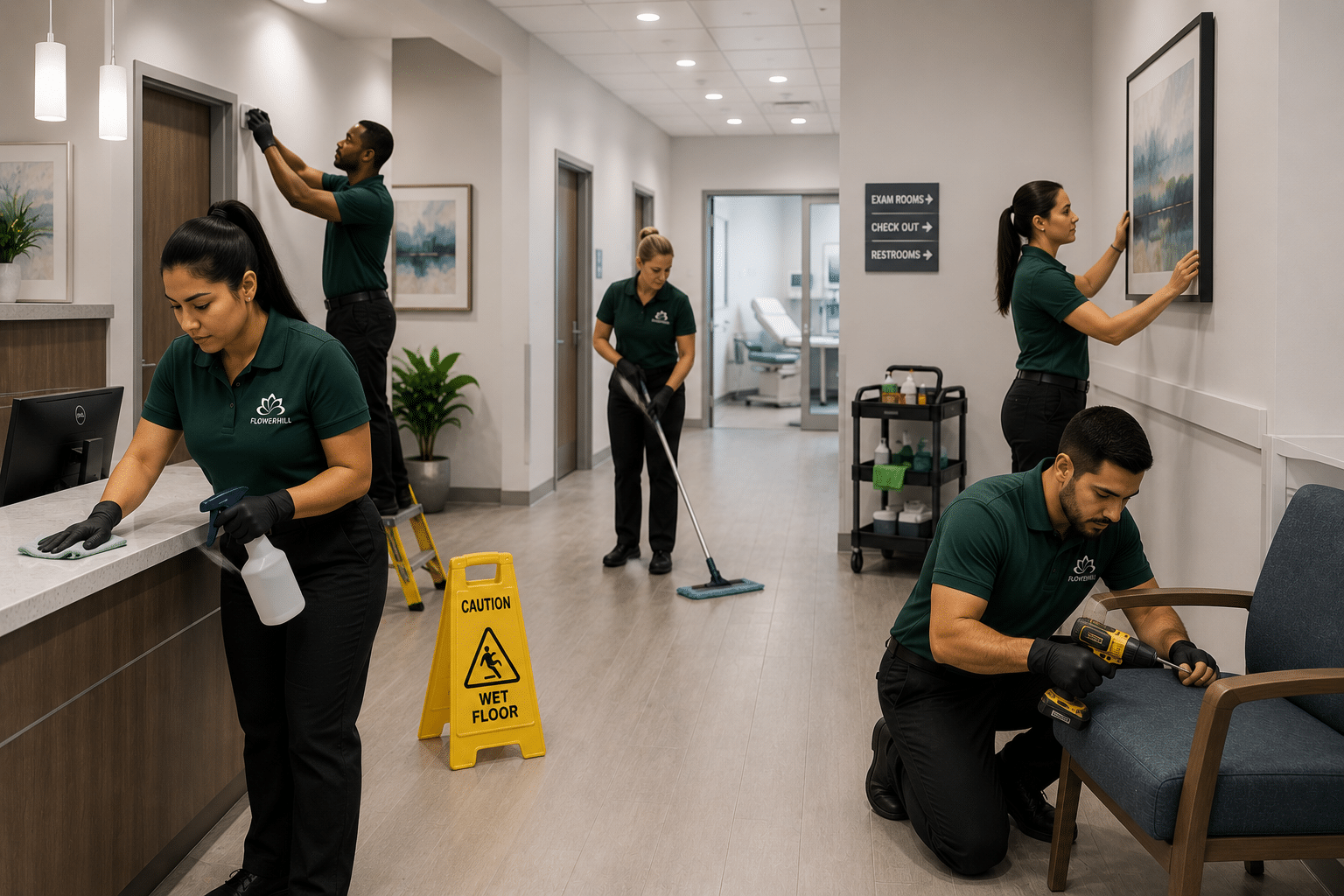
Medical Office Buildings

Support waiting rooms, administrative areas, restrooms, common spaces, lighting, furniture, doors, fixtures, and other non-clinical facility assets.

Professional Office Parks

Provide recurring upkeep for common areas, individual suites, shared restrooms, entrances, exterior spaces, property-management offices, and multi-tenant assets.

Retail and Mixed-Use Properties

Address customer-facing presentation, entrances, hardware, lighting, walls, restrooms, common areas, sidewalks, waste areas, and visible maintenance concerns.

Churches and Places of Worship

Help maintain worship spaces, classrooms, fellowship areas, offices, restrooms, furniture, lighting, doors, and exterior gathering areas.

Schools and Educational Facilities

Support classrooms, administrative offices, shared spaces, restrooms, furniture, lighting, doors, walls, and other approved facility assets.

Logistics and Airport-Support Facilities

Provide building-upkeep support for administrative areas, terminals, waiting areas, employee spaces, logistics buildings, warehouses, and operational facilities.

Facility Maintenance, Janitorial Service, and Facility Management

Janitorial service focuses primarily on recurring cleaning tasks such as restroom sanitation, floor cleaning, trash removal, breakroom care, dusting, and restocking.

Facility maintenance focuses on the physical condition and functionality of the building, including inspections, preventive upkeep, approved minor repairs, fixtures, finishes, doors, lighting, furniture, and surrounding property.

Day porter service provides visible support during operating hours for immediate cleaning, appearance, restocking, room resets, spill response, and basic facility needs.

Facility management is the broader organizational function that may include budgeting, planning, vendor management, space utilization, compliance, capital projects, technology, maintenance strategy, and overall building operations.

FlowerHill can combine janitorial cleaning, day porter service, floor care, and approved facility maintenance into a coordinated service program.

What Facility Maintenance Does Not Automatically Include

Not every building task should be performed by a general facility-support team.

Depending on the work involved, FlowerHill may recommend or coordinate a properly licensed, certified, or specialized contractor for:

  • Electrical wiring and energized systems
  • Major plumbing repairs
  • HVAC diagnostics and technical repairs
  • Fire alarms and suppression systems
  • Elevator maintenance
  • Roofing and structural repairs
  • Gas lines and fuel systems
  • Security and electronic access systems
  • Hazardous-material remediation
  • Mold or asbestos remediation
  • Industrial equipment repair
  • Work requiring permits or trade licensing

These service boundaries help protect the property, its occupants, and everyone performing work inside the facility.

Why DFW Facilities Trust FlowerHill Facility Services

One Coordinated Facility Partner

Facility cleaning, routine upkeep, minor approved repairs, inspections, and porter support can be coordinated through a single responsive service relationship.

Customized Maintenance Programs

Your maintenance scope is developed around the actual building rather than being copied from a generic checklist.

Preventive Attention

Routine inspections and documented observations help identify emerging concerns before they are ignored or allowed to worsen.

Responsive Communication

Facility contacts have a direct way to report concerns, authorize work, request changes, and receive updates.

Professional Service Teams

FlowerHill emphasizes professional presentation, respect for occupied environments, clear responsibilities, and accountability.

Flexible Scheduling

Maintenance and inspection tasks can be coordinated during regular hours, after hours, overnight, or during approved service windows.

Local, Woman-Owned Leadership

As a woman-owned North Texas company, FlowerHill combines local accountability with the systems and service capacity needed to support commercial properties throughout DFW.

Our Facility Maintenance Process

1. Facility Walkthrough

We tour the building, discuss existing concerns, review current maintenance resources, and identify priority assets and service areas.

2. Maintenance Needs Assessment

FlowerHill evaluates the property’s condition, usage, operating schedule, access requirements, recurring concerns, and desired service level.

3. Customized Scope of Work

We develop a proposed maintenance plan that identifies approved tasks, exclusions, inspection frequency, service schedule, reporting procedures, and pricing.

4. Access and Safety Coordination

Our team reviews building access, restricted areas, security procedures, approved work zones, equipment limitations, and client-specific safety requirements.

5. Scheduled Maintenance and Inspections

FlowerHill personnel complete authorized tasks according to the approved schedule and documented scope of work.

6. Reporting and Work-Order Updates

Completed tasks, emerging concerns, recommended repairs, and contractor needs can be documented and communicated to the designated facility contact.

7. Program Review and Adjustment

The maintenance plan can be updated as the property changes, occupancy grows, new assets are added, or operational priorities evolve.

Preventive Maintenance vs. Reactive Maintenance

Preventive maintenance includes scheduled inspections and routine upkeep intended to reduce avoidable failures and identify concerns early.

Corrective maintenance addresses a known issue that has been discovered but may not require emergency action.

Reactive maintenance responds after something unexpectedly fails, breaks, leaks, or becomes unusable.

A balanced facility program emphasizes preventive attention while maintaining a clear process for corrective and reactive needs.

How Often Should Facility Maintenance Be Performed?

The right frequency depends on the building’s size, age, condition, occupancy, operating schedule, assets, visitor traffic, and existing maintenance resources.

A small professional office may need a scheduled monthly inspection with maintenance work performed as needed. A corporate campus, warehouse, retail center, school, or heavily occupied commercial building may benefit from weekly visits, several service periods per week, or a dedicated on-site maintenance presence.

High-use assets such as doors, restrooms, lighting, entrances, employee areas, and shared furnishings may require more frequent attention than lower-traffic areas.

An on-site walkthrough allows FlowerHill to recommend a practical schedule based on the property’s actual condition and operations.

What Determines Facility Maintenance Pricing?

Facility maintenance pricing is based on the labor, supervision, equipment, materials, inspection frequency, documentation, access requirements, and level of support included in the approved scope.

Pricing factors may include:

  • Property size and building type
  • Age and existing condition
  • Number and type of maintained assets
  • Inspection frequency
  • Estimated maintenance hours
  • Daytime versus after-hours service
  • Required equipment and access methods
  • Security and onboarding requirements
  • Replacement materials and parts
  • Exterior and grounds responsibilities
  • Work-order and reporting requirements
  • Specialty-contractor coordination
  • Emergency or priority-response expectations

A facility walkthrough is the most reliable way to define responsibilities and prepare an accurate maintenance proposal.

Facility Maintenance Service Areas Across Dallas-Fort Worth

FlowerHill Facility Services supports commercial properties throughout Fort Worth, Dallas, North Richland Hills, Bedford, Hurst, Colleyville, Grapevine, Southlake, Keller, Roanoke, Alliance, Arlington, Irving, Coppell, Carrollton, Flower Mound, Frisco, Plano, Denton, Grand Prairie, The Colony, Westlake, McKinney, and surrounding North Texas communities.

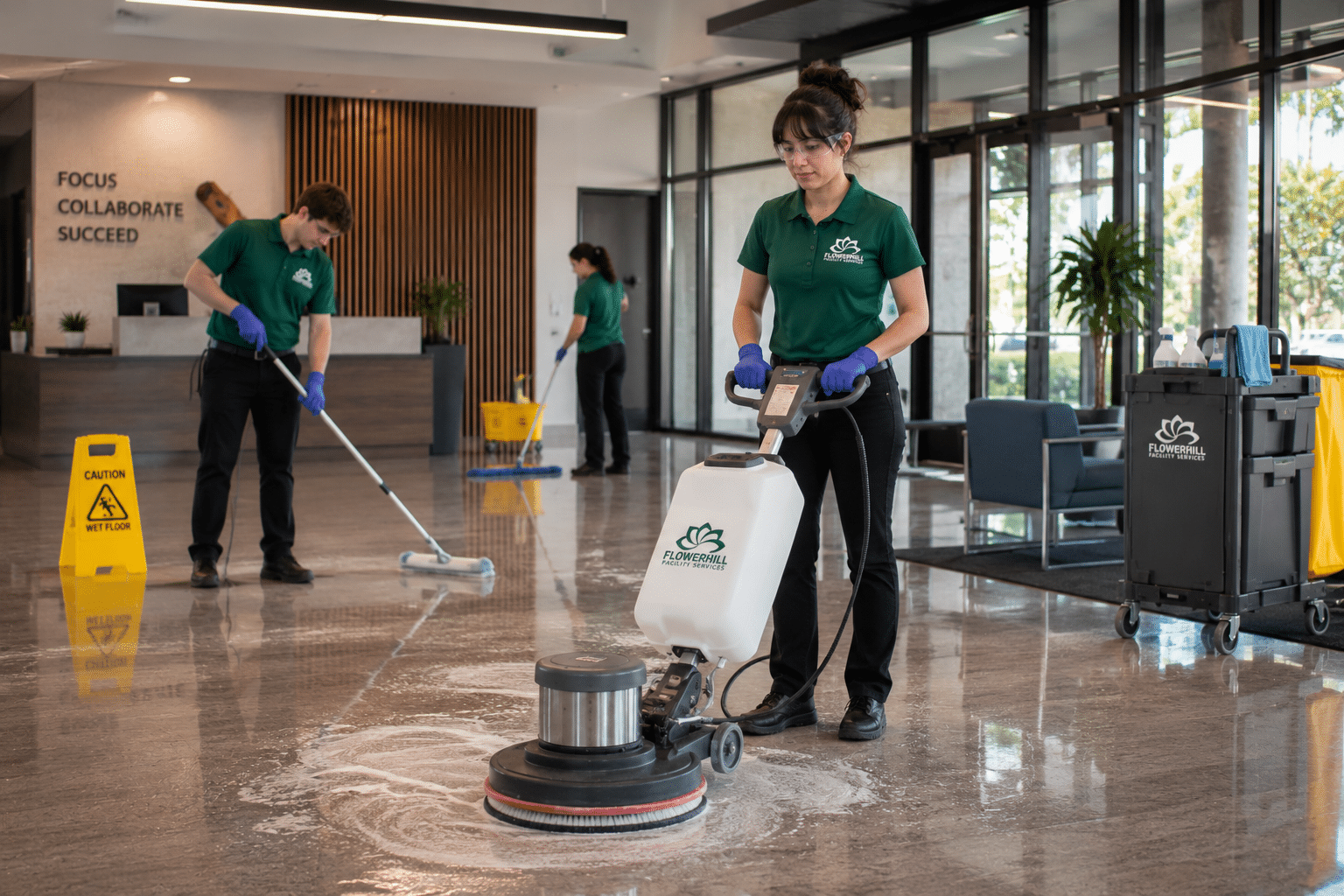
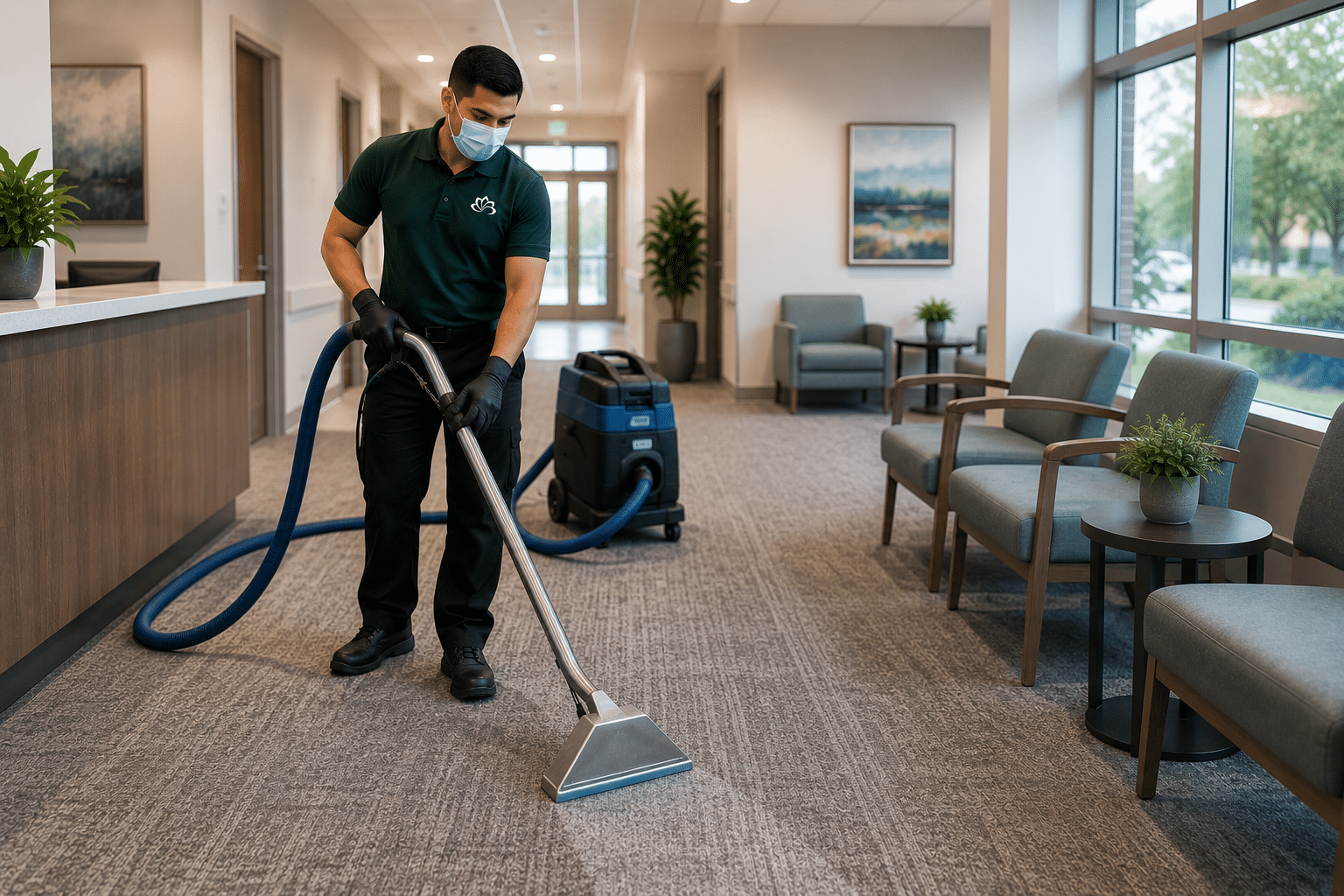
FlowerHill janitorial services team cleaning a modern Arlington, Texas office lobby.