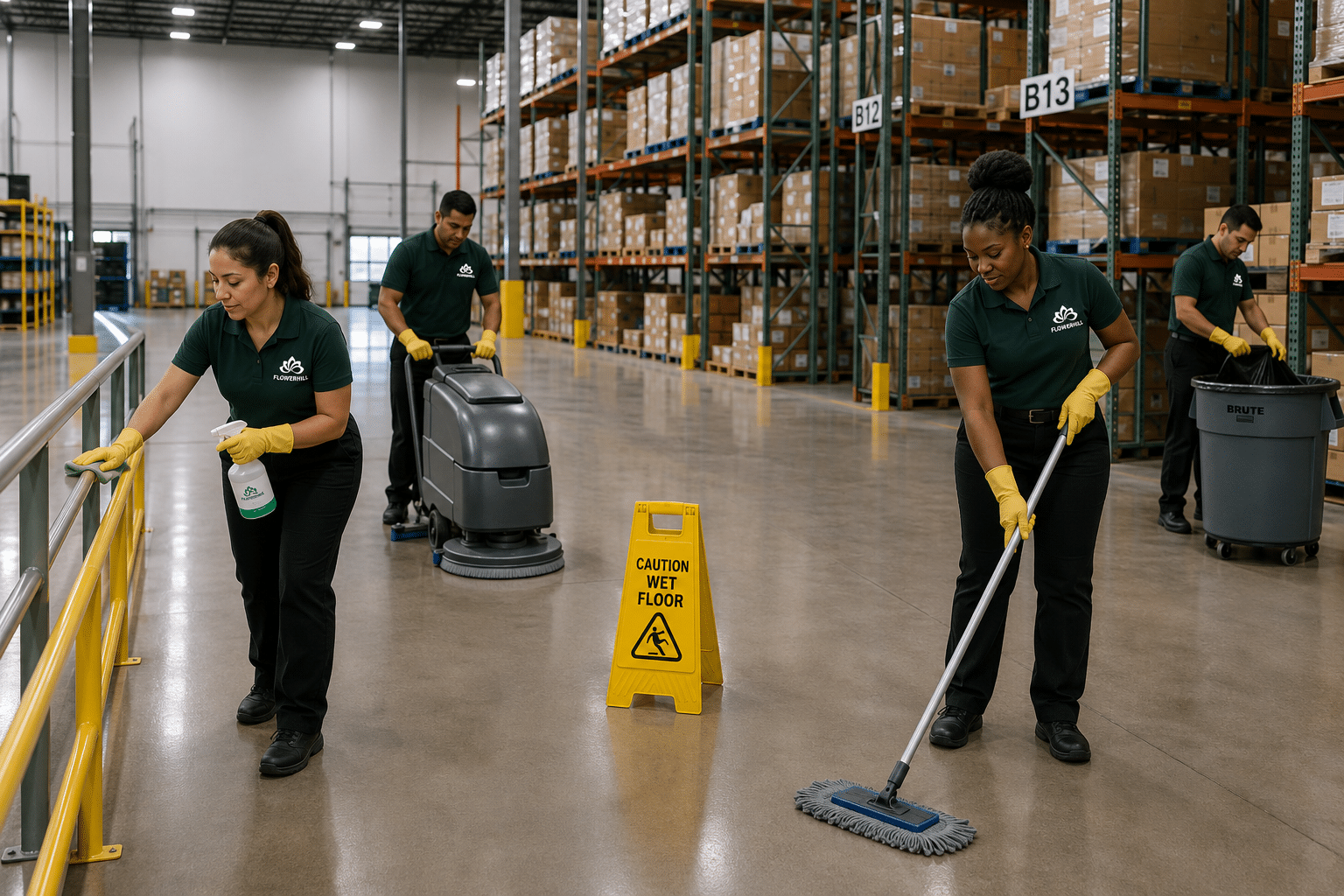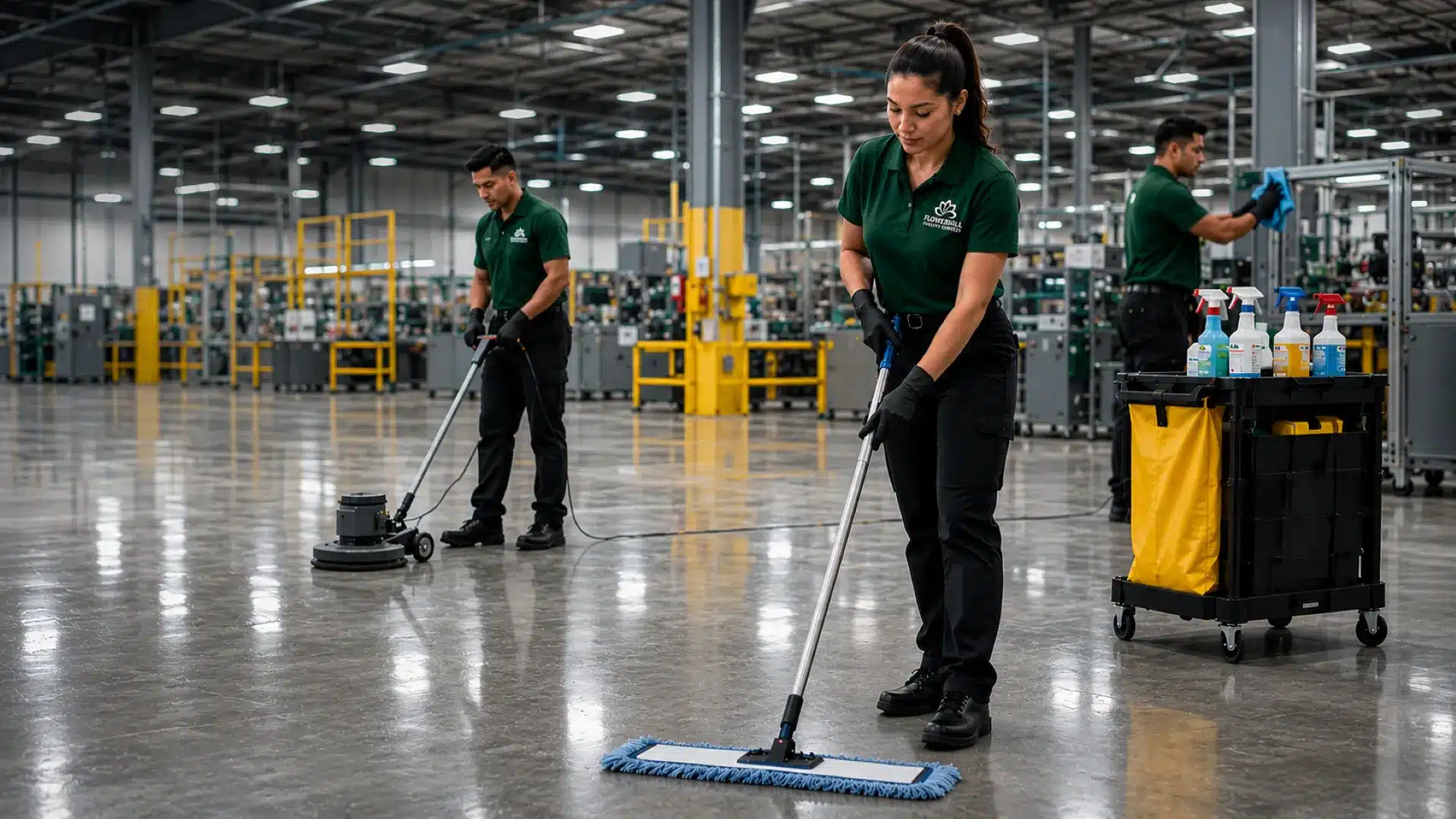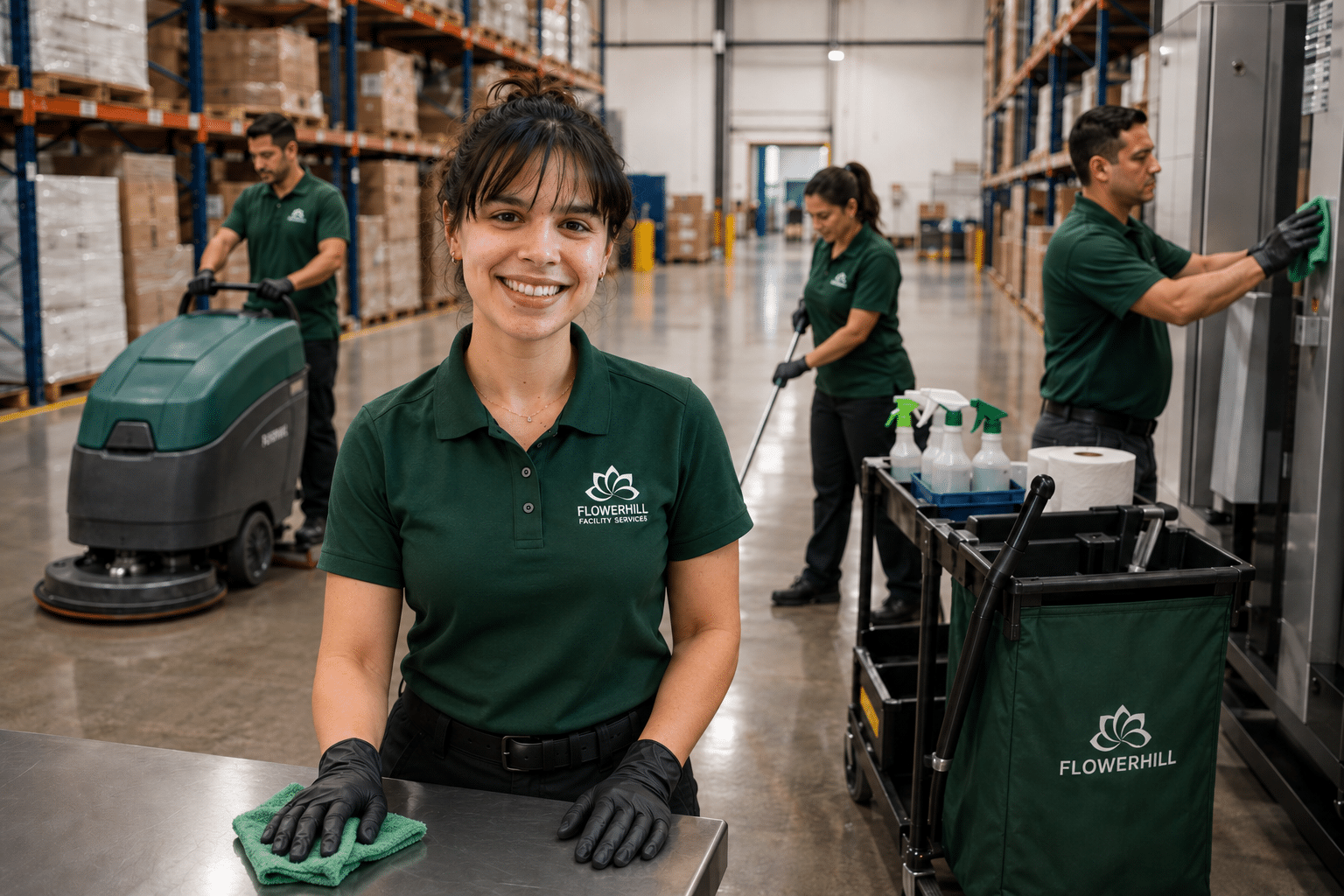
DALLAS - FORT WORTH'S PREFERRED COMMERCIAL CLEANING COMPANY

Warehouse Cleaning Services in Dallas-Fort Worth

We Clean From Warehouse Offices to the Inventory Floors & Shelves

FlowerHill Facility Services provides customized warehouse cleaning services for distribution centers, fulfillment operations, storage facilities, third-party logistics providers, wholesale properties, e-commerce warehouses, industrial campuses, and other commercial facilities throughout Dallas-Fort Worth.

Warehouses create cleaning demands that differ significantly from traditional offices. Forklift traffic, shipping activity, pallets, packaging materials, concrete floors, loading docks, employee break areas, multiple shifts, and large open spaces require a cleaning program built around active operations.

FlowerHill develops each warehouse cleaning plan around your facility’s layout, operating schedule, workforce, traffic patterns, floor surfaces, security requirements, safety procedures, and presentation standards.

Whether your property needs recurring janitorial service, machine floor scrubbing, daytime porter coverage, loading-dock upkeep, employee-area cleaning, or scheduled deep cleaning, our team creates a clearly defined program designed to support a cleaner, more organized, and professionally maintained warehouse.

What Is Professional Warehouse Cleaning?

Professional warehouse cleaning is the recurring and project-based care of storage, distribution, shipping, employee, administrative, and common areas within a warehouse facility.

A warehouse cleaning program may include floor sweeping, machine scrubbing, dust and debris removal, loading-area care, restroom cleaning, breakroom maintenance, trash collection, office cleaning, interior glass care, and daytime support for routine cleaning needs that develop during active operations.

The exact scope depends on how the building is used. A high-volume fulfillment center may need daily service and daytime coverage, while a lower-traffic storage facility may need several recurring visits per week plus scheduled floor projects.

Why Warehouses Need Specialized Cleaning Programs

Large commercial warehouses can accumulate dirt and debris quickly because employees, forklifts, pallet jacks, trailers, deliveries, and outdoor traffic continually move through the facility.

A customized warehouse cleaning plan helps address:

  • Dust and loose debris across large floor areas
  • Soil tracked through dock doors and entrances
  • Packaging materials and pallet debris
  • Forklift and equipment traffic
  • High-use employee restrooms and breakrooms
  • Multiple operating shifts
  • Shipping and receiving schedules
  • Large waste and recycling volumes
  • Administrative offices attached to warehouse areas
  • Seasonal increases in inventory and staffing
  • Customer, vendor, and auditor presentation expectations
  • Different cleaning requirements across operational zones

FlowerHill organizes these needs into a practical scope of work that identifies what will be cleaned, how frequently service will occur, and when the work can be completed without unnecessarily interfering with operations.

Warehouse Areas We Clean

Warehouse Floors and Operational Aisles

Warehouse floors experience constant wear from personnel, carts, pallets, forklifts, equipment, deliveries, and soil entering through dock doors.

Approved floor-cleaning services may include:

  • Routine sweeping and loose-debris removal
  • Dust mopping where appropriate
  • Cleaning marked pedestrian pathways
  • Cleaning approved operational aisles
  • Spot cleaning routine non-hazardous spills
  • Wet mopping designated areas
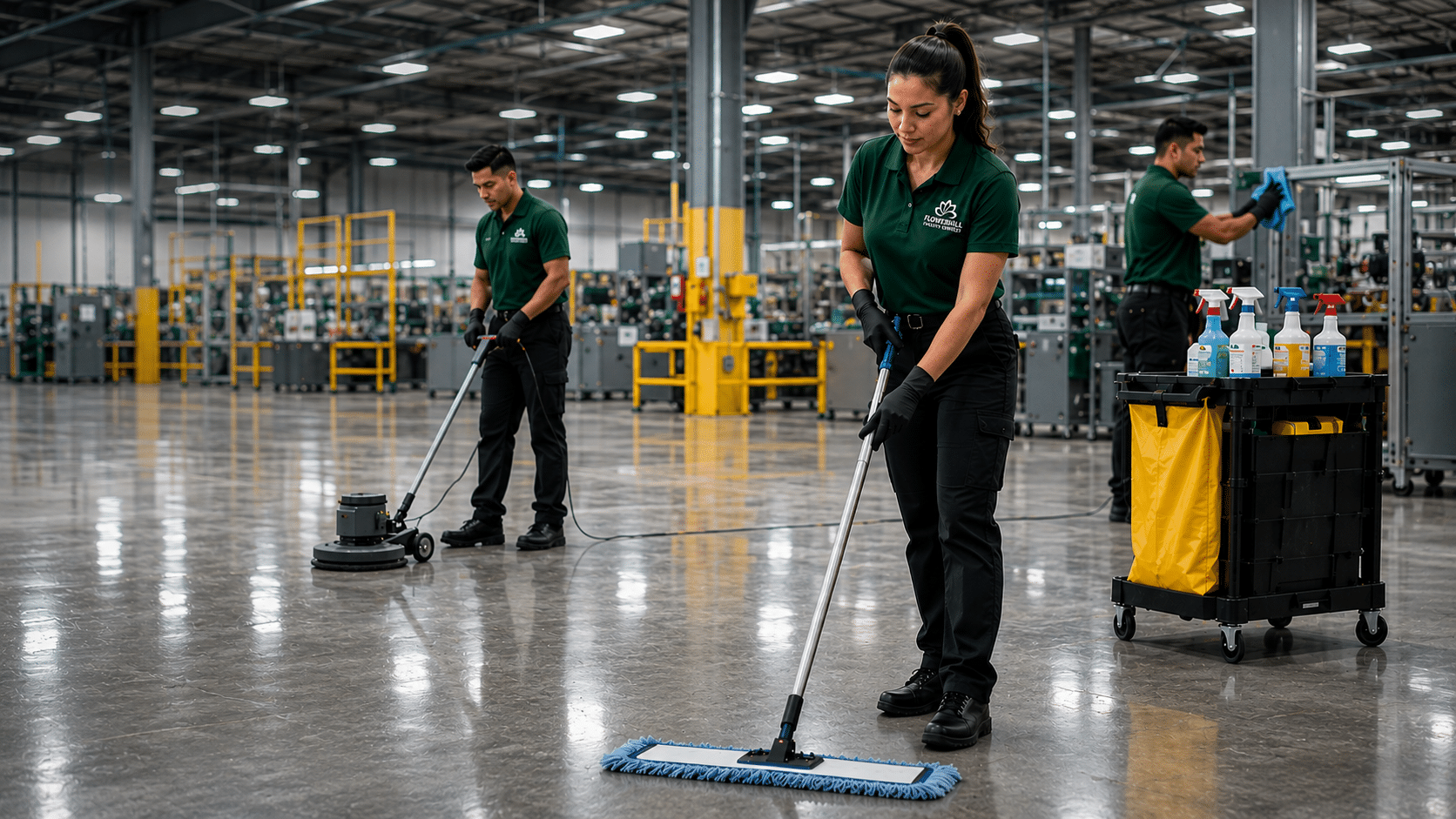
  • Walk-behind machine scrubbing
  • Ride-on floor scrubbing
  • Cleaning around columns and accessible edges
  • Periodic deep floor cleaning
  • Reporting damaged or uneven floor surfaces

The cleaning method should be selected according to the flooring material, existing condition, facility traffic, operational schedule, and manufacturer guidance.

Picking, Packing, and Fulfillment Areas

Picking and packing zones may generate cardboard fibers, plastic film, labels, paper, damaged packaging, and other loose materials throughout the workday.

Cleaning support may include:

  • Removing approved packaging debris
  • Sweeping designated work areas
  • Cleaning accessible packing-station surfaces
  • Emptying waste and recycling containers
  • Cleaning approved pedestrian routes
  • Maintaining nearby employee areas
  • Cleaning floors beneath accessible workstations
  • Reporting damaged fixtures or work surfaces

Inventory, products, tools, scanners, conveyor controls, customer materials, and equipment should only be moved or handled according to established facility procedures.

Loading Docks and Receiving Areas

Loading docks and receiving zones are among the busiest parts of a warehouse. Outdoor soil, pallet debris, packaging materials, vehicle traffic, and frequent deliveries can quickly affect cleanliness.

Approved loading-area services may include:

  • Sweeping designated dock areas
  • Removing loose debris
  • Collecting approved packaging waste
  • Cleaning pedestrian walkways
  • Maintaining interior dock entrances
  • Cleaning approved waste stations
  • Spot cleaning non-hazardous residue
  • Cleaning around accessible dock equipment
  • Reporting damaged doors or floor surfaces
  • Supporting post-delivery cleanup

Cleaning must be coordinated around trailer traffic, dock schedules, forklifts, restricted zones, open dock edges, and the warehouse’s site-specific safety procedures.

Shipping and Staging Areas

Shipping and staging areas may contain outbound orders, pallets, carts, equipment, temporary storage, and active workflow that changes throughout the day.

Cleaning responsibilities may include:

  • Removing visible loose debris
  • Cleaning approved floor areas
  • Maintaining pedestrian routes
  • Cleaning designated staging zones when accessible
  • Removing approved packaging waste
  • Maintaining nearby waste containers
  • Cleaning approved work surfaces
  • Reporting recurring accumulation points

Cleaning schedules can be coordinated around outbound deadlines, shift changes, inventory counts, and high-volume shipping periods.

Storage Aisles and Racking Areas

Storage aisles may collect dust, broken pallet material, shrink wrap, labels, packaging residue, and other debris over time.

Approved services may include:

  • Sweeping accessible aisles
  • Removing loose floor debris
  • Cleaning marked pedestrian paths
  • Cleaning accessible rack-base areas
  • Removing visible cobwebs
  • Cleaning approved guardrails and barriers
  • Reporting damaged or obstructed aisles
  • Documenting recurring debris concerns

Products, pallets, inventory, racking components, and stored materials should not be moved by cleaning personnel unless that responsibility has been specifically approved.

Mezzanines, Platforms, and Elevated Work Areas

Some warehouses contain mezzanines, elevated picking areas, platforms, stairs, and upper-level storage or office spaces.

Cleaning may include:

  • Sweeping approved mezzanine floors
  • Vacuuming carpeted upper-level areas
  • Cleaning stair treads and landings
  • Cleaning approved handrails
  • Removing trash and visible debris
  • Cleaning accessible edges and corners
  • Maintaining approved employee walkways
  • Reporting damaged flooring or railings

Elevated work must be evaluated before service begins. Specialized access, fall protection, lifts, ladders, or restricted-area procedures may require separately trained and qualified personnel.

Warehouse Restrooms

Restrooms serving warehouse teams may experience heavy use across multiple shifts and require more frequent attention than lower-occupancy commercial facilities.

Restroom cleaning may include:

  • Cleaning toilets and urinals
  • Cleaning sinks, counters, and fixtures
  • Cleaning mirrors and partitions
  • Sweeping and mopping floors
  • Cleaning baseboards and accessible edges
  • Removing waste and sanitary products
  • Cleaning approved high-touch surfaces
  • Monitoring odor and overall presentation
  • Restocking toilet tissue and paper towels
  • Replenishing soap and approved consumables
  • Reporting clogs, leaks, or damaged fixtures

Restroom inspection frequency can be adjusted according to workforce size, operating shifts, break schedules, and visitor traffic.

Employee Breakrooms and Locker Areas

Warehouse breakrooms and employee areas may serve large teams during concentrated shift breaks, creating significant food residue, waste, spills, and surface traffic.

Cleaning responsibilities may include:

  • Cleaning tables and seating surfaces
  • Cleaning countertops and sinks
  • Cleaning exterior appliance surfaces
  • Maintaining coffee and beverage stations
  • Cleaning cabinet and drawer fronts
  • Removing trash and recycling
  • Sweeping and mopping floors
  • Cleaning approved high-touch surfaces
  • Restocking approved supplies
  • Monitoring overall presentation

Locker interiors, employee belongings, dishes, food, refrigerators, laundry, showers, and appliance interiors should only be included when responsibilities have been clearly defined.

Administrative Offices and Conference Rooms

Many warehouse facilities include management offices, dispatch areas, conference rooms, training spaces, reception areas, and other administrative environments.

Office cleaning may include:

  • Accessible surface dusting
  • Trash and recycling removal
  • Carpet vacuuming
  • Hard-floor cleaning
  • Conference-room resets
  • Reception-area cleaning
  • Interior glass care
  • Breakroom and restroom service
  • Cleaning approved high-touch surfaces

FlowerHill can combine warehouse-floor care and traditional office cleaning into one coordinated facility plan.

Driver Waiting Rooms and Dispatch Areas

Driver lounges, dispatch areas, check-in rooms, and transportation offices may remain active for extended hours and receive frequent visitor traffic.

Approved cleaning may include:

  • Cleaning seating and approved surfaces
  • Removing trash and recycling
  • Vacuuming or mopping floors
  • Cleaning interior glass
  • Maintaining adjacent restrooms
  • Cleaning vending and beverage areas
  • Cleaning approved touchpoints
  • Reporting damaged furnishings or fixtures

Battery-Charging and Equipment-Support Areas

Forklift charging areas, equipment rooms, and other support spaces may contain electrical systems, batteries, fluids, chargers, and restricted equipment.

FlowerHill may clean approved surrounding floor and access areas only when the work has been reviewed and authorized.

Possible responsibilities may include:

  • Sweeping designated access paths
  • Removing approved loose debris
  • Cleaning surrounding nontechnical surfaces
  • Maintaining clear pedestrian areas
  • Reporting visible leaks, residue, damage, or obstructions

Battery handling, electrical work, equipment servicing, acid-spill response, charger maintenance, and hazardous-material cleanup require separately qualified personnel.

Trash, Recycling, and Waste Collection Areas

Warehouses may generate significant quantities of cardboard, plastic wrap, packaging material, general waste, and recyclable materials.

Approved waste support may include:

  • Emptying interior waste containers
  • Replacing liners
  • Collecting approved recycling
  • Consolidating materials at approved collection points
  • Cleaning residue around waste containers
  • Maintaining accessible waste areas
  • Removing loose packaging debris
  • Reporting overflow or contamination concerns

The client and FlowerHill should establish how materials are separated, where they are transferred, and which party is responsible for compactors, balers, hazardous waste, pallets, and final disposal.

Warehouse Entrances and Exterior Areas

The condition of employee entrances, visitor doors, sidewalks, and building perimeters affects curb appeal and the amount of soil tracked into the warehouse.

Approved exterior services may include:

  • Removing litter near entrances
  • Sweeping approved sidewalks
  • Maintaining entry mats
  • Cleaning approved entrance glass
  • Emptying exterior waste containers
  • Cleaning designated smoking areas
  • Removing loose debris near dock entrances
  • Reporting pavement, drainage, lighting, or door concerns

Warehouse Floor Cleaning and Machine Scrubbing

Warehouse floor care should be based on the surface, traffic level, soil type, equipment movement, and operational schedule.

Depending on the facility, a floor-maintenance program may include:

  • Routine manual sweeping
  • Mechanical sweeping
  • Dust mopping
  • Spot cleaning
  • Damp mopping designated areas
  • Walk-behind floor scrubbing
  • Ride-on floor scrubbing
  • Cleaning pedestrian walkways
  • Periodic deep cleaning
  • Entry-mat maintenance
  • Cleaning approved sealed-concrete surfaces
  • Care for resilient flooring in employee and office spaces

Cleaning methods must account for floor coatings, joints, drainage, cracks, striping, product-storage requirements, and the time needed for surfaces to dry before traffic resumes.

Dust and Debris Control

Dust can accumulate across floors, ledges, beams, rack bases, corners, dock areas, and other surfaces throughout a warehouse.

A customized dust-control plan may include:

  • Routine floor sweeping
  • Cleaning accessible horizontal surfaces
  • Removing visible cobwebs
  • Cleaning ledges and approved fixtures
  • Cleaning approved guardrails and barriers
  • Cleaning around columns and walls
  • Removing loose packaging fibers
  • Periodic high dusting where safely accessible
  • Post-construction or post-installation detail cleaning

High-level dusting, rafter cleaning, elevated fixtures, overhead piping, and ceiling structures may require lifts, specialized equipment, area isolation, or additional safety planning.

Day Porter Services for Active Warehouses

Some warehouses require cleaning attention throughout operating hours instead of relying exclusively on nighttime service.

A warehouse day porter may assist with:

  • Restroom checks and supply restocking
  • Breakroom upkeep
  • Waste and recycling removal
  • Routine non-hazardous spill response
  • Entrance and office presentation
  • Cleaning designated pedestrian areas
  • Removing loose packaging debris
  • Maintaining driver and visitor areas
  • Supporting shift-change cleanup
  • Reporting visible facility concerns

Day porter service can be combined with more comprehensive evening or overnight janitorial cleaning.

Multi-Shift and Overnight Warehouse Cleaning

Warehouses may operate during one, two, or three shifts, and some facilities continue running around the clock.

FlowerHill can organize cleaning around:

  • Scheduled shift changes
  • Lower-volume operating periods
  • Overnight service windows
  • Weekend maintenance periods
  • Inventory-count schedules
  • Receiving and shipping deadlines
  • Seasonal staffing increases
  • Approved shutdown periods
  • Restricted operational zones

The facility can be divided into cleaning zones so work occurs only where access is available and operational conditions permit.

Peak Season and High-Volume Cleaning Support

E-commerce, retail distribution, third-party logistics, and fulfillment operations may experience substantial seasonal increases in inventory, staffing, deliveries, packaging, and waste.

Temporary or expanded cleaning support may include:

  • Additional daytime porter hours
  • More frequent restroom checks
  • Expanded breakroom cleaning
  • Additional waste removal
  • More frequent floor sweeping
  • Shift-change cleanup
  • Temporary employee-area support
  • Post-peak deep cleaning

Planning seasonal service before volume increases can help establish staffing, schedules, supply needs, and operational access in advance.

Warehouse Move-In, Turnover, and Post-Construction Cleaning

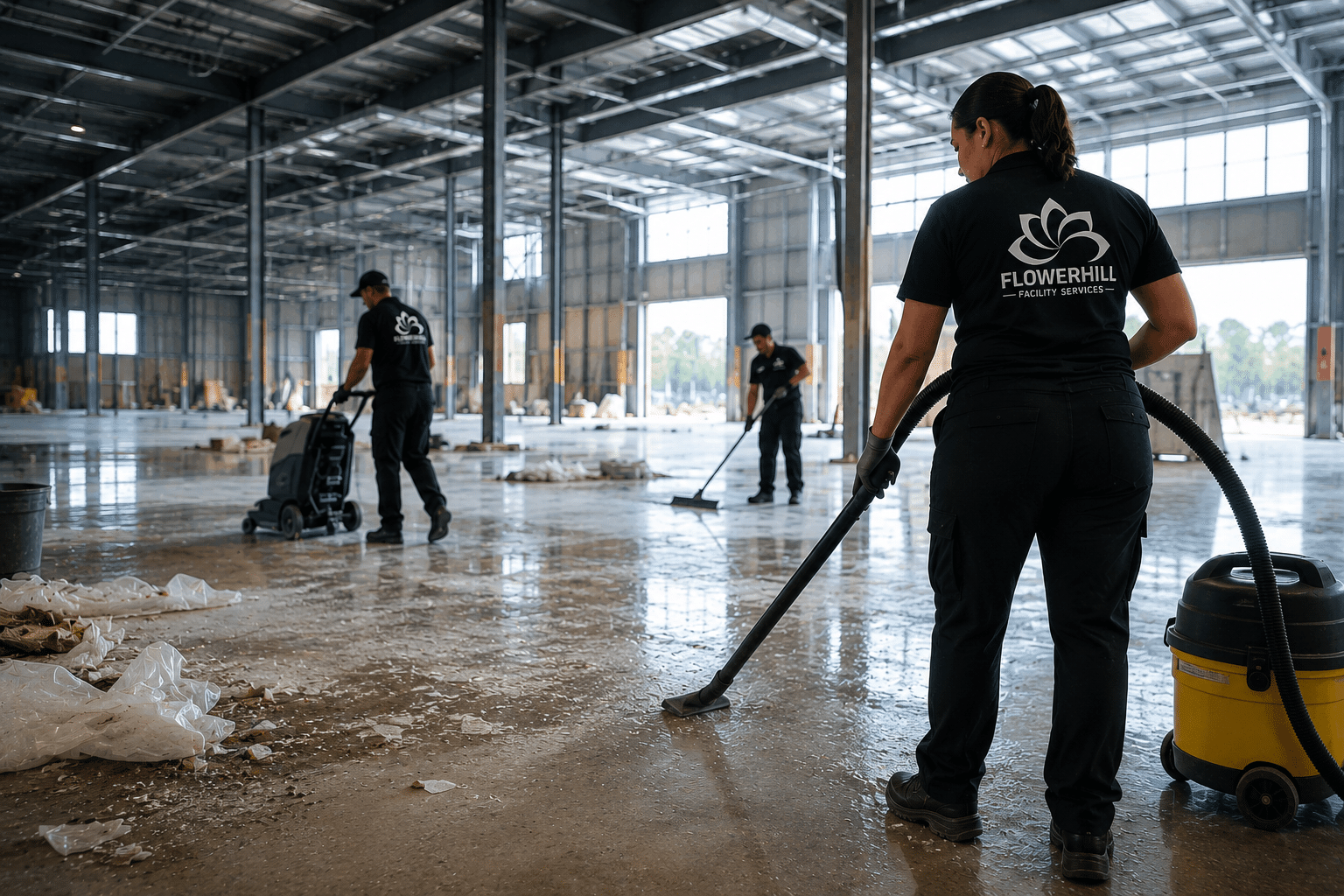
New construction, tenant turnover, racking installation, office buildouts, equipment changes, and warehouse expansions can leave dust, packaging, labels, and construction residue throughout the property.

Approved project cleaning may include:

  • Detailed floor cleaning
  • Removing approved construction debris
  • Cleaning doors, frames, and partitions
  • Cleaning offices and employee spaces
  • Cleaning approved rack exteriors
  • Removing labels and adhesive residue from approved surfaces
  • Cleaning loading and staging areas
  • Cleaning restrooms and breakrooms
  • Interior glass cleaning
  • Final presentation cleaning before occupancy

Construction cleanup should be coordinated around contractors, equipment installation, active utilities, remaining punch-list work, and the scheduled operational launch.

Safety-Aware Warehouse Cleaning

Cleaning inside an active warehouse requires coordination with facility management because forklifts, trailers, conveyors, machinery, open docks, material handling, and pedestrian traffic may remain active during service.

Before work begins, FlowerHill should review:

  • Authorized cleaning areas
  • Forklift and equipment routes
  • Pedestrian pathways
  • Loading-dock restrictions
  • Required personal protective equipment
  • Restricted or controlled zones
  • Approved cleaning times
  • Emergency communication procedures
  • Spill-response boundaries
  • Chemical and product restrictions
  • Equipment lockout or shutdown requirements
  • Incident-reporting procedures

Cleaning personnel should not operate warehouse machinery, move loaded pallets, service powered equipment, enter prohibited areas, or perform technical maintenance unless specifically trained, authorized, and assigned to do so.

Routine Cleaning vs. Specialized Warehouse Cleanup

Routine warehouse cleaning may include sweeping, floor scrubbing, restroom cleaning, breakroom care, office cleaning, waste removal, dock upkeep, and recurring dust control.

Warehouse deep cleaning may include machine floor cleaning, detailed edge work, elevated dust removal, post-construction service, and periodic attention to areas not included in daily cleaning.

Day porter service provides ongoing support during operating hours for restrooms, employee areas, routine spills, waste, entrances, and visible debris.

Facility maintenance addresses approved physical-building needs such as inspections, lighting, doors, hardware, walls, fixtures, and minor repairs.

Hazardous or technical cleanup may involve chemical releases, biohazards, combustible dust, regulated waste, active machinery, or other conditions requiring specialized training, equipment, procedures, or contractors.

Types of Warehouses We Clean

Distribution Centers

Customized cleaning for high-volume facilities managing receiving, storage, inventory movement, order preparation, and outbound shipping.

E-Commerce Fulfillment Centers

Recurring cleaning and porter support for picking, packing, shipping, employee, administrative, and high-traffic operational areas.

Third-Party Logistics Warehouses

Flexible cleaning programs for multi-client environments, shared spaces, customer areas, staging zones, docks, and administrative operations.

General Storage Warehouses

Scheduled cleaning for storage aisles, floors, entrances, employee areas, offices, and approved operational spaces.

Wholesale and Supply Warehouses

Cleaning support for facilities receiving, storing, displaying, and distributing commercial inventory and supplies.

Retail Distribution Facilities

Scalable cleaning programs built around inventory cycles, seasonal demand, shipping activity, employee traffic, and extended schedules.

Manufacturing-Support Warehouses

Coordinated cleaning for storage, staging, offices, employee spaces, finished-goods areas, and approved production-adjacent environments.

Industrial and Flex Warehouses

Cleaning for facilities that combine warehouse storage with offices, showrooms, light production, service areas, or customer-facing spaces.

Refrigerated and Temperature-Controlled Warehouses

Cleaning support may be available following an evaluation of temperature, moisture, product requirements, floor conditions, protective equipment, and facility-specific sanitation procedures.

Food-contact areas, regulated storage, sanitation programs, and specialized cold-environment work may require additional controls and a separately defined scope.

Warehouse Cleaning Programs Built Around Your Operation

No two warehouses share the same layout, inventory, traffic, staffing, equipment, or operating schedule.

Before recommending a cleaning program, FlowerHill evaluates:

  • Total cleanable square footage
  • Warehouse layout and ceiling height
  • Flooring material and existing condition
  • Employee and visitor population
  • Number of operating shifts
  • Forklift and equipment traffic
  • Shipping and receiving activity
  • Number of dock doors
  • Restroom and breakroom usage
  • Office and administrative areas
  • Waste and recycling volume
  • Security and access requirements
  • Seasonal demand
  • Restricted or hazardous areas
  • Day porter requirements
  • Periodic floor and project-cleaning needs

The result is a clearly documented cleaning program aligned with the facility’s workflow, priorities, service expectations, and budget.

Why DFW Warehouses Trust FlowerHill Facility Services

Customized Warehouse Cleaning Plans

The scope is built around the facility’s actual layout, operations, floor conditions, staffing, traffic, and service schedule.

Flexible Day and Night Scheduling

Cleaning can be coordinated around shifts, shipping periods, overnight hours, weekends, and approved operational windows.

Scalable Support for Large Facilities

Programs can be structured for individual warehouses, multi-building properties, distribution campuses, and expanding operations.

Coordinated Office and Warehouse Cleaning

FlowerHill can maintain warehouse floors and operational areas while also cleaning attached offices, restrooms, breakrooms, conference rooms, and reception spaces.

Responsive Communication

Facility contacts have an established process for reporting concerns, adjusting schedules, requesting project work, and reviewing service performance.

Clearly Defined Responsibilities

The approved scope identifies which areas are included, what tasks are performed, how frequently service occurs, and which specialized conditions are excluded.

Local, Woman-Owned Leadership

As a woman-owned North Texas company, FlowerHill combines local accountability with the operational structure needed to serve active commercial properties throughout Dallas-Fort Worth.

Our Warehouse Cleaning Process

1. Warehouse Walkthrough

We tour the facility, observe traffic patterns, review current conditions, discuss operational concerns, and identify service priorities.

2. Operational Cleaning Assessment

FlowerHill evaluates square footage, flooring, shifts, docks, restrooms, employee spaces, offices, equipment traffic, security, and existing cleaning responsibilities.

3. Customized Scope of Work

We develop a proposed plan identifying service areas, tasks, frequency, schedule, staffing, equipment, exclusions, and pricing.

4. Access and Safety Coordination

Our team reviews access points, restricted areas, forklift routes, approved service times, personal protective equipment, emergency procedures, and communication expectations.

5. Service Preparation

Personnel, equipment, supplies, cleaning routes, storage areas, and reporting procedures are coordinated before recurring service begins.

6. Scheduled Warehouse Cleaning

FlowerHill personnel complete approved tasks according to the documented scope and service schedule.

7. Quality Review and Reporting

Service performance, visible concerns, recurring accumulation points, special requests, and recommended adjustments can be documented and reviewed with the facility contact.

8. Program Adjustments

The plan can be updated as shifts change, volume increases, inventory moves, new areas open, or facility priorities evolve.

How Often Should a Warehouse Be Professionally Cleaned?

The appropriate cleaning frequency depends on the facility’s size, operating schedule, workforce, traffic, floor condition, loading activity, waste volume, and presentation expectations.

A smaller storage warehouse may require service several times per week. A busy fulfillment center, distribution hub, or multi-shift operation may need daily janitorial service, continuous daytime porter support, overnight cleaning, or multiple service periods.

Different areas may follow different schedules. Restrooms and breakrooms may require daily or repeated attention, while machine floor scrubbing, high dusting, and detailed project cleaning may occur periodically.

An on-site walkthrough allows FlowerHill to recommend a frequency based on actual facility use rather than a generic package.

What Determines Warehouse Cleaning Pricing?

Warehouse cleaning pricing is based on the labor, supervision, equipment, supplies, access requirements, and service frequency needed to complete the approved scope.

Pricing factors may include:

  • Total cleanable square footage
  • Facility type and operating activity
  • Cleaning frequency
  • Number of operating shifts
  • Floor material and condition
  • Required floor-cleaning equipment
  • Number of dock doors and loading areas
  • Number of restrooms and employee spaces
  • Office and administrative coverage
  • Daytime versus overnight access
  • Day porter staffing
  • Security and onboarding requirements
  • Required personal protective equipment
  • Waste and recycling responsibilities
  • Elevated or detailed cleaning
  • Seasonal or project-based support
  • Existing facility condition

A warehouse walkthrough is the most reliable way to determine staffing, equipment, frequency, and an accurate service proposal.

Warehouse Cleaning Service Areas Across Dallas-Fort Worth

FlowerHill Facility Services supports warehouses, distribution centers, fulfillment operations, storage properties, and logistics facilities throughout Fort Worth, Dallas, Alliance, Roanoke, Grapevine, Irving, Coppell, Carrollton, Arlington, Grand Prairie, Denton, Bedford, Hurst, North Richland Hills, Colleyville, Southlake, Keller, Westlake, Flower Mound, Frisco, Plano, McKinney, The Colony, Richardson, Addison, and surrounding North Texas communities.

Frequently Asked Questions

What does professional warehouse cleaning include?

Warehouse cleaning may include floor sweeping, machine scrubbing, dust and debris removal, loading-area care, restroom cleaning, breakroom maintenance, waste removal, office cleaning, entrances, aisles, and other approved areas identified in the scope of work.

Can FlowerHill clean while our warehouse is operating?

Cleaning may be performed during active operations when approved work zones, equipment routes, access procedures, schedules, and safety responsibilities have been clearly established.

Do you provide warehouse floor scrubbing?

Machine floor scrubbing may be included using appropriate walk-behind or ride-on equipment, depending on the floor surface, facility layout, current condition, access, and approved service plan.

Can warehouse cleaning be performed overnight?

Yes. Service may be scheduled during the day, evening, overnight, weekends, shift changes, or another approved operational window.

Do you clean loading docks?

Approved loading-dock and receiving-area cleaning may include sweeping, loose-debris removal, packaging-waste collection, pedestrian-path cleaning, and interior entrance upkeep.

Can you clean both our warehouse and attached offices?

Yes. FlowerHill can create one coordinated plan covering warehouse areas, management offices, conference rooms, reception spaces, restrooms, breakrooms, and other approved parts of the property.

Do you provide warehouse day porter services?

Yes. A day porter can help maintain restrooms, breakrooms, entrances, waste stations, pedestrian areas, routine non-hazardous spills, and other approved needs during operating hours.

Can you remove cardboard and packaging materials?

Collection and transfer of approved packaging waste may be included. Responsibilities for balers, compactors, pallets, recycling vendors, hazardous materials, and final disposal should be clearly defined.

Do you clean warehouse racks?

Accessible rack exteriors and base areas may be included when approved. Cleaning personnel should not climb racks, move inventory, handle products, or interfere with structural components without specific authorization and appropriate procedures.

Can you clean a refrigerated warehouse?

Refrigerated and temperature-controlled facilities require an assessment of temperature, moisture, floor conditions, products, personal protective equipment, and sanitation requirements before a scope can be developed.

Do you handle chemical or hazardous spills?

Routine warehouse cleaning does not automatically include hazardous-material response. Chemical releases, biohazards, combustible dust, regulated waste, and other hazardous conditions require separately qualified personnel and procedures.

Can you provide seasonal warehouse cleaning support?

Temporary staffing or increased cleaning frequency may be available during peak shipping periods, seasonal inventory increases, facility expansions, and other high-volume operating periods.

How do we receive a warehouse cleaning proposal?

Begin by requesting an on-site walkthrough. FlowerHill will review the facility, operating schedule, floor conditions, employee areas, loading activity, access requirements, and cleaning priorities before preparing a customized scope and proposal.

Build a Warehouse Cleaning Program Around Your Operation

Your warehouse needs a cleaning program that supports the operation instead of disrupting it.

FlowerHill Facility Services develops customized warehouse janitorial, floor-care, day porter, deep-cleaning, and facility-support programs for commercial properties throughout Dallas-Fort Worth.

Request a warehouse walkthrough to discuss your facility, shifts, floor conditions, cleaning priorities, access requirements, and ongoing service needs.